Manufactured in Greater NoidaGenuine Philips UV-C LampsIIT Patna Alumni on Our TeamExporting to 20+ Countries
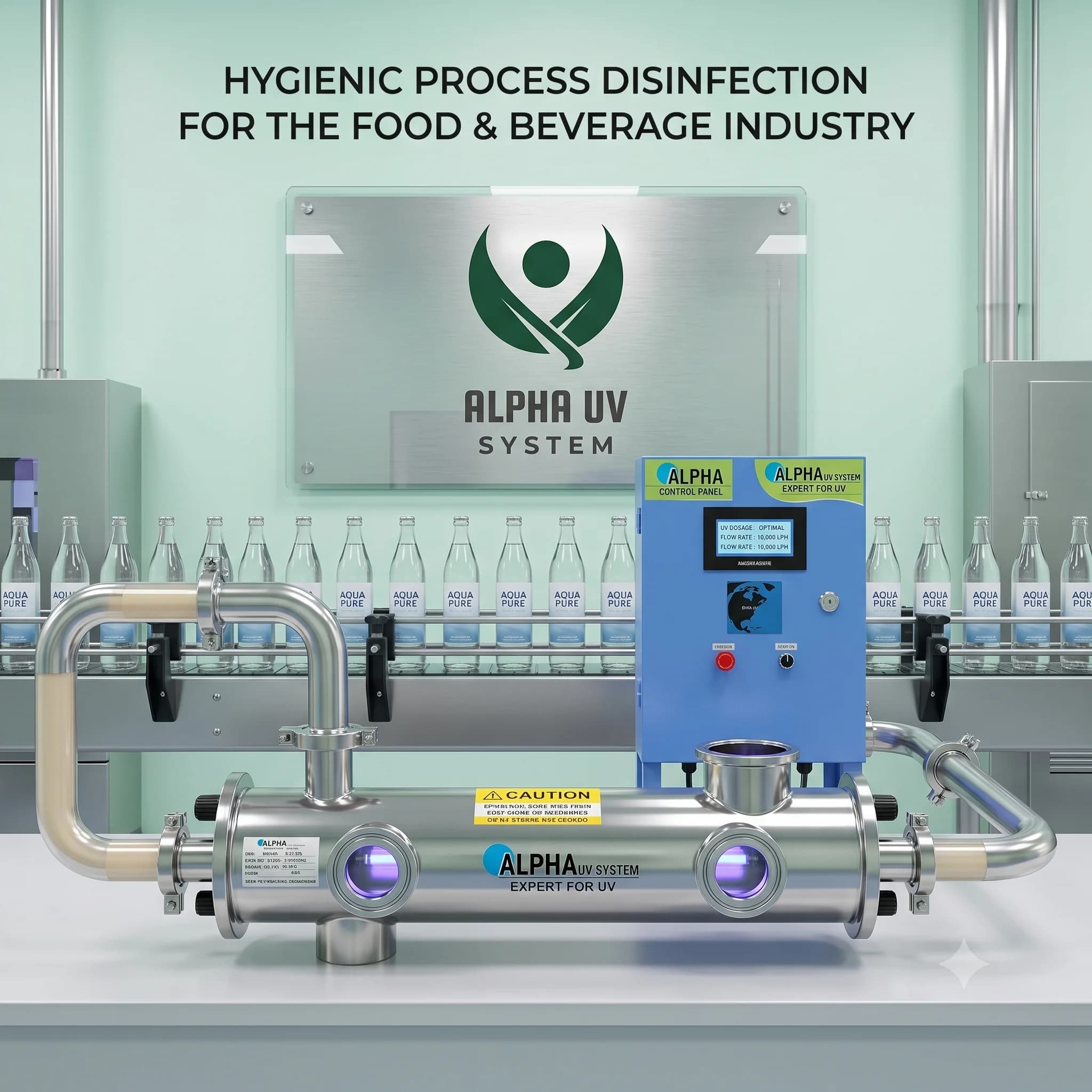
Food manufacturing requires water that meets FSSAI IS 10500:2012 standards at every point of use — washing, ingredient water, CIP rinse, process water, and ice. Waterborne pathogen contamination of food products through process water has caused some of India's most significant food safety incidents. Alpha UV System food-grade UV disinfection systems deliver 40–80 mJ/cm² pathogen control for E. coli, Listeria monocytogenes, Salmonella, Norovirus, and Cryptosporidium — without chemical addition that affects food taste, composition, or HACCP documentation requirements. SS316L food-grade construction. Codex Alimentarius and FSSAI compliant. IIT Patna-trained engineers.
UV Dose
40–80 mJ/cm²
Capacity
1,000 – 50,000 LPH
Modern food manufacturing involves water at multiple distinct use points, each with different contamination risk profiles and different UV treatment requirements. Raw material washing — vegetables, fruits, meat, poultry, seafood — introduces the highest microbial load, as produce arrives from fields carrying soil bacteria, Salmonella from animal manure, E. coli O157:H7, Listeria monocytogenes from post-harvest environments, and Cryptosporidium from irrigation water sources. The WHO Food Safety Technical Paper on Water Quality in Food Production (2018) identifies produce washing water as a primary vehicle for foodborne pathogen cross-contamination in fresh produce supply chains.
Process water used in food manufacturing — blanching, cooking, brine mixing, sauce formulation, cereal hydration — contacts the food directly and becomes part of the product. Any pathogen or chemical contaminant in process water appears in the finished product. Cleaning and sanitation water used in CIP systems, equipment rinse cycles, and floor cleaning carries bacterial biofilm fragments and cleaning chemical residuals that must not contaminate food contact surfaces they are intended to sanitise. Ice used in seafood, meat, and poultry processing plants is manufactured on-site from municipal or borewell water; ice-borne Listeria and Salmonella contamination has been documented in multiple Indian food-processing incidents. UV disinfection of ice-making water before freezing prevents ice-associated contamination routes.
FSSAI Food Safety and Standards (Food Products Standards and Food Additives) Regulations 2011 mandate that all water used in food manufacturing — as an ingredient, processing aid, ice, or cleaning agent — must meet IS 10500:2012 drinking-water quality standards. This obligation applies to all food business operators (FBOs) covered by FSSAI licensing, from small food manufacturers to large integrated food processing facilities.
Food processing waterborne pathogens differ from general drinking-water pathogens in their specific association with food matrices and their ability to cause outbreaks through contaminated food products. Listeria monocytogenes is the food industry's most feared waterborne pathogen because it grows at refrigeration temperatures (2–4°C), colonises drains and wet floor surfaces in processing environments, forms persistent biofilms, and causes listeriosis — a disease with 20–30% case fatality rate in vulnerable populations (pregnant women, elderly, immunocompromised). L. monocytogenes requires 5.5 mJ/cm² for 4-log UV inactivation in clear water — well within the dose range of standard food-grade UV systems.
Salmonella is the most common cause of foodborne disease in India, with processed poultry, eggs, meat, and leafy vegetables as primary vectors. Salmonella typhimurium and Salmonella enteritidis are inactivated at UV doses of 5–8 mJ/cm² (4-log). E. coli O157:H7 — responsible for haemolytic uremic syndrome (HUS) in children — is inactivated at 8 mJ/cm². Norovirus — responsible for the majority of food poisoning outbreaks globally — is inactivated at 12–15 mJ/cm² and can be transmitted through contaminated food-washing water. Hepatitis A virus, a significant food safety concern in India associated with contaminated water in raw food preparation, is inactivated at 20–25 mJ/cm².
A food-grade UV system operating at 40 mJ/cm² — Alpha UV System's standard food industry dose specification — provides 4-log margins against all of these pathogens: Salmonella (6-fold margin), E. coli O157 (5-fold), Listeria (7-fold), Cryptosporidium (4-fold). Only Norovirus (12–15 mJ/cm² for 4-log) and Hepatitis A (20–25 mJ/cm² for 4-log) receive lower than 4-log reduction at 40 mJ/cm², receiving approximately 3-log and 2-log respectively — sufficient for most food manufacturing applications but lower-risk than the other listed pathogens in water-transmitted food safety contexts.
FSSAI's Schedule IV (Standards for Food Business Establishment) specifies detailed requirements for water supply, storage, distribution, and monitoring in food manufacturing. Schedule IV mandates that FBOs must ensure: potable water supply meeting IS 10500:2012 at all food contact points; documented water quality testing at defined frequencies (monthly for microbiological, quarterly for physico-chemical); maintained records of water treatment and testing for inspection by FSSAI officers; and corrective action procedures when water quality deviations are identified.
UV disinfection supports FSSAI Schedule IV compliance by providing continuous treatment and continuous monitoring evidence. The UV intensity sensor's real-time output constitutes a continuous monitoring record for the water treatment CCP. Monthly microbiological test results demonstrating E. coli absent and TPC below 100 CFU/mL satisfy FSSAI's periodic verification requirements. The UV system's commissioning report and lamp certificates constitute the installation documentation required by FSSAI's HACCP food safety plan format.
The Codex Alimentarius Commission's General Principles of Food Hygiene CXC 1-1969 (revised 2020) — which forms the technical basis for FSSAI's food safety regulations — establishes HACCP as the internationally accepted food safety management methodology. Within the HACCP framework, water quality is a critical control point requiring: identified hazard (pathogenic microorganisms), defined critical limit (40 mJ/cm² UV dose), continuous monitoring (UV intensity sensor), corrective action (production halt if UV alarm activates), verification (periodic microbiological testing), and maintained records (UV intensity log). Alpha UV System's food-grade UV systems satisfy all six HACCP CCP requirements.
Food contact water UV chambers must satisfy hygiene engineering requirements that differ fundamentally from standard industrial UV systems. The EHEDG (European Hygienic Engineering and Design Group) Document 8, the 3-A Sanitary Standards, and ASME BPE-2019 define the construction requirements for equipment in contact with food process water.
The material standard is SS316L (UNS S31603) — low-carbon austenitic stainless steel with 2–3% molybdenum — for all surfaces in contact with food process water. The low carbon content prevents sensitisation at welds, and the molybdenum addition provides superior resistance to chloride pitting corrosion in food processing environments where cleaning chemicals contain chlorine compounds. Internal surfaces must be finished to Ra ≤ 0.8 µm (food polished) — significantly smoother than the mill finish (Ra ~3.2 µm) of standard industrial chambers — to eliminate bacterial harbourage sites in surface irregularities.
Connections must be tri-clamp (ISO 2852) or SMS sanitary fittings that allow complete disassembly for cleaning and inspection, rather than the threaded BSP connections used in standard water treatment equipment. Drain valves must be present on all low points of the chamber to prevent stagnant water accumulation between production runs. EPDM or PTFE seals (not NBR rubber) are specified for resistance to CIP cleaning chemicals — caustic (NaOH, pH 11–13) and acidic (phosphoric acid, pH 2–3) at temperatures up to 85°C.
During CIP cycles, UV lamps must be de-energised and the CIP solution should bypass the UV chamber through a three-way valve arrangement — protecting quartz sleeves from chemical attack and the lamp from thermal shock of hot caustic followed by cold acid rinse. Alpha UV System food-grade UV systems include the CIP bypass three-way valve as standard.
HACCP HACCP (Hazard Analysis and Critical Control Points) food safety management systems identify water quality as a critical control point when water directly contacts food or is used as an ingredient. The CCP requires critical limits (TPC < 100 CFU/mL, E. coli absent per 100 mL), monitoring procedures (real-time UV intensity monitoring), corrective actions (stop production if UV intensity drops below setpoint), and verification (periodic microbiological testing). Alpha UV System UV systems with real-time UVC intensity monitoring and alarm outputs satisfy all HACCP CCP monitoring requirements.
BRC Global Standard Food Safety Issue 9, Clause 4.4.2 requires documented evidence that water quality is monitored and maintained. The data-logging capability of Alpha UV System food-grade UV systems records every minute of UV operation — providing the CCP monitoring records required by BRC and SQF audit standards. BRC Issue 9 Section 4.4 on Utilities specifically requires: source water quality documentation, treatment system records, and monitoring records demonstrating consistent compliance. Alpha UV System commissioning reports and UV intensity logs are formatted to satisfy these requirements.
SQF Code Edition 9, Element 11.6 similarly requires water quality monitoring records demonstrating that process water consistently meets microbiological standards. The automated data logging in Alpha UV System UV systems provides continuous records without requiring manual logging by food production staff — an important practical advantage in high-throughput food manufacturing environments where manual record-keeping is error-prone.
Clean-in-Place (CIP) systems use caustic and acid cleaning chemicals to remove soil and biofilm from food processing equipment without disassembly. The final stage of a CIP cycle is the rinse cycle — water flushed through the system to remove residual cleaning chemical before the equipment is returned to service. CIP final rinse water quality is critical: residual cleaning chemical left on food contact surfaces can contaminate the next production run, and microbiological contamination of rinse water can re-inoculate equipment that has just been cleaned.
UV disinfection of CIP final rinse water provides chemical-free microbiological control — eliminating the risk of cross-contamination between rinse water-borne pathogens and the freshly cleaned food contact surface. The absence of chemical residuals in UV-treated rinse water (compared to chlorinated rinse water) eliminates the risk of chlorine residual contaminating the product in the subsequent production run. For food products sensitive to chlorine taste — beverages, dairy, bakery, confectionery — chlorine-free UV-treated CIP rinse water is a significant product quality advantage.
Alpha UV System food-grade UV systems for CIP rinse water applications are rated for continuous operation at the CIP rinse flow rate (typically 2,000–10,000 LPH), with CIP-compatible construction (SS316L, EPDM seals, CIP bypass valve) and UV dose of 40 mJ/cm² minimum.
The operating cost advantage of UV over chlorination in food manufacturing is substantial. For a 10,000 LPH food processing plant running continuously, chlorination with sodium hypochlorite and dechlorinant (required to remove residual chlorine before food contact) costs approximately Rs 4–5 lakh per year in chemical procurement alone, plus daily residual monitoring labour and chemical waste disposal. UV disinfection operating costs — Philips UV-C lamp replacement plus power — are approximately Rs 1.5–2.5 lakh per year for the same flow, with zero chemical procurement and zero residual monitoring labour.
The liability cost of chlorophenol off-flavour contamination — when residual chlorine in process water reacts with phenolic compounds in flavour-sensitive food products — is not easily quantified but can exceed the entire cost of a UV system in a single product recall event. UV disinfection eliminates this risk entirely by removing chlorine from the water treatment process.
For food manufacturers seeking ISO 22000:2018, BRC Issue 9, or SQF Edition 9 certification, UV disinfection provides a cleaner, better-documented HACCP CCP for water than chlorination — with fewer chemical handling requirements, simpler monitoring, and a more complete audit trail. Alpha UV System provides complete food industry UV solutions — equipment, commissioning, HACCP documentation, and ongoing AMC support — delivered within 24–48 hours of inquiry. Contact us on WhatsApp at 9318305878 or call 9599500580.
Recommended Products
IIT Patna engineers recommend these systems for food industry uv applications based on flow rate, required UV dose, and compliance standard. Both systems use genuine Philips UV-C lamps and ship with complete compliance documentation.
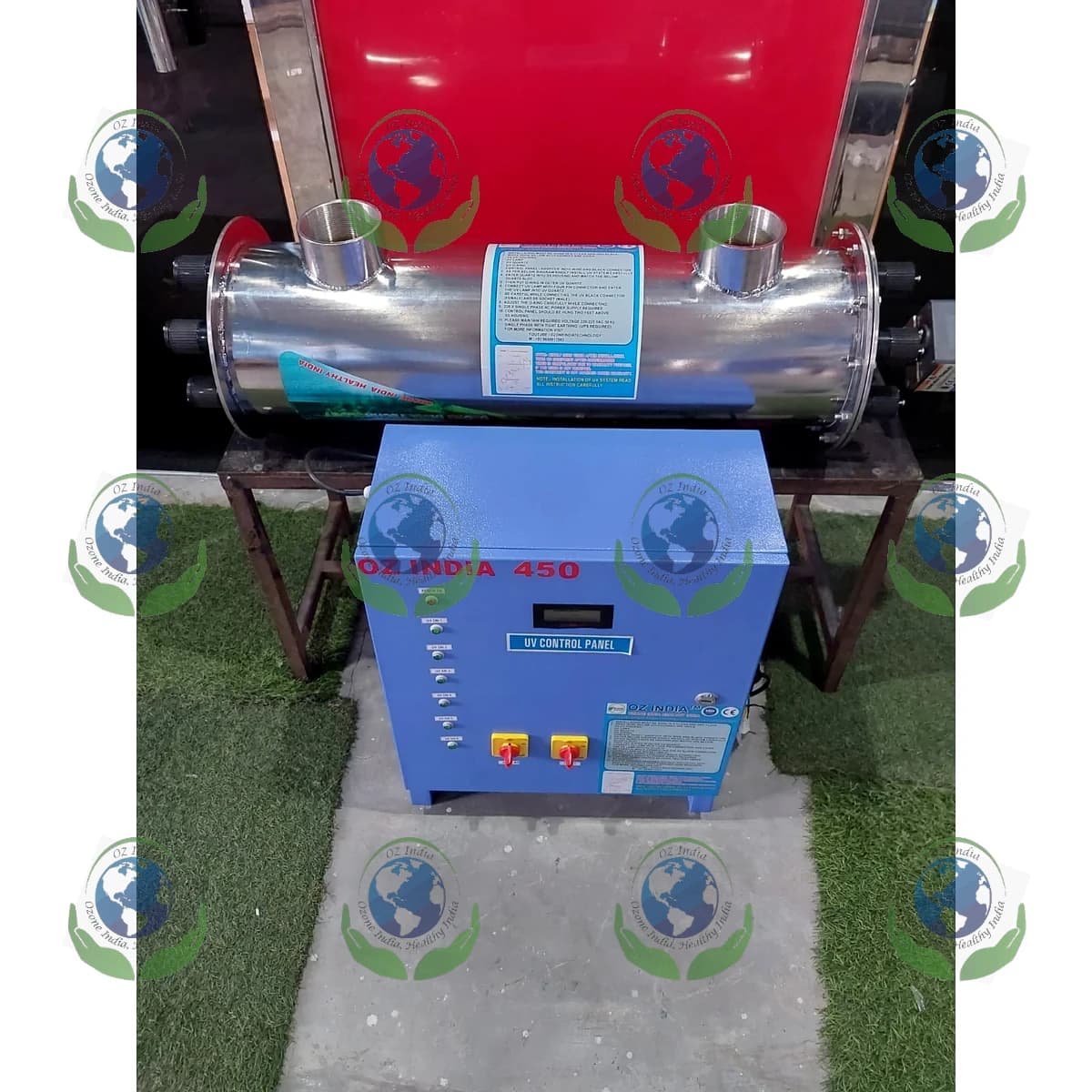
High-flow UV water treatment for pharmaceutical WFI, food & beverage process water, and industrial applications. Revised Schedule M 2025, HACCP, and FSSAI compliant. IQ/OQ/PQ documentation.
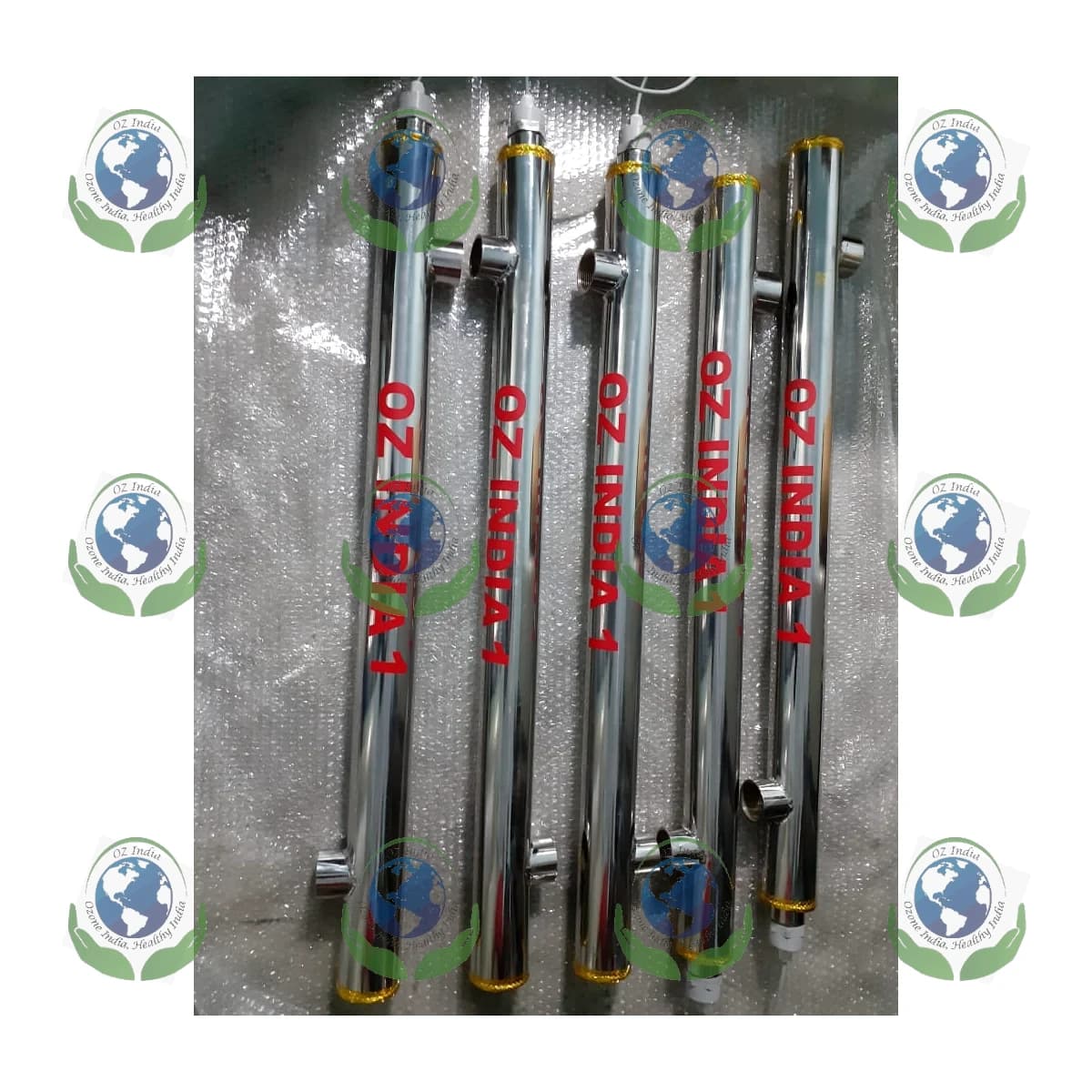
UV water disinfection for hotels, restaurants, offices, and educational institutions. HACCP and FSSAI compliant documentation. Trusted by Taj Hotels, McDonald's India, and IIT Kanpur.
IIT Patna Engineering
Alpha UV System IIT Patna engineers calculate UV dose from your actual water quality parameters — measured UVT, flow rate, target log reduction, and the specific compliance standard that governs your facility. Not from catalogue sizing tables or generic assumptions. Every system ships with a signed UV dose calculation report, a Philips certificate of authenticity, and compliance documentation prepared for the regulatory framework applicable to food industry uv operations.
From measured UVT, flow rate, and target log-reduction. Signed by IIT Patna engineer.
FSSAI · HACCP · Codex Alimentarius · Schedule M — documentation prepared to the audit checklist, not generic templates.
WhatsApp your flow rate, water quality, and compliance requirement — engineering-backed quote in 2 hours.
Mon–Sat · 9 AM–6 PM IST · IIT Patna alumni on call
Send us your flow rate and compliance requirement — quote with engineering rationale in 2 hours.
+91 93183 05878
Get Quote →
Call Direct
+91 95995 00580
Tap to Call →
Send Enquiry
Detailed specifications form
Open Form →
