Manufactured in Greater NoidaGenuine Philips UV-C LampsIIT Patna Alumni on Our TeamExporting to 20+ Countries
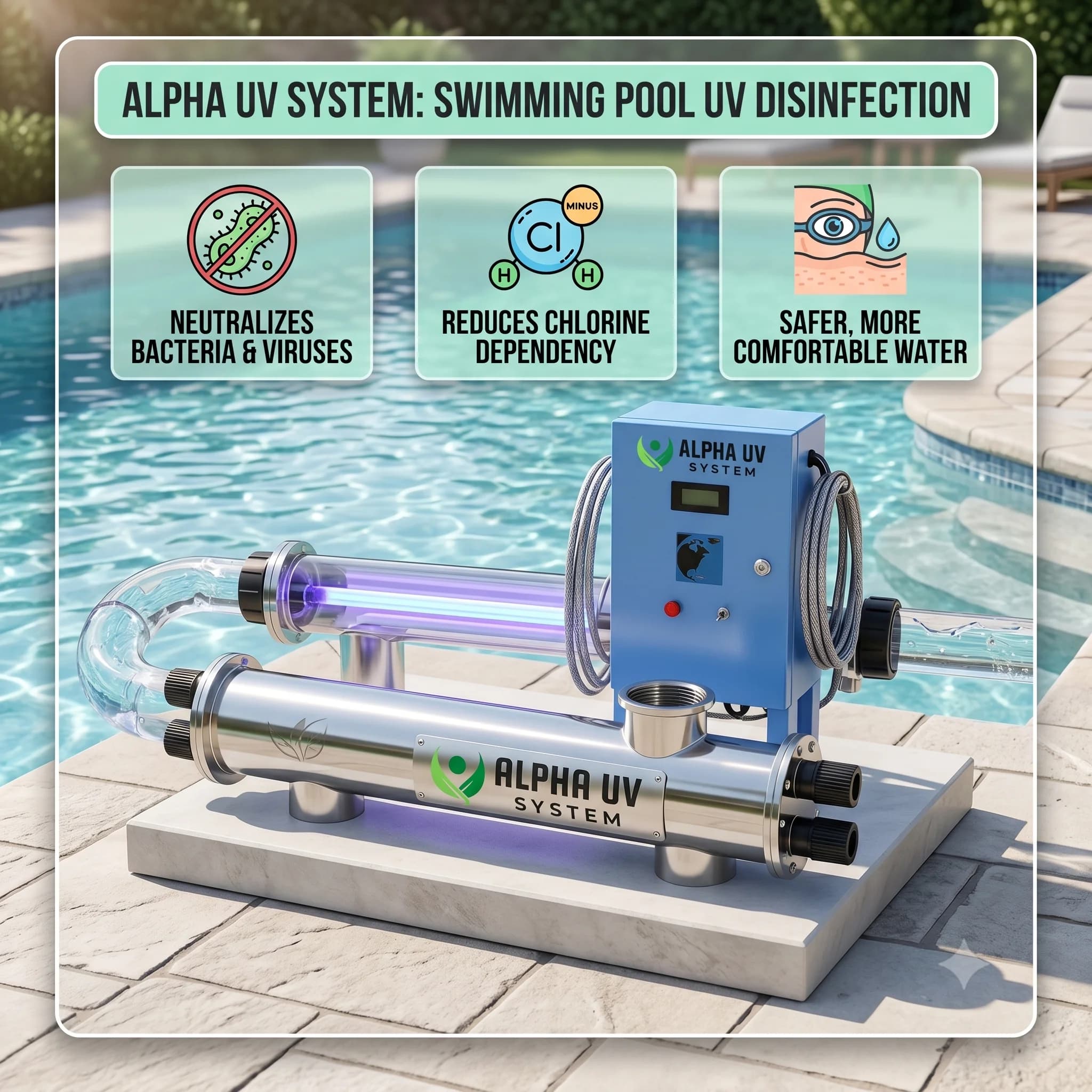
The characteristic eye irritation, skin redness, and strong pool smell that swimmers associate with chlorine are actually caused by chloramines — nitrogen-chlorine compounds formed when chlorine reacts with swimmer-derived contaminants. UV-C light, particularly from medium-pressure Philips lamps, photolytically destroys chloramines in a single pass through the UV chamber, simultaneously providing 4-log Cryptosporidium inactivation that chlorine cannot achieve at pool concentrations. Alpha UV System swimming pool UV systems reduce chlorine consumption by 50–80%, eliminate chloramine-related guest complaints, and comply with WHO Swimming Pool Water Guidelines (2006), CDC recreational water guidelines, and FINA competition pool water standards.
UV Dose
60–120 mJ/cm²
Capacity
5,000 – 5,00,000 LPH
The characteristic eye irritation, skin redness, and "chlorine smell" that swimmers and pool staff associate with a heavily chlorinated pool are caused not by free chlorine but by chloramines — nitrogen-chlorine compounds formed when free chlorine reacts with nitrogen-rich substances from swimmers: urine, sweat, amino acids, creatinine, and sunscreen. Chloramines are potent irritants; trichloramine (NCl₃) in particular is volatile and accumulates above indoor pool water surfaces, causing respiratory problems in enclosed pool halls.
The WHO Guidelines for Safe Recreational Water Environments, Volume 2: Swimming Pools and Similar Environments (2006) sets a combined chlorine (chloramine) limit of less than 0.2 mg/L — a standard that high-bather-load commercial pools frequently cannot achieve with chlorination alone, regardless of how carefully chlorine dosing is managed. The reason is thermodynamic: as long as nitrogen compounds enter the pool from swimmers, chloramines will form as a reaction product of added chlorine. The only way to destroy chloramines already formed in the water is photolytic destruction using UV-C at the appropriate wavelengths.
UV-C light from medium-pressure lamps, which emit a polychromatic spectrum from 200–400 nm, photolytically breaks the nitrogen-chlorine bond in chloramine molecules. Research by Zwiener et al. (Environmental Science & Technology, 2007) confirmed that medium-pressure UV photolysis reduces combined chlorine below 0.1 mg/L consistently — half the WHO limit — in a single pass through the UV chamber. The photolysis simultaneously converts combined chlorine back to free chlorine and nitrogen gas, recovering the disinfection capacity of the original chlorine dose while eliminating the irritant compounds.
Cryptosporidium parvum is a protozoan parasite resistant to chlorine at concentrations safe for pool water. At the WHO-recommended free chlorine level of 0.2–1.0 ppm, Cryptosporidium requires days of contact time for inactivation — a period far exceeding any realistic pool water contact time. CDC recreational water illness surveillance data consistently identifies Cryptosporidium as the leading cause of pool-associated disease outbreaks in developed countries with well-chlorinated pool systems, precisely because chlorination provides essentially no protection against it at pool operating conditions.
UV-C at 40 mJ/cm² achieves 4-log (99.99%) inactivation of Cryptosporidium in a single pass through the UV chamber. The dose-response data from Hijnen et al. (Water Research, 2006) — the most comprehensive compilation of UV dose-response data available — shows that Cryptosporidium is actually more UV-sensitive than some other pool pathogens, requiring only 10 mJ/cm² for 2-log inactivation. Alpha UV System pool UV systems deliver 40–60 mJ/cm² in standard configuration, providing 4-log Cryptosporidium inactivation with a comfortable safety margin.
The combined effect of UV photolysis (destroying chloramines) and UV inactivation (killing Cryptosporidium) makes UV the most important single upgrade a pool operator can make to water quality management. The WHO, CDC, and PWTAG (Pool Water Treatment Advisory Group, UK) all recommend UV as the secondary disinfection barrier specifically because of Cryptosporidium control — and pool operators who have experienced a Cryptosporidium outbreak (which requires pool closure and enhanced disinfection protocols) have universally cited UV installation as the preventive measure they wished they had implemented first.
Pool UV applications use Philips medium-pressure UV-C lamps rather than the low-pressure lamps used in drinking water and process water UV systems. The reason is the polychromatic spectrum requirement for chloramine photolysis.
Low-pressure UV lamps emit nearly monochromatic UV-C at 254 nm. This wavelength is highly effective for microbial DNA damage (the peak absorption wavelength for nucleic acid) but has limited effectiveness for chloramine photolysis, which requires UV at 300–320 nm to break the N-Cl bond in monochloramine and dichloramine with high efficiency.
Medium-pressure lamps emit a broad polychromatic spectrum from approximately 200–400 nm, covering both the 254 nm peak for microbial kill and the 300–320 nm range needed for efficient chloramine photolysis. A single medium-pressure lamp produces 100–500 W of UV-C output — far more than a low-pressure lamp — enabling compact chamber designs that handle the high flow rates of commercial pools. The trade-off is shorter lamp life (4,000–6,000 hours vs 9,000–16,000 hours for low-pressure) and higher operating temperature (600–900°C vs 40–100°C), both of which are managed in Alpha UV System pool UV designs.
Alpha UV System uses Philips medium-pressure UV-C lamps exclusively for pool applications, selected for their proven polychromatic output profile and long service record in commercial pool installations globally.
Pool UV system sizing must be based on the recirculation flow rate, not the pool volume. The recirculation flow rate is determined by dividing pool volume by the target turnover time. WHO Pool Guidelines (2006) and PWTAG recommend: outdoor pools — 4–6 hour turnover; indoor pool — 4 hour turnover; hydrotherapy pools — 0.5–1 hour turnover; children's paddling pools — 0.5–1 hour turnover. The UV system must be rated to treat 100% of the recirculation flow at the target UV dose.
For a standard 25m hotel pool of approximately 600 m³ with 4-hour turnover, the recirculation flow rate is 150,000 LPH (2,500 LPH per minute). A UV system rated for 150,000 LPH at 40 mJ/cm² is required. For a smaller 10 x 5m hotel pool of 150 m³ with 4-hour turnover, the flow rate is 37,500 LPH — a much more manageable size in the Alpha UV System standard pool range.
Alpha UV System engineers calculate pool UV system specifications from provided pool drawings or dimensions, confirm the recirculation pump flow rate and head pressure, and specify the Philips medium-pressure lamp configuration required to deliver the target UV dose at the actual recirculation flow rate and pool water UV transmittance.
Hotel and resort pools in India face a combination of high bather loads from guests, year-round operation in a warm climate that favours Legionella growth in spa pools and hot tubs, and increasingly sophisticated guests who notice and comment on pool water quality — chlorine smell, eye irritation, and water clarity. Five-star hotel chains in particular have brand reputation at stake when pool water quality is poor.
Alpha UV System has supplied pool UV systems for hotel chains, resort pools, club aquatic facilities, and competitive sports clubs across Delhi NCR, Maharashtra, Rajasthan, and Tamil Nadu. Installations range from 10,000 LPH compact units for small hotel pools to 2,00,000 LPH multi-unit configurations for large resort complexes and water parks. Each installation includes WHO Pool Guidelines compliance documentation, Philips medium-pressure lamp certificates, and UV intensity monitoring with alarm output to pool plant control room.
For competitive swimming facilities — university pools, state aquatic centres, and club facilities hosting FINA-standard competitions — Alpha UV System designs UV systems to the specific hydraulic requirements of competition pools (typically 50m x 25m x 2m depth, 2,500 m³ volume) with recirculation flow rates of 4,00,000–6,00,000 LPH. At these flow rates, multiple UV chambers in parallel configuration are specified, with individual UV intensity monitoring on each chamber and flow distribution balancing to ensure equal dose delivery.
Spa pools and hot tubs — with water temperatures of 36–40°C and high bather loads relative to water volume — require UV at 60–80 mJ/cm² to address the elevated Legionella risk associated with warm aerosolised water. WHO Pool Guidelines (2006) recommend UV as an additional control for spa pools specifically because of the Legionella risk profile. Alpha UV System spa pool UV units are designed for the high-temperature operating environment and elevated UV dose requirement.
The financial case for pool UV is compelling across pool types and sizes. Chlorine savings alone — typically 50–80% reduction in chlorine dosing — recover a significant fraction of the UV system capital cost within the first year of operation. Additional financial benefits include: reduced algaecide and clarifier consumption; lower labour cost for chemical handling and residual testing; reduced guest complaint resolution costs; and avoidance of pool closure costs associated with Cryptosporidium outbreaks, which can involve pool draining, hyperchlorination, and loss of several days' revenue.
For 5-star hotels, the intangible benefit — improved guest experience reviews mentioning pool water quality — has genuine commercial value. International hotel comparison sites increasingly collect and display guest comments on pool water quality. A pool with UV + low chlorine, consistently maintaining WHO combined chlorine limits (< 0.2 ppm), will receive different guest reviews than one running at 2–3 ppm combined chlorine with visible eye irritation among guests.
FINA competition pools and club aquatic facilities also benefit from UV through enhanced swimmer performance: elite swimmers competing in low-chloramine water experience less eye irritation and respiratory impact over the course of multi-day meets, with some coaches anecdotally attributing marginal performance improvements to reduced respiratory challenge in UV-treated pool environments.
Alpha UV System provides pool UV proposals with full financial modelling — chlorine savings, lamp and power costs, payback period, and 5-year total cost of ownership — within 24–48 hours of receiving pool specifications. Contact via WhatsApp at 9318305878 or call 9599500580.
Alpha UV System swimming pool UV systems are designed to comply with WHO Guidelines for Safe Recreational Water Environments Volume 2 (2006), CDC Healthy Swimming technical standards, and BIS IS 3535 for swimming pool water quality in India. Medium-pressure Philips UV-C lamps deliver the polychromatic spectrum needed for chloramine photolysis and Cryptosporidium inactivation at the flow rates specified.
Pool UV intensity monitoring includes Philips-compatible UV intensity sensors with 4–20 mA analogue output for integration with pool plant control systems. Alarm setpoints are configured to WHO and site-specific dose requirements. All Alpha UV System pool UV installations are commissioned with a UV dose verification measurement confirming delivery of the specified dose at the actual recirculation flow rate under pool water UV transmittance conditions. Philips medium-pressure UV-C lamp certificates are provided with each installation for compliance documentation.
For complete pool UV specifications, flow rate calculations, and financial analysis for your hotel, resort, club, or water park pool — contact Alpha UV System by WhatsApp at 9318305878 or call 9599500580. IIT Patna-trained engineers, Philips UV-C technology, and response within 24–48 hours.
Recommended Products
IIT Patna engineers recommend these systems for swimming pool uv applications based on flow rate, required UV dose, and compliance standard. Both systems use genuine Philips UV-C lamps and ship with complete compliance documentation.
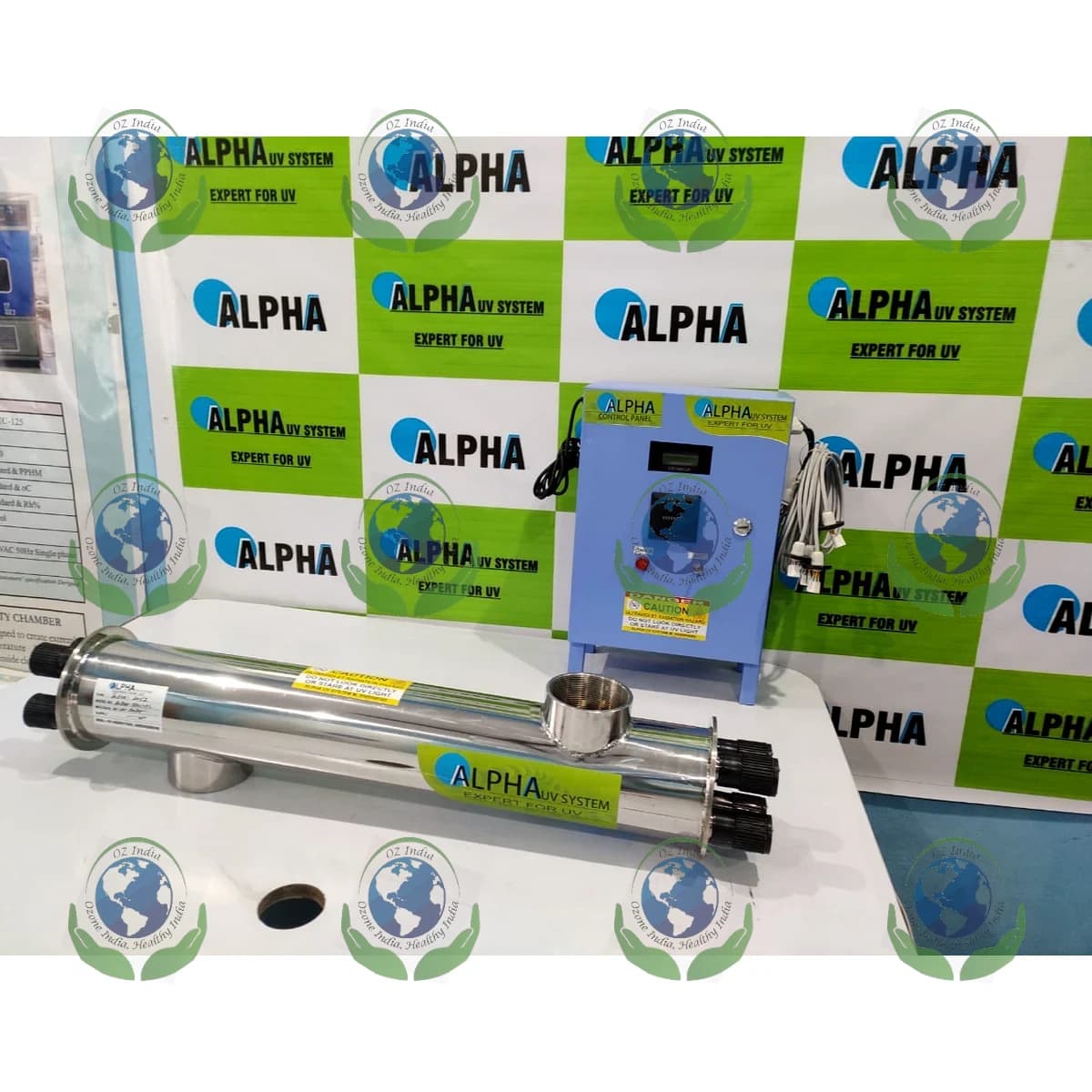
UV-C chloramine destruction for swimming pools. Philips medium-pressure UV-C lamps. Reduces chlorine consumption by 50–80%. Eliminates eye irritation. Kills Crypto — which chlorine alone cannot. For hotels, resorts, clubs, and water parks.
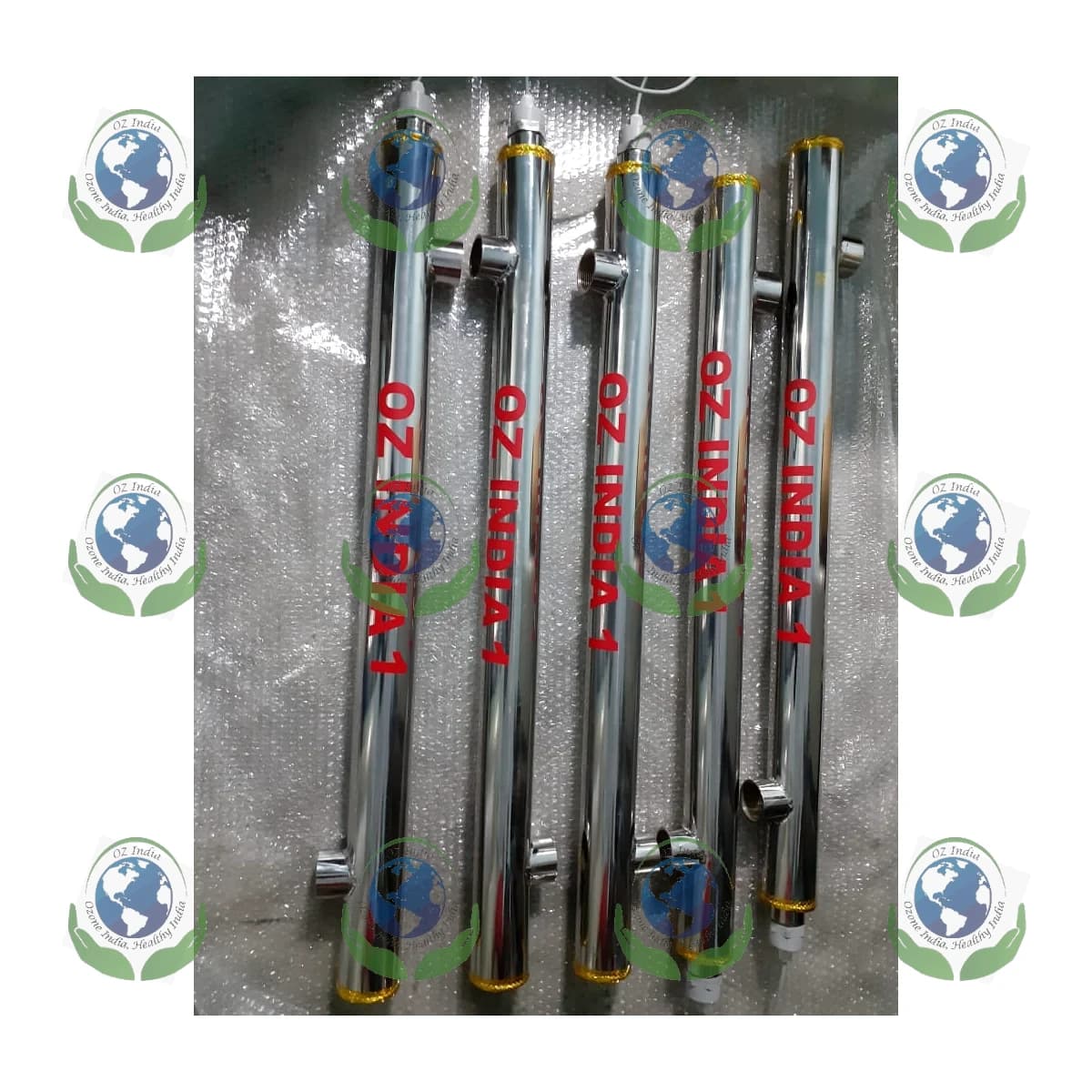
UV water disinfection for hotels, restaurants, offices, and educational institutions. HACCP and FSSAI compliant documentation. Trusted by Taj Hotels, McDonald's India, and IIT Kanpur.
IIT Patna Engineering
Alpha UV System IIT Patna engineers calculate UV dose from your actual water quality parameters — measured UVT, flow rate, target log reduction, and the specific compliance standard that governs your facility. Not from catalogue sizing tables or generic assumptions. Every system ships with a signed UV dose calculation report, a Philips certificate of authenticity, and compliance documentation prepared for the regulatory framework applicable to swimming pool uv operations.
From measured UVT, flow rate, and target log-reduction. Signed by IIT Patna engineer.
WHO Pool Guidelines · FINA · BIS · CDC Guidelines — documentation prepared to the audit checklist, not generic templates.
WhatsApp your flow rate, water quality, and compliance requirement — engineering-backed quote in 2 hours.
Mon–Sat · 9 AM–6 PM IST · IIT Patna alumni on call
Send us your flow rate and compliance requirement — quote with engineering rationale in 2 hours.
+91 93183 05878
Get Quote →
Call Direct
+91 95995 00580
Tap to Call →
Send Enquiry
Detailed specifications form
Open Form →
