Manufactured in Greater NoidaGenuine Philips UV-C LampsIIT Patna Alumni on Our TeamExporting to 20+ Countries
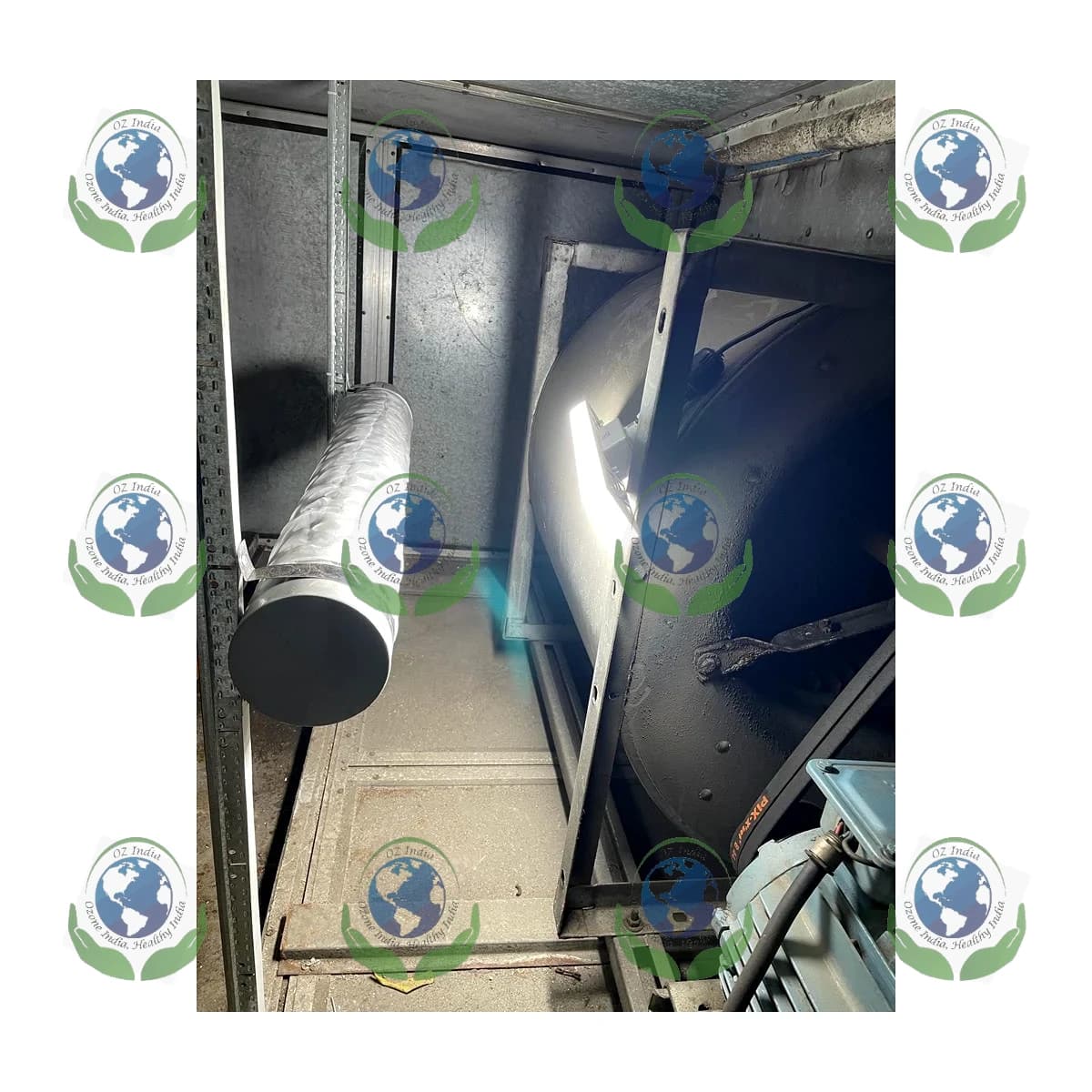
HVAC systems and air handling units are the primary pathway for airborne pathogen transmission in hospitals, hotels, commercial buildings, and pharmaceutical facilities. Alpha UV Systems delivers Ultraviolet Germicidal Irradiation (UVGI) systems for AHU and HVAC applications that inactivate airborne bacteria, viruses, and mould spores, eliminate cooling coil biofilm and mould growth, and improve indoor air quality while reducing energy consumption through clean coil efficiency.
UV Dose
25–100 mJ/cm² (airstream) or coil irradiation
Capacity
All AHU sizes — 1,000 to 1,00,000 CFM
Modern buildings concentrate people in enclosed spaces where the air is continuously recirculated by centralised HVAC systems. An air handling unit (AHU) processing 10,000 cubic feet per minute (CFM) of air circulates the entire air volume of a 50,000 square foot floor every few minutes. Every person who enters the building, every outdoor air intake, and every poorly-maintained filter contributes pathogens to this circulated air — and the HVAC system distributes these pathogens to every space it serves.
The public health implications became globally visible during the COVID-19 pandemic, when aerosol transmission through HVAC systems was documented in multiple superspreader events in hotels, restaurants, and office buildings. Mycobacterium tuberculosis, influenza, SARS-CoV-2, measles virus, Aspergillus spores, and Legionella pneumophila are all documented airborne pathogens that HVAC systems can transmit across entire buildings.
In India's climate, with its combination of high humidity, warm temperatures, and monsoon season, HVAC systems face particularly severe biological contamination challenges. Cooling coils operating at 10–14°C with 70–80% relative humidity on their surfaces are ideal environments for mould growth. Aspergillus fumigatus and Cladosporium species colonise wet coil surfaces and drain pans within weeks of cleaning, forming biofilms that continuously release spores into the airstream. For immunocompromised patients in hospitals or cleanroom workers in pharmaceutical facilities, inhaling these spores can cause serious invasive fungal infections.
Ultraviolet Germicidal Irradiation (UVGI) provides a continuous, chemical-free solution to airborne pathogen transmission through HVAC systems. UV-C lamps installed inside AHUs irradiate the airstream and/or cooling coil surfaces with germicidal UV-C light, inactivating bacteria, viruses, and mould spores without any chemical addition, without increasing air pressure drop, and without the maintenance burden and health hazards of chemical coil cleaning.
The single-pass inactivation data above, from Kowalski's Ultraviolet Germicidal Irradiation Handbook (Springer, 2009) and CDC UVGI Guidelines for Healthcare Facilities (2003), demonstrates that UVGI at 25–60 mJ/cm² achieves 99.9–99.99% inactivation of bacteria and viruses in a single air pass. Mould spores, being more UV-resistant, require higher doses (60 mJ/cm²) for 95% inactivation — achievable with Alpha UV Systems' high-output UVGI configurations.
HVAC cooling coils operate in conditions that are essentially perfect for microbial growth: cool, constantly wet surfaces with continuous nutrient supply from organic particulates in airstream. Within weeks of cleaning, biofilm begins to establish on coil fins. This biofilm consists of bacteria, mould hyphae, and extracellular polysaccharide matrix that is extremely difficult to remove chemically and essentially impossible to eliminate with traditional periodic cleaning alone.
Biofilm on cooling coils creates two serious problems. The first is an air quality hazard: bacteria and mould spores continuously shed from biofilm into the airstream are delivered directly to building occupants. In hospital AHUs, this is a primary source of healthcare-associated infections (HAI) from Aspergillus, Pseudomonas, and Acinetobacter. In food processing facilities, airborne mould spores from AHU coils contaminate exposed food surfaces and accelerate spoilage.
The second problem is an energy efficiency problem. Biofilm creates a thermal resistance layer on coil surfaces that impedes heat transfer between the refrigerant inside the coil and the airstream passing over it. As biofilm accumulates, the coil must run colder and the compressor must work harder to achieve the same cooling effect. ASHRAE Transactions research (Scheir and Fencl, 2002) quantified this effect: biofilm accumulation over 12–24 months in a typical commercial AHU increases energy consumption by 15–24%.
UVGI coil irradiation — positioning UV lamps to continuously irradiate the cold coil face and drain pan — eliminates this biofilm growth continuously. The UV light destroys biofilm cells on the coil surface faster than they can grow, maintaining the coil in a near-clean condition without any chemical cleaning. The energy savings from maintaining coil efficiency typically offset the operating cost of the UVGI system within the first year of operation.
The longitudinal mould colony data above, from Kowalski (2009) Chapter 9 and ASHRAE Standard 62.1 commentary, shows the characteristic pattern: without UVGI, mould colony counts on cooling coil surfaces reach 5.8 log CFU/cm² (a fully mature biofilm) within 12 months. With UVGI coil irradiation, counts fall continuously from the moment of installation and reach non-detectable levels within 6–12 months as the established biofilm is eliminated.
The energy efficiency benefit of UVGI coil irradiation is a compelling financial argument for building owners and facilities managers who may be primarily motivated by economics rather than infection control. Alpha UV Systems routinely prepares energy savings projections for commercial and institutional HVAC clients based on measured coil condition at the time of UVGI installation.
The mechanism is straightforward: HVAC compressor energy consumption is directly proportional to the pressure differential the compressor must maintain. Fouled coils with insulating biofilm require the compressor to operate at higher differential pressure to achieve design cooling capacity, directly increasing electricity consumption. In a large commercial building with 100,000–500,000 square feet of conditioned space, a 15–24% HVAC energy efficiency reduction translates to INR 20–80 lakhs per year in additional electricity costs.
UVGI coil irradiation maintains coil efficiency at near-clean levels, preventing this energy drift. The cost of UVGI lamp electricity consumption is approximately 0.5–2% of the energy savings achieved through coil efficiency maintenance — a return on investment that building managers consistently recognise as one of the most favourable of any building systems investment.
For Indian commercial buildings operating under Bureau of Energy Efficiency (BEE) Star Rating programmes, improved HVAC energy efficiency contributes to higher BEE ratings, which increasingly influence commercial property valuations and tenant attraction.
The energy consumption data above, from ASHRAE Transactions (2002) and Kowalski UVGI Handbook (2009), quantifies the progressive energy penalty of coil fouling and the effectiveness of UVGI in preventing it. At 24 months without UVGI, energy consumption is 24% above baseline. With UVGI installed from day one, energy consumption remains effectively at baseline — a direct saving that compounds every year the system operates.
The technical design of an AHU UVGI system requires careful attention to air velocity — the primary variable that determines how long each cubic foot of air is exposed to UV-C radiation as it passes the UV lamp array. Higher air velocities mean shorter exposure time and lower delivered UV dose for a given lamp configuration.
ASHRAE and CDC guidelines for in-duct UVGI design require that the system be sized to deliver the target UV dose at the maximum design air velocity in the AHU. At typical commercial AHU air velocities of 1.5–2.5 m/s, a single UV lamp bank can deliver 25–60 mJ/cm² depending on lamp spacing, lamp output, and AHU cross-section dimensions. For higher velocities or higher dose requirements (healthcare applications), dual-bank or higher-output configurations are used.
Alpha UV Systems' UVGI design process begins with AHU engineering drawings and on-site velocity measurements. We calculate the UV dose delivered across the AHU cross-section using validated photometric modelling, accounting for airflow velocity profile, reflection from AHU interior surfaces, and lamp output at operating temperature. The result is a UVGI specification that guarantees the required UV dose at every point in the AHU cross-section at maximum design air velocity.
The air velocity performance data above, based on CDC UVGI Healthcare Guidelines Appendix B design data, demonstrates the importance of dual-bank UVGI configurations at air velocities above 2.0 m/s. Single-bank configurations at 3.0 m/s deliver only 92% of M. tuberculosis inactivation — below the 99.9% (3-log) target for healthcare applications. Dual-bank configurations maintain 99.5% inactivation even at 3.0 m/s. Alpha UV Systems specifies the minimum number of UV banks required for the target inactivation efficiency at each installation's measured air velocity.
UVGI and HEPA filtration are frequently presented as alternatives. They are more accurately complementary technologies with different strengths and limitations, and the most effective infection control HVAC systems use both where the application demands it.
HEPA filtration (H14 class, ≥99.97% efficiency at 0.3 µm) physically removes particles from the airstream by interception on filter media. It is highly effective against all particle sizes above 0.1 µm, including all bacteria, mould spores, and most virus-containing aerosols. The limitations of HEPA filters in AHU applications are: very high pressure drop (100–300 Pa for H14 filters) requiring significantly more powerful fan motors and increased energy consumption; progressive performance degradation as the filter loads; requirement for frequent filter replacement in high-loading environments (significant recurring cost and waste); and inability to address microbial growth on coil surfaces (which continues regardless of how well the airstream is filtered).
UVGI does not remove particles from the airstream — it inactivates the microorganisms within those particles. Its advantages over HEPA are: minimal pressure drop (typically 2–5 Pa for lamp arrays vs 100–300 Pa for HEPA); continuous performance without clogging or degradation over the lamp life; dual function of airstream disinfection and coil/drain pan biofilm control; and particularly high efficacy against viruses and mycobacteria, which are among the most pressure-drop-sensitive particles for HEPA filters. UVGI is less effective than HEPA against mould spores (which are more UV-resistant) and provides no protection against non-biological particles (allergens, PM2.5).
The performance comparison above, from CDC UVGI Healthcare Guidelines (2003) and WHO IAQ Guidelines (2009), highlights the complementary nature of the two technologies. For virus and mycobacterial control in healthcare facilities, UVGI is preferred due to its high inactivation efficiency without the energy penalty of HEPA. For mould spore control in pharmaceutical cleanrooms, HEPA is preferred. For comprehensive IAQ improvement in hospitals and intensive care settings, the combination of UVGI with standard efficiency filtration (F7/F9) delivers HEPA-equivalent overall performance without HEPA's energy and maintenance costs.
The five-year TCO comparison above demonstrates the economic advantage of UVGI over periodic chemical coil cleaning for a 10,000 CFM AHU. Chemical coil cleaning requires quarterly or biannual cleaning cycles using alkaline or acid-based chemical cleaners, high-pressure washing, and AHU shutdown time — with associated labour, chemical, water, and disposal costs accumulating to INR 5 lakhs per year including the progressive energy penalty from incomplete fouling removal. By Year 3, the cumulative chemical cleaning cost exceeds INR 16.5 lakhs versus INR 10.5 lakhs for UVGI (including capital investment amortisation).
By Year 5, the cumulative cost difference is INR 14 lakhs in favour of UVGI. Additionally, UVGI provides the microbiological safety benefit — constant Cryptosporidium, TB, and influenza control — that chemical coil cleaning does not provide at all.
For hospital HVAC systems, UVGI is increasingly relevant to NABH (National Accreditation Board for Hospitals) accreditation standards. NABH standards for infection prevention and control reference air quality requirements for operating theatres, ICUs, and isolation wards that are consistent with UVGI installation as a component of the HVAC treatment train. Hospitals seeking NABH accreditation or re-accreditation are increasingly installing UVGI in their AHUs for critical areas as part of their infection control programme.
The CDC UVGI Guidelines for Environmental Infection Control in Healthcare Facilities (2003) — the international benchmark for healthcare UVGI — explicitly recommend UVGI for airstream disinfection in tuberculosis isolation wards and immunocompromised patient areas, and for upper-room UV in areas where patients may have infectious TB.
Alpha UV Systems supplies and installs UVGI systems in hospital AHUs across India. Our installations include full commissioning documentation specifying delivered UV dose per AHU, lamp specifications, safety interlock testing records, and maintenance schedule — documentation suitable for NABH infection control programme files.
Our IIT Patna-trained engineers design UVGI systems for every AHU type and application: hospital operating theatre AHUs, pharmaceutical manufacturing clean area AHUs, hotel central AHUs, food processing facility AHUs, and commercial office building AHUs. Each installation is designed using photometric modelling based on actual AHU dimensions and measured air velocities — not generic sizing rules.
WhatsApp: 9318305878 — 24–48 hour response guaranteed.
Eliminate airborne pathogens. Control coil biofilm. Improve indoor air quality and HVAC energy efficiency — with UVGI engineered for India's AHU and HVAC sector.
Recommended Products
IIT Patna engineers recommend these systems for uvgi ahu/hvac applications based on flow rate, required UV dose, and compliance standard. Both systems use genuine Philips UV-C lamps and ship with complete compliance documentation.
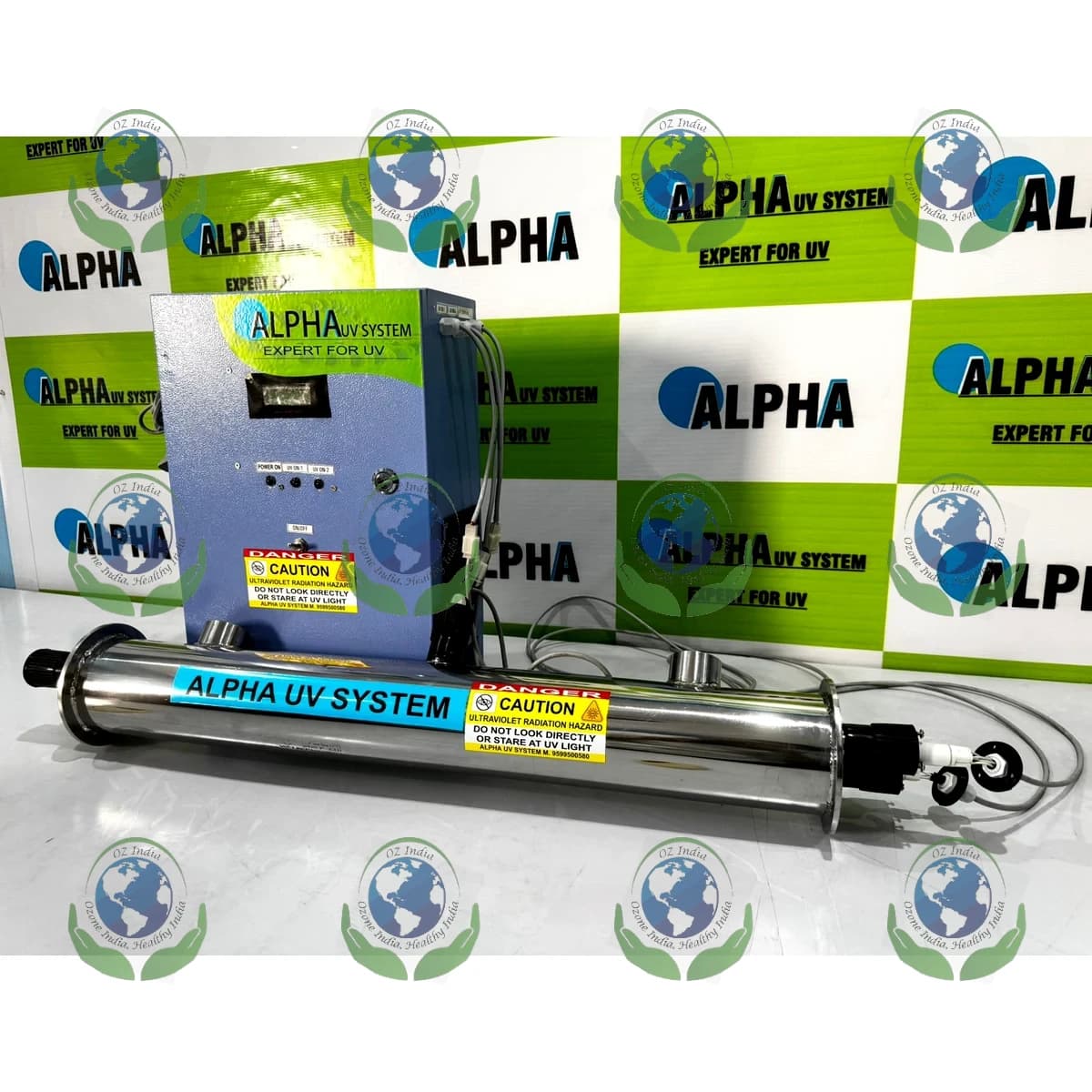
In-duct UVGI systems for air handling units. Kills airborne viruses (including COVID-19), bacteria, and fungal spores. Coil irradiation prevents biofilm and improves AHU energy efficiency. Hospitals, pharma cleanrooms, hotels, offices.
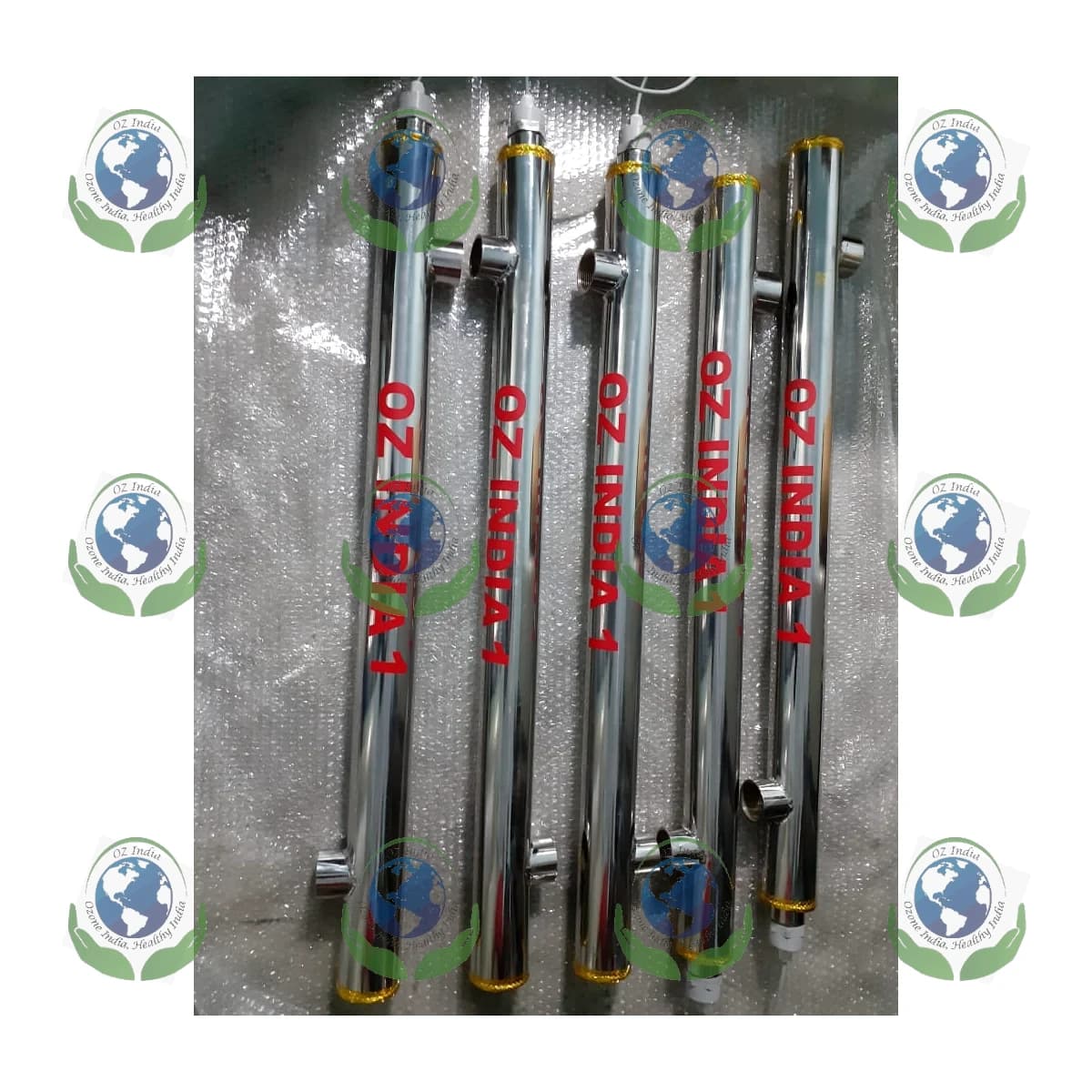
UV water disinfection for hotels, restaurants, offices, and educational institutions. HACCP and FSSAI compliant documentation. Trusted by Taj Hotels, McDonald's India, and IIT Kanpur.
IIT Patna Engineering
Alpha UV System IIT Patna engineers calculate UV dose from your actual water quality parameters — measured UVT, flow rate, target log reduction, and the specific compliance standard that governs your facility. Not from catalogue sizing tables or generic assumptions. Every system ships with a signed UV dose calculation report, a Philips certificate of authenticity, and compliance documentation prepared for the regulatory framework applicable to uvgi ahu/hvac operations.
From measured UVT, flow rate, and target log-reduction. Signed by IIT Patna engineer.
ASHRAE Standard 62.1 (Ventilation for Acceptable Indoor Air Quality) · ASHRAE Standard 62.2 · CDC UVGI Guidelines for Environmental Infection Control in Healthcare · NABH Accreditation Standards (Air Quality) — documentation prepared to the audit checklist, not generic templates.
WhatsApp your flow rate, water quality, and compliance requirement — engineering-backed quote in 2 hours.
Mon–Sat · 9 AM–6 PM IST · IIT Patna alumni on call
Send us your flow rate and compliance requirement — quote with engineering rationale in 2 hours.
+91 93183 05878
Get Quote →
Call Direct
+91 95995 00580
Tap to Call →
Send Enquiry
Detailed specifications form
Open Form →
