Manufactured in Greater NoidaGenuine Philips UV-C LampsIIT Patna Alumni on Our TeamExporting to 20+ Countries
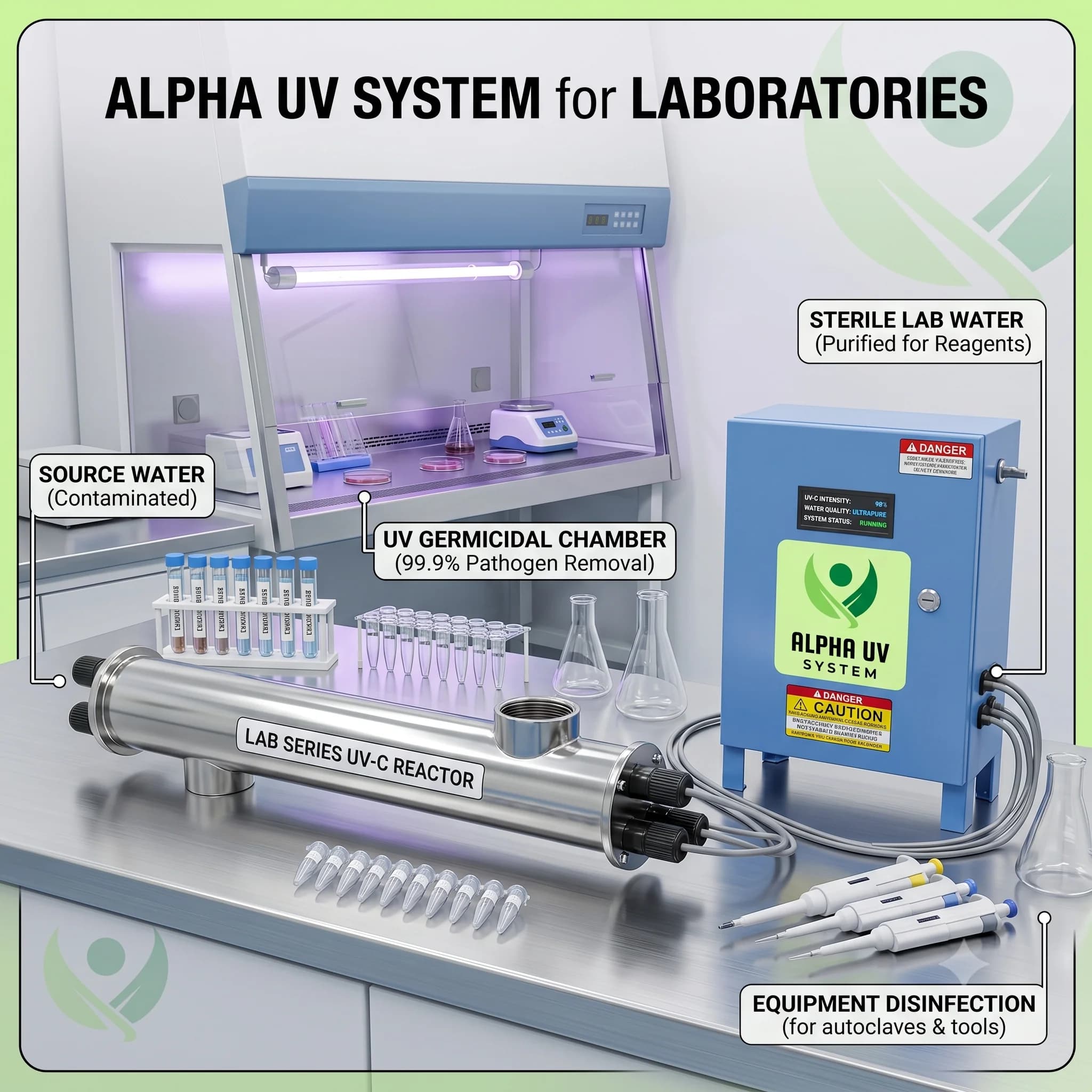
Laboratory water quality determines the reliability of every analytical result produced in a research or QC environment. Type I water (ASTM D1193) for HPLC, ICP-MS, molecular biology, and cell culture demands resistivity ≥18.2 MΩ·cm, TOC below 10 ppb, and zero detectable bacteria — standards that cannot be maintained without UV disinfection operating continuously on the purification loop. Type II water for general laboratory use, autoclave feeds, and reagent preparation requires zero coliform and a total bacteria count below 1 CFU/mL. In both cases, UV is the final treatment step that prevents microbial re-colonisation after reverse osmosis, deionisation, and ultrafiltration. Without UV, deionisation resin beds become reservoirs for organisms such as Ralstonia pickettii and Pseudomonas that contaminate purified water output within weeks of commissioning. Alpha UV System laboratory UV units cover 100 to 5,000 LPH in single-pass or recirculation configuration, using 185+254 nm dual-wavelength lamps for Type I TOC reduction and 254 nm lamps for Type II/III microbiological disinfection.
UV Dose
40–200 mJ/cm²
Capacity
100 – 5,000 LPH
Deionised water produced by ion exchange or electrodeionisation (EDI) achieves resistivity above 18 MΩ·cm but is not sterile. The ion-exchange resin provides an enormous internal surface area for bacterial biofilm formation, and organisms that have adapted to low-nutrient purified water environments — Pseudomonas fluorescens, Ralstonia pickettii, Sphingomonas paucimobilis — thrive in deionised water loops. These organisms are nutritionally oligotrophic: they grow on trace levels of organic carbon leaching from the resin itself, from polymer pipe fittings, from PTFE tubing, and from atmospheric CO₂ dissolving into the recirculating water. Once a biofilm is established on DI resin or storage tank surfaces, it is extremely difficult to eliminate without draining, cleaning, and sanitising the entire loop — a process that takes the water system offline for 24–48 hours.
UV disinfection at the DI outlet continuously reduces planktonic bacteria to undetectable levels, preventing biofilm re-establishment with each pass of the recirculating water. For laboratories performing cell culture, PCR amplification, or mass spectrometry-coupled protein analysis, even low levels of gram-negative bacterial contamination in reagent water introduces bacterial-derived lipopolysaccharide (LPS, endotoxin) that invalidates cell culture experiments, inhibits PCR reactions, and contaminates mass spectrometry columns. UV at 185 nm simultaneously photo-oxidises TOC from organic leachables in the system, reducing total organic carbon to below 5 ppb — a level where endotoxin risk from photo-oxidised organic fragments is negligible.
The relationship between laboratory water grade and UV dose requirement is defined by three international standards: ASTM D1193 (the primary US and globally adopted standard), ISO 3696:1987 (the international standard adopted by European and many Asian laboratories), and USP Chapter 1231 (the pharmaceutical standard for Purified Water). Each standard defines progressively stricter limits at its highest grade, and UV is the consensus treatment method recommended by all three for achieving and maintaining those limits in a recirculation loop.
Standard germicidal UV lamps emit energy almost entirely at 254 nm. At this wavelength, UV energy is absorbed by the DNA of microorganisms (maximum DNA absorption is at 260 nm), causing thymine dimer formation and fatal replication errors in bacterial and viral nucleic acids. Type II and Type III laboratory water disinfection requires only 254 nm UV.
For Type I water systems where TOC below 10 ppb is the critical specification, lamps that additionally emit at 185 nm are required. The 185 nm wavelength is absorbed by water molecules themselves rather than by DNA, generating highly reactive hydroxyl radicals (OH•) with a reduction potential of 2.80 V — sufficient to oxidise virtually all organic molecules through a chain reaction mechanism. The hydroxyl radical mechanism converts dissolved organic carbon into carbon dioxide and water, reducing TOC from tens of ppb to below 3–5 ppb in a well-designed recirculation loop.
The dual 185+254 nm mechanism provides both germicidal disinfection (via the 254 nm component) and TOC reduction (via the 185 nm component) in a single lamp pass. Alpha UV System Type I laboratory UV units are designed for continuous recirculation loop duty — they operate safely without water flow (unlike some UV designs that rely on flowing water for lamp cooling), allowing the system to continue protecting the recirculation loop even when the laboratory is not actively drawing water. Lamp life for 185+254 nm dual-wavelength lamps used in Type I applications is 8,000–9,000 hours, corresponding to approximately 12 months of continuous operation.
A common misconception in laboratory water management is that a newly commissioned DI or RO system with acceptable resistivity and TOC readings will maintain those values indefinitely. In practice, without UV, both TOC and bacterial count in a laboratory water recirculation loop increase steadily over time as microbial colonisation progresses. Bacteria in the loop metabolise trace organics from resin extractables and atmospheric CO₂, generating bacterial exopolysaccharides and cell components that contribute to TOC. Dead bacterial cells lyse and release cytoplasmic contents, adding further organic carbon to the water.
The critical failure mode is that laboratory water passes resistivity testing — because ionic species remain controlled by the DI stage — while having elevated TOC and significant bacterial counts that invalidate applications sensitive to organic or biological contamination. Laboratories that test only resistivity and not TOC or HPC can operate with systematically compromised analytical water for months before a method failure or culture result discrepancy triggers investigation.
Installing UV on the recirculation return line with continuous lamp output monitoring provides an always-on antimicrobial barrier that prevents this failure mode. The UV intensity monitor in each Alpha UV System laboratory unit provides a 4–20 mA output that can be connected to the laboratory's building management system (BMS) or data logger, creating an auditable continuous record of UV system operation for CLSI and CAP laboratory accreditation purposes.
Calibration laboratories preparing primary standard solutions for ICP-MS, IC, or HPLC require water with sub-ppb trace element concentrations. Type I water for these applications must be not only microbiologically clean but also free of trace metal contamination at nanogram-per-litre concentrations. UV treatment introduces no elements into the water and has no effect on trace metal concentrations — unlike RO membranes that can contribute trace plasticiser compounds or DI resins that contribute organic extractables.
The UV unit materials of construction are critical for trace-element clean water: any plastics, elastomers, or metals in contact with the water must be characterised for extractable trace elements. Alpha UV System laboratory UV units use SS316L chambers, fused quartz sleeves (not borosilicate glass), and PTFE o-rings — the materials specified by ISO 3696 for water contact in analytical applications. Material extraction test data (trace metals in contact water at Type I conditions) is available on request for customers requiring it as part of their laboratory validation documentation.
For NIST-traceable calibration laboratories subject to ISO/IEC 17025 accreditation, the water system is part of the measurement infrastructure and must be validated and documented as such. Alpha UV System provides laboratory UV units with a full validation package: equipment specification sheet, factory test report, recommended installation qualification (IQ) checklist, operational qualification (OQ) protocol with acceptance criteria, and a performance qualification (PQ) monitoring programme template. This documentation package is aligned with the CLSI GP40 validation framework and is accepted by accreditation bodies including NABL (National Accreditation Board for Testing and Calibration Laboratories) in India.
Pharmaceutical quality control laboratories in India operate under Schedule M of the Drugs and Cosmetics Act, which specifies that QC laboratory water must meet BIS IS:2780 (equivalent to USP Purified Water specifications). The United States Pharmacopoeia Chapter 1231 specifies a TAMC (Total Aerobic Microbial Count) action limit of 100 CFU/mL for Purified Water used in QC applications, and an alert limit of 10 CFU/mL. UV disinfection on the QC laboratory water loop ensures stored purified water consistently remains below both limits between monthly plate count verification tests.
For contract testing laboratories (CTLs) serving pharmaceutical companies and subject to US FDA, EU GMP, or WHO-GMP audit, the water system is a focus area during regulatory inspections. Inspectors expect to see a validated water system with documented change control, continuous monitoring, and corrective action procedures for out-of-specification results. Alpha UV System QC laboratory UV units ship with the same IQ/OQ/PQ documentation package supplied for pharmaceutical manufacturing WFI systems — ensuring that the CTL can demonstrate water system validation to the standard expected by international regulatory inspectors.
CDSCO (Central Drugs Standard Control Organisation) drug testing laboratories and NABL-accredited testing facilities in India are increasingly adopting laboratory water standards aligned with international pharmacopoeias. UV disinfection is explicitly required by Schedule M's water system specifications for pharmaceutical QC applications. Alpha UV System works with laboratory architects and validation consultants designing new QC laboratory water systems across India to specify, size, and validate the UV component of the purification train.
Laboratory UV systems are compact. A typical 100–500 LPH unit for a small to medium research laboratory occupies a footprint of approximately 300 × 150 mm and can be mounted directly in the water purification cabinet, on the wall behind the purification system, or under the bench adjacent to the point-of-use tap. Larger systems for central laboratory water supply (1,000–5,000 LPH) are floor-mounted units with the same chamber construction scaled for higher flow rates.
Installation connects the UV unit in-line between the final filtration stage (0.2 µm or UF membrane) and the distribution header or point-of-use outlet. The 220V single-phase electrical connection powers both the UV lamp ballast and the UV intensity monitor. For Type I recirculation loops, the UV unit is installed on the return line between the point-of-use and the storage tank, with the 185+254 nm lamp operating continuously to maintain TOC below the ASTM Type I limit regardless of whether water is being drawn.
Alpha UV System laboratory UV units for Type I recirculation duty are rated for continuous operation without flow — the chamber does not overheat with static water because the lamp ballast is thermally regulated and the chamber geometry allows passive convective cooling. For Type II and Type III single-pass systems, flow must be maintained through the UV chamber during operation; the system automatically shuts off when no flow is sensed, preventing lamp overheating.
The correct UV system capacity is determined by the peak water draw rate of the laboratory, not the daily consumption. A research laboratory drawing 10 litres of Type I water per day but using an entire day's supply in a 30-minute instrument preparation burst requires a UV system rated for the peak flow rate of that burst — typically 2–5× the average hourly demand. For central laboratory water systems serving multiple benches simultaneously, the coincidence factor of simultaneous peak demands must be estimated to avoid undersizing.
Alpha UV System's standard laboratory UV range covers the following typical configurations: 100–200 LPH for small single-bench R&D labs; 500 LPH for typical analytical or QC laboratories with 3–5 analytical instruments; 1,000–2,000 LPH for large multi-bench laboratories or central water supply serving one floor of a research building; 5,000 LPH for hospital central laboratories or multi-floor laboratory blocks. Custom capacities within the 100–5,000 LPH range are available. IIT Patna-trained engineers from Alpha UV System's technical team review each enquiry and provide a sizing recommendation within 24–48 hours of receiving the laboratory's water usage data.
Contact Alpha UV System via WhatsApp 9318305878 or through the website enquiry form for a laboratory water UV system proposal. Our team will request key data — laboratory type, water grade required, peak flow rate, source water quality, and any specific compliance documentation requirements — to generate a technically complete proposal aligned with ASTM D1193, ISO 3696, CLSI GP40, and applicable Indian standards.
Recommended Products
IIT Patna engineers recommend these systems for laboratory uv applications based on flow rate, required UV dose, and compliance standard. Both systems use genuine Philips UV-C lamps and ship with complete compliance documentation.
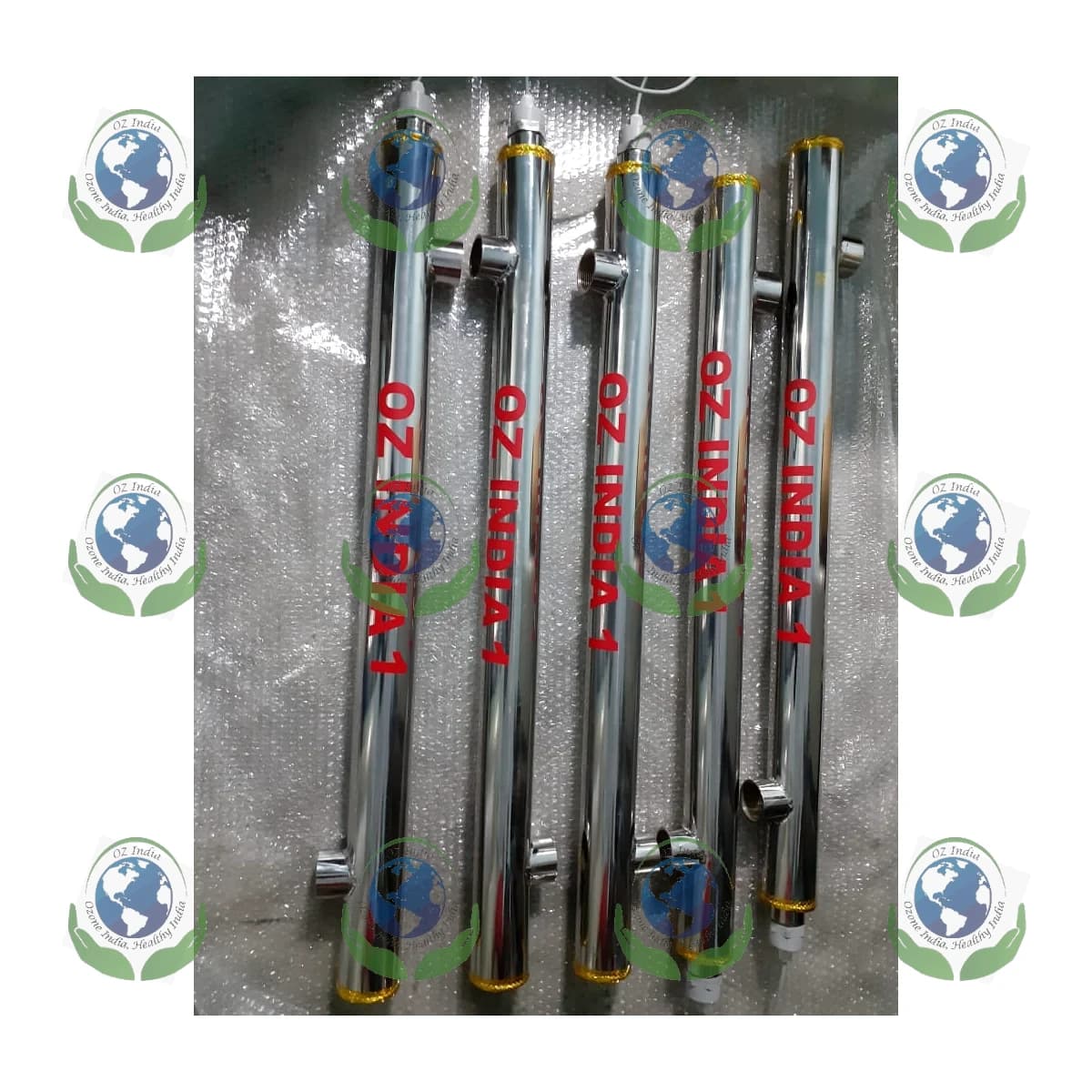
UV water disinfection for hotels, restaurants, offices, and educational institutions. HACCP and FSSAI compliant documentation. Trusted by Taj Hotels, McDonald's India, and IIT Kanpur.
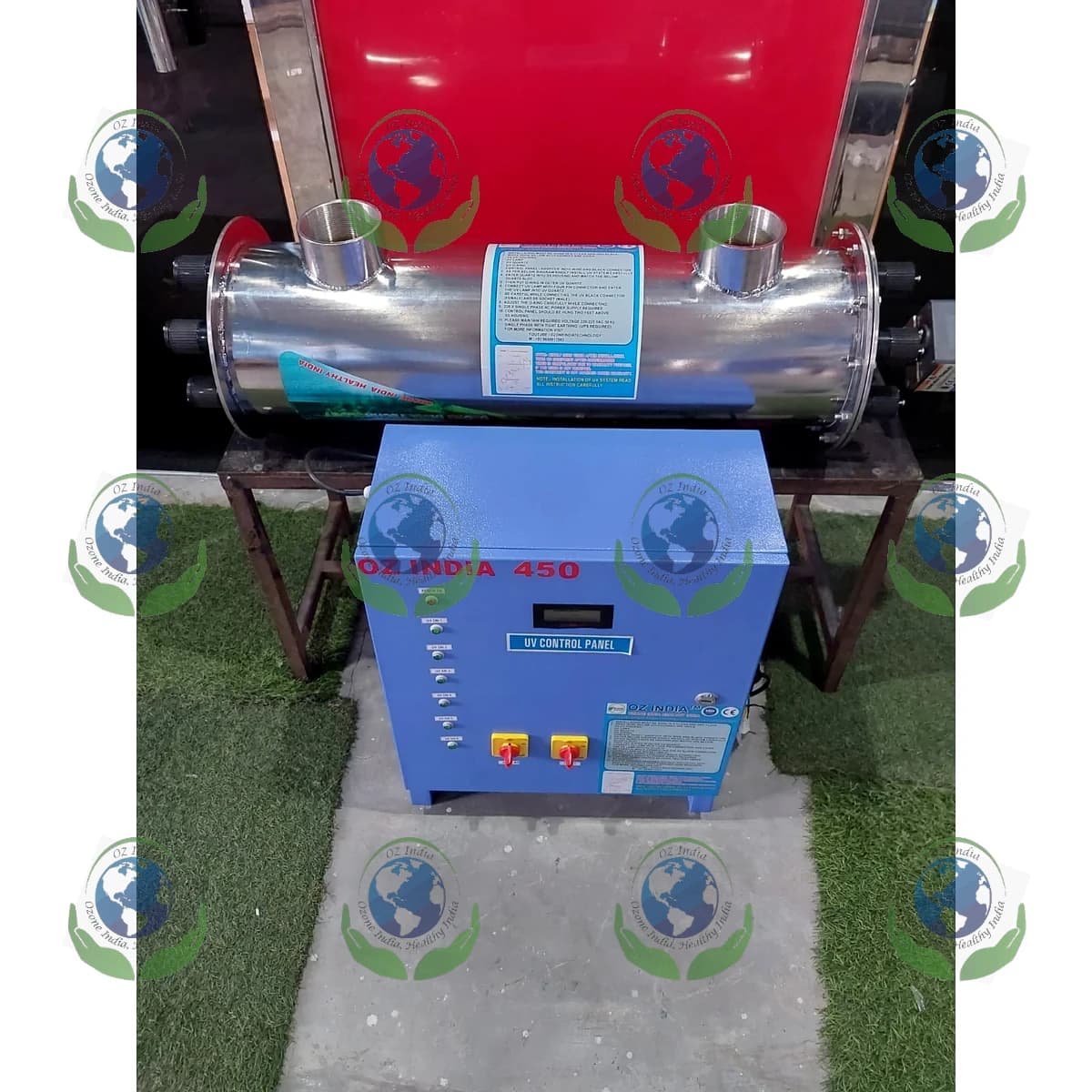
High-flow UV water treatment for pharmaceutical WFI, food & beverage process water, and industrial applications. Revised Schedule M 2025, HACCP, and FSSAI compliant. IQ/OQ/PQ documentation.
IIT Patna Engineering
Alpha UV System IIT Patna engineers calculate UV dose from your actual water quality parameters — measured UVT, flow rate, target log reduction, and the specific compliance standard that governs your facility. Not from catalogue sizing tables or generic assumptions. Every system ships with a signed UV dose calculation report, a Philips certificate of authenticity, and compliance documentation prepared for the regulatory framework applicable to laboratory uv operations.
From measured UVT, flow rate, and target log-reduction. Signed by IIT Patna engineer.
ASTM D1193 · CLSI GP40 · ISO 3696 · USP Purified Water — documentation prepared to the audit checklist, not generic templates.
WhatsApp your flow rate, water quality, and compliance requirement — engineering-backed quote in 2 hours.
Mon–Sat · 9 AM–6 PM IST · IIT Patna alumni on call
Send us your flow rate and compliance requirement — quote with engineering rationale in 2 hours.
+91 93183 05878
Get Quote →
Call Direct
+91 95995 00580
Tap to Call →
Send Enquiry
Detailed specifications form
Open Form →
