Manufactured in Greater NoidaGenuine Philips UV-C LampsIIT Patna Alumni on Our TeamExporting to 20+ Countries
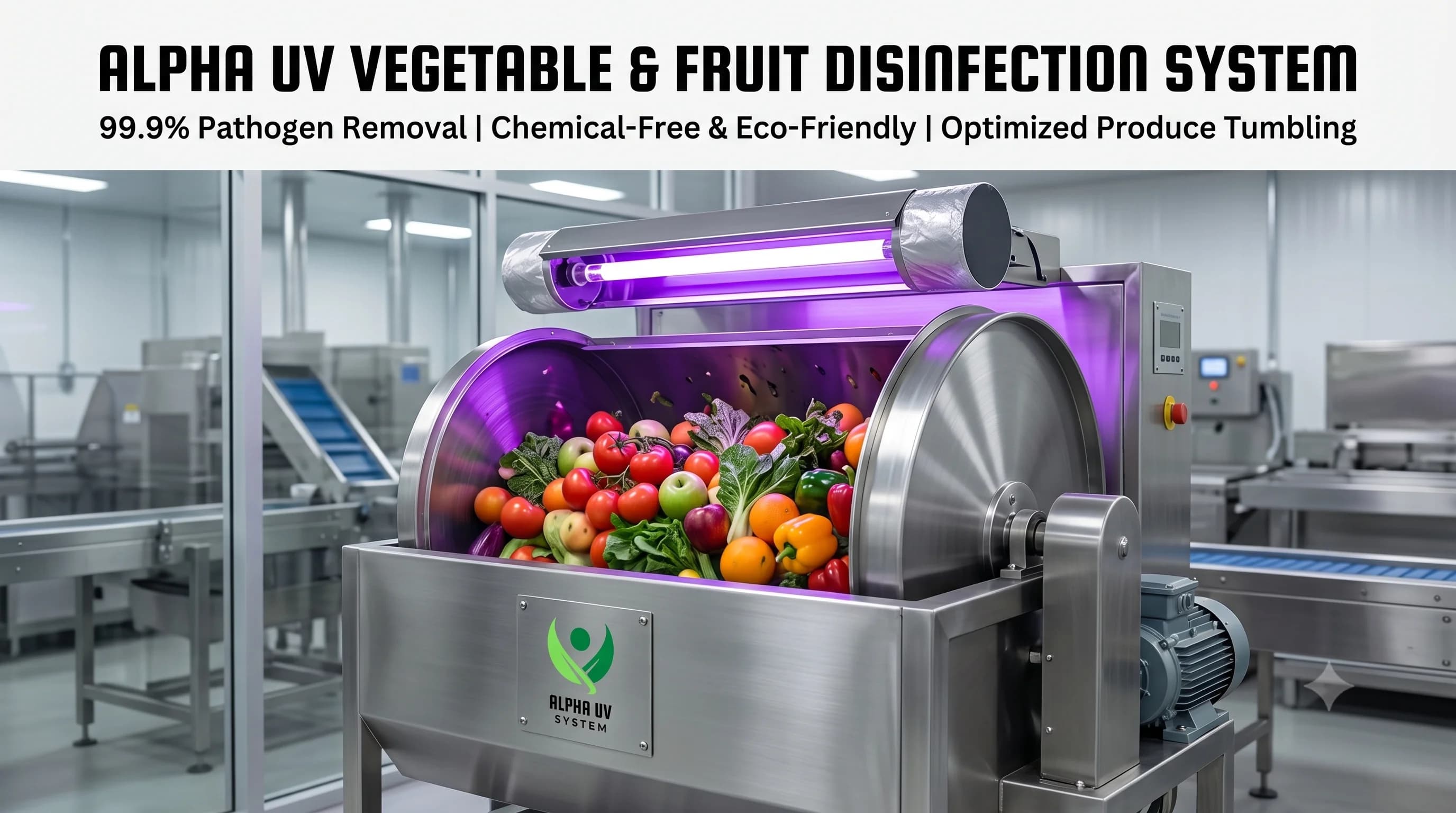
Fruit and vegetable processing — from post-harvest packhouse washing through fresh-cut salad manufacture — involves water contact at multiple points where waterborne and cross-contamination pathogen transmission can transform a single contaminated source into a widespread food safety incident. India is one of the world's largest producers of fruits and vegetables, with a rapidly growing export-oriented fresh produce sector supplying EU, Middle East, and Southeast Asian markets. FSSAI Schedule IV, GlobalGAP (Good Agricultural Practice) certification, and BRC Global Standard for Fresh Produce all mandate microbiologically safe water at every product contact point. UV disinfection of wash water, flume water, and rinse water is the food safety industry's preferred approach because it achieves complete pathogen inactivation without chlorine residuals that cause produce browning, off-flavours, or chemical residue concerns in certified organic produce operations. Alpha UV System supplies food-grade UV systems from 2,000 to 50,000 LPH for Indian packhouses, fresh-cut processors, and export-oriented produce operations.
UV Dose
40–60 mJ/cm²
Capacity
2,000–50,000 LPH
Fresh produce is consumed raw — without any cooking step to kill pathogens — making microbiological safety of wash water critical for public health. The major foodborne pathogens associated with fresh produce globally include E. coli O157:H7 (associated with leafy greens, sprouts, and contaminated irrigation water), Salmonella (associated with tomatoes, peppers, mangoes, and herbs), Listeria monocytogenes (associated with ready-to-eat salads, herbs, and sprouts), hepatitis A virus (associated with berries, green onions, and minimally processed vegetables), and Cyclospora cayetanensis (associated with herbs, raspberries, and imported tropical produce).
In India, the irrigated produce supply chain is particularly susceptible to faecal contamination through irrigation with untreated or inadequately treated wastewater — a practice common in peri-urban farming areas around major cities. Produce arriving at packhouses from these areas can carry E. coli and Salmonella at counts of 10²–10⁶ CFU/g on surface contamination. Wash water that contacts contaminated produce accumulates pathogen loads that are then cross-contaminated onto previously uncontaminated produce items — a phenomenon called cross-contamination transfer in wash water. UV disinfection of wash water continuously keeps the pathogen load in the wash water below effective infection thresholds, breaking the cross-contamination cycle that makes batch washing dangerous.
Chlorine wash is the traditional produce disinfection method, typically applied as sodium hypochlorite at 50–200 mg/L (ppm) free chlorine, or as chlorinated water at 100–200 mg/L for continuous flume washing. Chlorine is effective against bacteria at these concentrations in clean water, but its efficacy in produce wash water is severely compromised by the organic loading from produce debris, soil, and plant juices — organic matter reacts with chlorine to form chloramines and other combined chlorine species, rapidly depleting free chlorine and generating disinfection by-products (DBPs) including trihalomethanes (THMs) and chlorate that are regulated in food-contact water.
Chlorine also causes produce quality problems: it accelerates browning of cut surfaces in fresh-cut salads, bleaches the colour of herbs and leafy greens at extended contact times, and creates a characteristic 'pool smell' in packhouse operations that permeates the working environment and occasionally transfers to produce. For certified organic produce — where chlorine is restricted or prohibited — chlorine washing is not an option at all. UV disinfection resolves all these problems: it achieves >4-log inactivation of produce-associated pathogens at 40 mJ/cm² with zero chemical residual in the water, no impact on produce colour or flavour, complete compatibility with organic certification standards, and no DBP formation. For export-oriented Indian packhouses targeting EU and UK markets, where maximum chlorine residue levels on produce are strictly regulated, UV-treated wash water provides a compliance-safe alternative.
A packhouse UV water system must integrate into the washing and grading line without creating bottlenecks in production flow. Wash water volumes and flow rates in packhouse operations are substantial: a modern tomato or mango packhouse processing 5–10 MT of produce per day may use 30,000–80,000 litres of wash water, primarily in flume washers, brush washers, and hydrocoolers. UV chambers for packhouse applications are designed as in-line flow-through units on the water supply line to each washer — not on the recirculating flume water itself, which is too turbid (suspended solids from soil and produce debris) for effective UV disinfection.
For fresh-cut produce operations (baby leaf salads, pre-cut stir-fry vegetables, fresh-cut fruit) where water is continuously recirculated through washing systems with short residence times, the UV unit is positioned on the clean make-up water inlet, with continuous monitoring of recirculating water quality to trigger water changes when turbidity rises above the threshold that would reduce UV dose in any potential future UV treatment of recirculating water. A practical approach for fresh-cut operations is to treat the make-up water at 60 mJ/cm², change recirculating water frequently (every 2–4 hours in high-throughput operations), and use UV on the final rinse water delivered to each cutting and packing station.
India's export of fresh produce to Europe and the UK is subject to multiple levels of certification that mandate water quality management at every point in the supply chain. GlobalGAP Control Point FV 5.1.1 (Fruit and Vegetables) requires that all water in contact with the edible product meets WHO drinking-water quality guidelines. GlobalGAP also requires water testing at a defined frequency — typically every six months for microbiological parameters at packhouse use points. BRC Global Standard for Food Safety Issue 9, used extensively by UK retailers including Tesco, Sainsbury's, and Waitrose in their supplier approval, requires documented water quality management including Critical Control Point (CCP) monitoring for all food-contact water.
For organic produce certified under EU Regulation 2018/848 or the National Programme for Organic Production (NPOP) in India, chlorine-based disinfection of wash water is prohibited or restricted. UV disinfection is explicitly permitted as a physical disinfection method compatible with organic certification under both EU and NPOP frameworks. Indian packhouses supplying organic produce to EU supermarkets can therefore achieve both organic certification compliance and FSSAI/BRC food safety compliance simultaneously using UV-treated wash water — a combination that is impossible with chlorine washing.
UV has applications in fresh produce beyond wash water disinfection. UV-C surface irradiation of whole fruits and vegetables — applying UV directly to the produce surface as it moves along conveyor belts — has been validated as a non-thermal surface disinfection method for extending shelf life. Surface UV treatment of strawberries, tomatoes, bell peppers, and leafy greens at doses of 1–5 kJ/m² reduces surface mould and yeast counts by 2–3 log, extending commercial shelf life by 2–5 days. This is particularly valuable for Indian export produce where transit times to EU markets of 10–21 days require maximum shelf life at origin.
For packhouses handling sprouts (bean sprouts, alfalfa sprouts, fenugreek sprouts) — a high-risk category associated with multiple E. coli and Salmonella outbreaks globally — irrigation water UV treatment is critical. Sprouts are grown from seeds in warm, humid conditions (25–30°C) that support rapid bacterial multiplication, and the seeds themselves can carry Salmonella internally that UV cannot reach. However, UV treatment of the irrigation water used in sprouting chambers eliminates the environmental bacteria in the water, significantly reducing the risk that irrigation water becomes a vector for cross-contamination between seed batches. FSSAI has issued specific guidance on sprout safety; UV irrigation water treatment is one of the mandated control measures for registered sprout production facilities.
Recommended Products
IIT Patna engineers recommend these systems for vegetable-fruit applications based on flow rate, required UV dose, and compliance standard. Both systems use genuine Philips UV-C lamps and ship with complete compliance documentation.
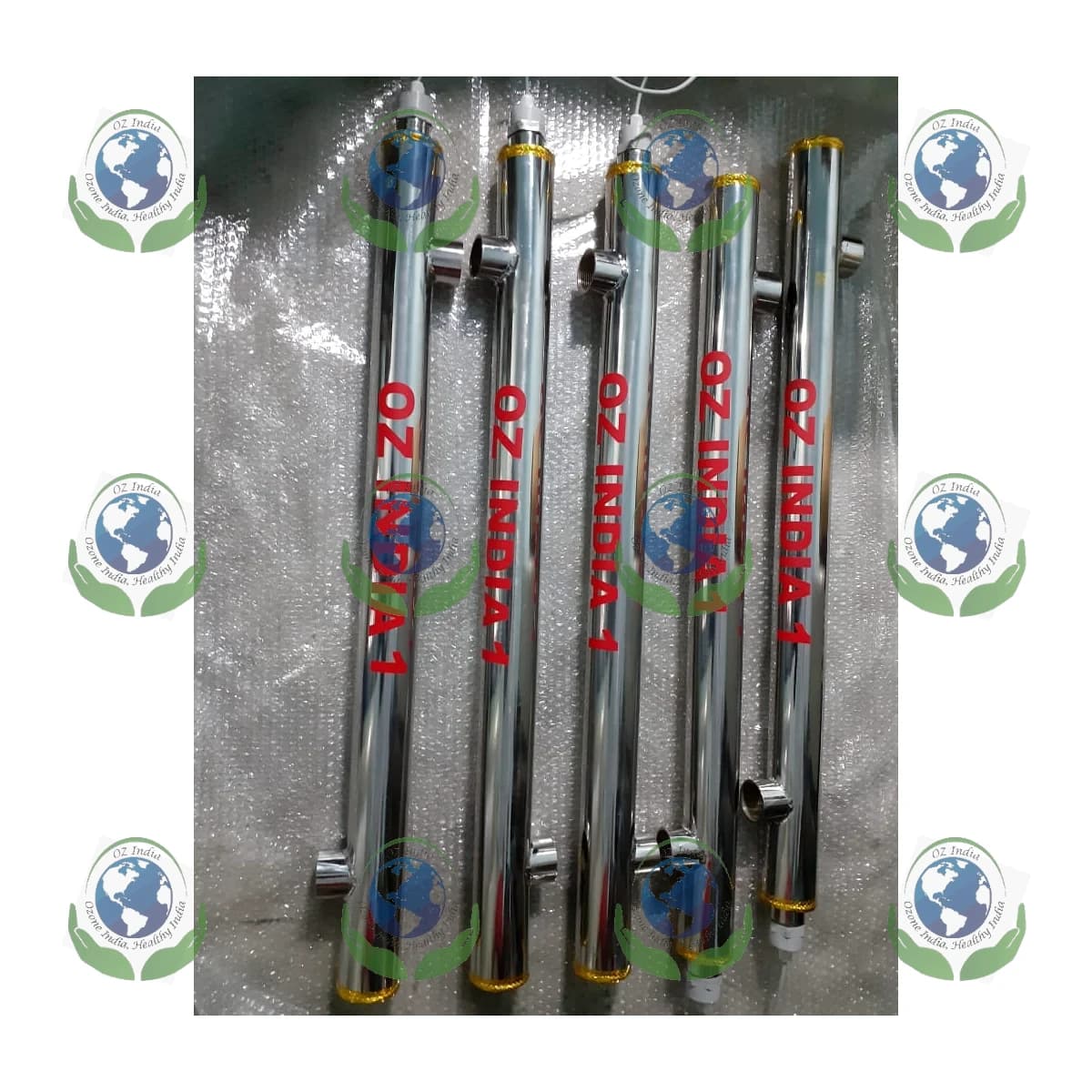
UV water disinfection for hotels, restaurants, offices, and educational institutions. HACCP and FSSAI compliant documentation. Trusted by Taj Hotels, McDonald's India, and IIT Kanpur.
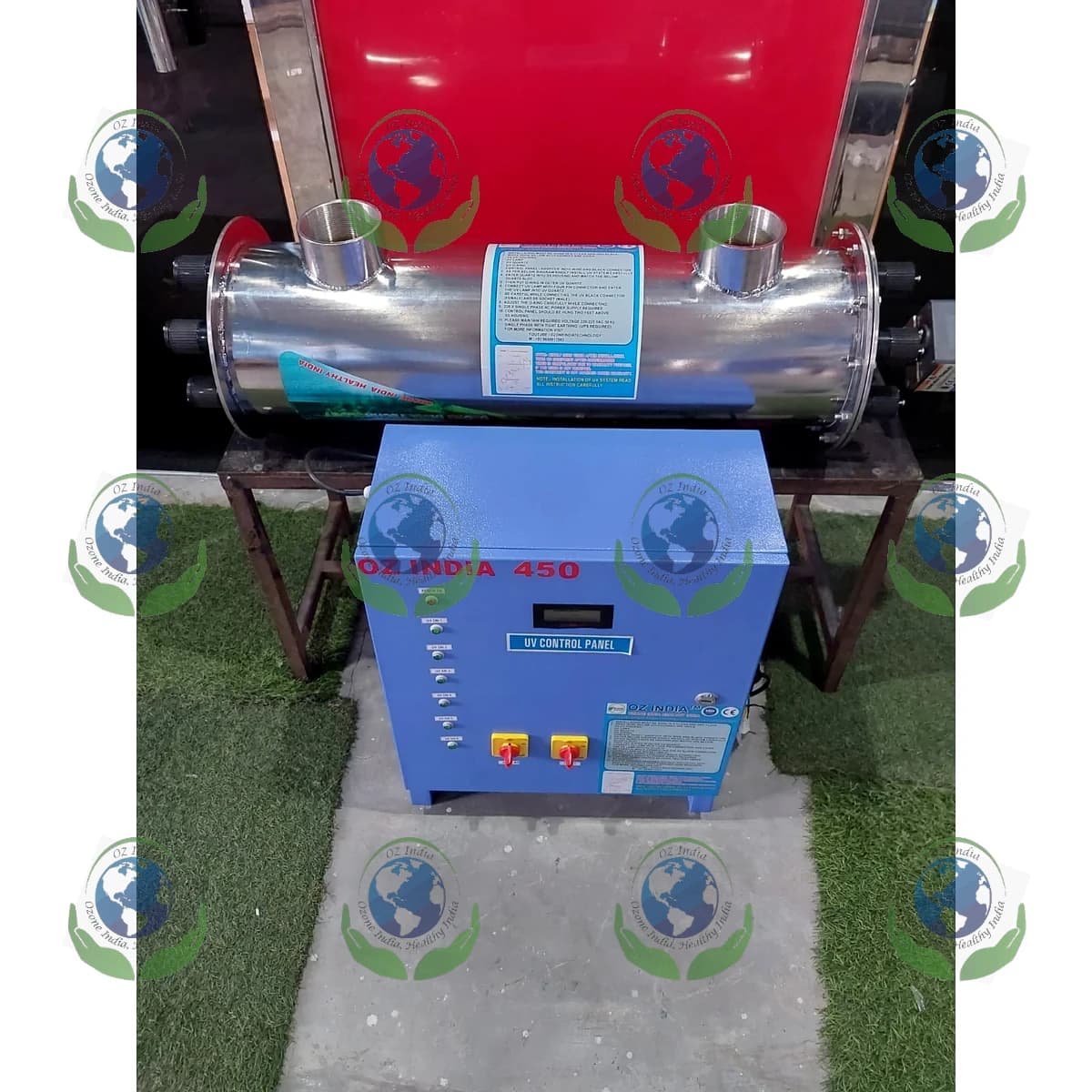
High-flow UV water treatment for pharmaceutical WFI, food & beverage process water, and industrial applications. Revised Schedule M 2025, HACCP, and FSSAI compliant. IQ/OQ/PQ documentation.
IIT Patna Engineering
Alpha UV System IIT Patna engineers calculate UV dose from your actual water quality parameters — measured UVT, flow rate, target log reduction, and the specific compliance standard that governs your facility. Not from catalogue sizing tables or generic assumptions. Every system ships with a signed UV dose calculation report, a Philips certificate of authenticity, and compliance documentation prepared for the regulatory framework applicable to vegetable-fruit operations.
From measured UVT, flow rate, and target log-reduction. Signed by IIT Patna engineer.
FSSAI · HACCP · GlobalGAP · BRC Global Standard · CODEX STAN 197 · IS 10500 — documentation prepared to the audit checklist, not generic templates.
WhatsApp your flow rate, water quality, and compliance requirement — engineering-backed quote in 2 hours.
Mon–Sat · 9 AM–6 PM IST · IIT Patna alumni on call
Send us your flow rate and compliance requirement — quote with engineering rationale in 2 hours.
+91 93183 05878
Get Quote →
Call Direct
+91 95995 00580
Tap to Call →
Send Enquiry
Detailed specifications form
Open Form →
