Manufactured in Greater NoidaGenuine Philips UV-C LampsIIT Patna Alumni on Our TeamExporting to 20+ Countries
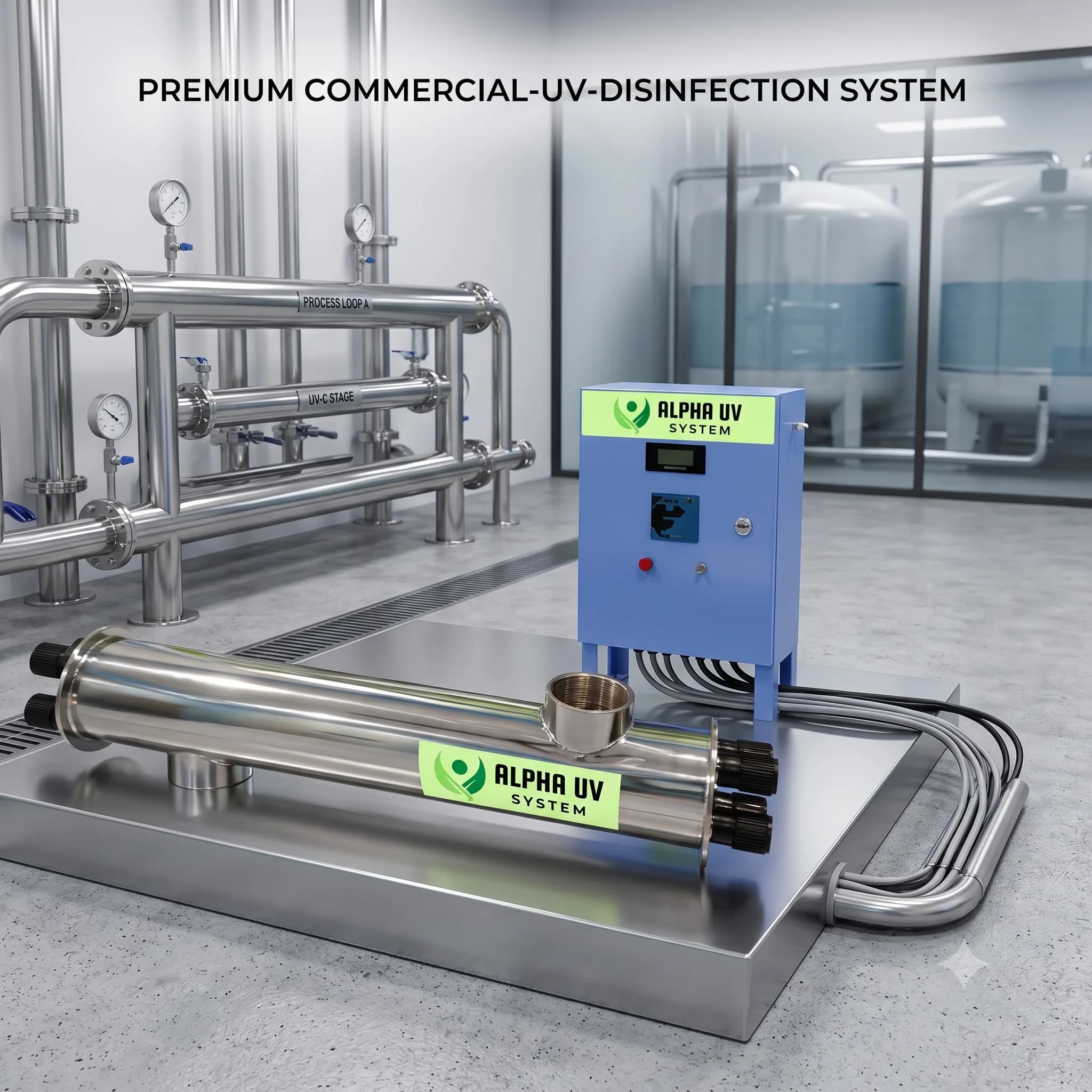
Hotels, restaurants, offices, and commercial buildings face a water quality challenge that bottled water cannot solve at scale: FSSAI compliance for food contact water, Legionella safety in hot water systems, and guest experience expectations for chemical-free drinking water. Alpha UV System commercial UV disinfection systems deliver 40 mJ/cm² WHO-standard UV dose with no chemical addition, no taste or odour impact, and full FSSAI and HACCP documentation for food service audits. Philips UV-C lamps. IIT Patna-trained engineers. Installations across Delhi NCR, Mumbai, Bengaluru, Chennai, Hyderabad, and Pune.
UV Dose
40 mJ/cm²
Capacity
500 – 10,000 LPH
Commercial buildings in India face a water quality challenge that is more complex than domestic use. Hotels must manage Legionella risk in hot water systems, FSSAI food safety compliance for kitchen and bar water, and guest experience expectations for chemical-free drinking water — all simultaneously. Restaurants operating under HACCP food safety management systems must treat water as a Critical Control Point (CCP) with documented monitoring and corrective action records. Corporate offices are increasingly replacing bottled water with centralised treatment systems to reduce costs and plastic waste. Real estate developers and facility management companies are incorporating UV water treatment into new commercial projects to satisfy RERA disclosure requirements and LEED green building certification criteria.
UV disinfection addresses all of these requirements simultaneously: it delivers 40 mJ/cm² WHO-standard dose that achieves 4-log (99.99%) inactivation of E. coli, Salmonella, and all common waterborne pathogens; it produces no chemical residuals or disinfection by-products (DBPs); and it operates with a minimal footprint, low power consumption, and annual maintenance limited to lamp replacement.
The WHO Guidelines for Drinking Water Quality, 4th Edition (2017) recommends UV as a validated point-of-entry disinfection technology for potable water supplies, noting that it provides effective inactivation of bacteria, viruses, and protozoa without chemical addition. Codex Alimentarius General Principles of Food Hygiene (2020) recognise UV as an appropriate CCP technology for HACCP food safety management in food service establishments.
FSSAI Food Safety and Standards (Food Products Standards and Food Additives) Regulations 2011, Schedule III, specify that water used in food preparation must comply with IS 10500:2012 for all microbiological parameters. For food business operators (FBOs) running hotel kitchens, restaurants, cloud kitchens, and food processing units, the obligation to use potable water meeting IS 10500:2012 standards applies to all food contact water — including water used for washing raw materials, cooking, ice making, beverage preparation, and cleaning food contact surfaces.
FSSAI food safety audits increasingly include verification of water quality management as part of the food safety plan assessment. FBOs that cannot demonstrate a documented water treatment system with monitoring and maintenance records risk non-conformance findings in FSSAI audits. UV disinfection, with its UV intensity monitoring and alarm system, provides the continuous CCP monitoring record that FSSAI auditors require to verify water quality compliance.
For hotels with food service operations, the dual FSSAI obligation — food safety water quality in the kitchen and restaurant, plus potable water quality for guest drinking water — is most efficiently satisfied with a single centralised UV system at the building water inlet combined with point-of-use filters at drinking water dispensers. Alpha UV System designs commercial hotel water treatment packages that satisfy both requirements with a unified system and unified compliance documentation.
The European Centre for Disease Prevention and Control (ECDC) publishes annual data on travel-associated Legionella cases in Europe, with hotels identified as the most common setting for Legionella exposure outside the home. ECDC Legionella Annual Epidemiological Report 2022 documents over 11,000 cases of Legionnaires' disease in Europe annually, with hotels accounting for a significant proportion of identified exposure sites. In India, Legionella surveillance data is limited but growing — NABH accreditation pressure and increased clinical awareness are driving hotel engineering teams to implement Legionella risk management programmes.
Hotel hot water systems are particularly vulnerable to Legionella colonisation because they typically incorporate: large-volume hot water storage tanks where temperature stratification can create zones at 25–45°C (Legionella's optimal growth range); long pipe runs where water cools below 50°C in the distribution system before reaching remote outlets; shower heads and spa equipment that aerosolise warm water; and periods of low occupancy (seasonal properties, wing closures) where dead-leg stagnation creates ideal Legionella growth conditions.
UV disinfection on the hotel hot water recirculation return loop provides continuous Legionella control — treating every litre of recirculated water before it re-enters the calorifier. At 40 mJ/cm², UV delivers 4–5 log inactivation of Legionella pneumophila in a single pass. Combined with temperature maintenance above 55°C in the calorifier and regular flushing of infrequently used outlets, UV provides the engineering control backbone for a hotel Legionella Water Safety Plan compliant with WHO Legionella Guidelines and Bartram et al. (WHO, 2007).
HACCP (Hazard Analysis and Critical Control Points) is mandatory for large food business operators under FSSAI, and increasingly adopted by hotel chains and restaurant groups seeking BRC, ISO 22000, or SQF food safety certification. Water quality is typically identified as a Critical Control Point (CCP) in any HACCP plan for food service, since contaminated water represents a direct food safety hazard that cannot be controlled by subsequent heat treatment in all dish types.
Codex Alimentarius Commission's Recommended International Code of Practice — General Principles of Food Hygiene, CXC 1-1969 (revised 2020) defines CCPs as points in the food production process at which hazard can be prevented, eliminated, or reduced to an acceptable level. UV disinfection qualifies as a CCP for water because: the critical limit (40 mJ/cm² UV dose) is measurable in real time by the UV intensity sensor; deviations are detected immediately and trigger automatic corrective action; and the UV intensity data logger provides continuous CCP monitoring records.
Alpha UV System provides commercial customers with a complete HACCP CCP documentation package including: written CCP identification form, critical limit definition (40 mJ/cm²), monitoring procedure description, corrective action SOP, verification protocol, and maintenance log template. This package is prepared by IIT Patna-trained engineers and is formatted to satisfy FSSAI audit and major food safety scheme (BRC, SQF, ISO 22000) documentation requirements.
Corporate offices in India spend approximately Rs 1.5–3 lakh per year on bottled water for a 200-person office — with no FSSAI or WHO compliance evidence, inconsistent quality from batch to batch, significant plastic waste, and logistics overhead. A centralised UV system at the building overhead tank outlet eliminates all bottled water procurement costs, reduces plastic waste to zero, and delivers water with documented microbiological quality that exceeds packaged drinking water standards.
The capital cost of a 1,000–1,500 LPH commercial UV system for a 200-person office is typically Rs 60,000–1,20,000 depending on pre-filtration requirements. Annual operating costs are limited to Philips UV-C lamp replacement (Rs 8,000–15,000 per year depending on lamp size) and power consumption (typically 40–75W for a commercial unit). The system pays for itself in 8–12 months versus bottled water procurement costs, and delivers an ongoing annual saving of Rs 1.2–1.6 lakh per year for a mid-size office.
LEED green building certification — increasingly required for Grade A commercial office developments in India — awards points for reduction of potable water use and reduction of plastic waste. A centralised UV system satisfies LEED WE (Water Efficiency) credit requirements more effectively than bottled water supply, and the elimination of single-use plastic water bottles contributes to the project's waste management credits.
Commercial UV system installation follows standard engineering principles with a few commercial-specific considerations. The UV system should be installed after the overhead storage tank outlet (or municipal supply pressure-reducing valve) on the main cold water feed, before the water distribution to kitchen, bars, drinking water outlets, and hot water calorifier. A minimum 5-micron sediment pre-filter is required upstream of the UV unit to prevent quartz sleeve fouling from suspended particles in municipal or borewell supply; an activated carbon filter is recommended for buildings with high municipal chlorine residual or where taste improvement is important for drinking water applications.
For hotels with separate hot and cold water systems, UV on both the cold water main (incoming supply) and the hot water recirculation return (Legionella control) provides comprehensive coverage. For restaurants with a single cold water supply to the kitchen, a single UV unit at the kitchen water inlet handles all food contact water treatment. For large commercial complexes with multiple buildings or wings, zone-based UV installation — one UV unit per zone or building — provides more maintainable coverage than a single very large centralised unit.
Alpha UV System's IIT Patna-trained engineers provide commercial UV system design services including: sizing calculation, installation point selection, pre-filtration specification, FSSAI/HACCP documentation package, and on-site commissioning. Contact us on WhatsApp at 9318305878 or call 9599500580 for a commercial UV system proposal — delivered within 24–48 hours for most commercial building types.
All Alpha UV System commercial UV products are designed to deliver the UV dose and inactivation performance benchmarks established by WHO, USEPA, and AWWA. The WHO GDWQ 4th Edition (2017) specifies 40 mJ/cm² as the dose required for 4-log inactivation of the reference organisms (Cryptosporidium, Giardia, E. coli) that define drinking water safety performance. USEPA Ultraviolet Disinfection Guidance Manual (UVDGM, 2006) provides the validated dose-response relationships for each pathogen that underlie Alpha UV System UV dose calculations. AWWA Manual of Water Supply Practices M52 — Disinfection of Water and Wastewater (2019) provides installation and operational guidance that informs Alpha UV System's commercial system design protocols.
For FSSAI compliance documentation, Alpha UV System references FSSAI Food Safety and Standards (Food Products Standards and Food Additives) Regulations 2011, FSSAI Schedule IV commercial kitchen requirements, and FSSAI guidance on water treatment for food business operators. For Legionella risk management, Alpha UV System documentation follows WHO Legionella and the Prevention of Legionellosis (Bartram et al., 2007) and ASHRAE Standard 188-2018 Legionellosis Risk Management for Building Water Systems.
All UV dose calculations are performed by IIT Patna-trained engineers using validated hydraulic models that account for UV lamp output at end-of-rated-life, water UV transmittance (UVT), and chamber geometry — ensuring that the minimum dose guarantee of 40 mJ/cm² is delivered under worst-case operating conditions, not just at peak lamp output and minimum flow rate.
Recommended Products
IIT Patna engineers recommend these systems for commercial uv applications based on flow rate, required UV dose, and compliance standard. Both systems use genuine Philips UV-C lamps and ship with complete compliance documentation.
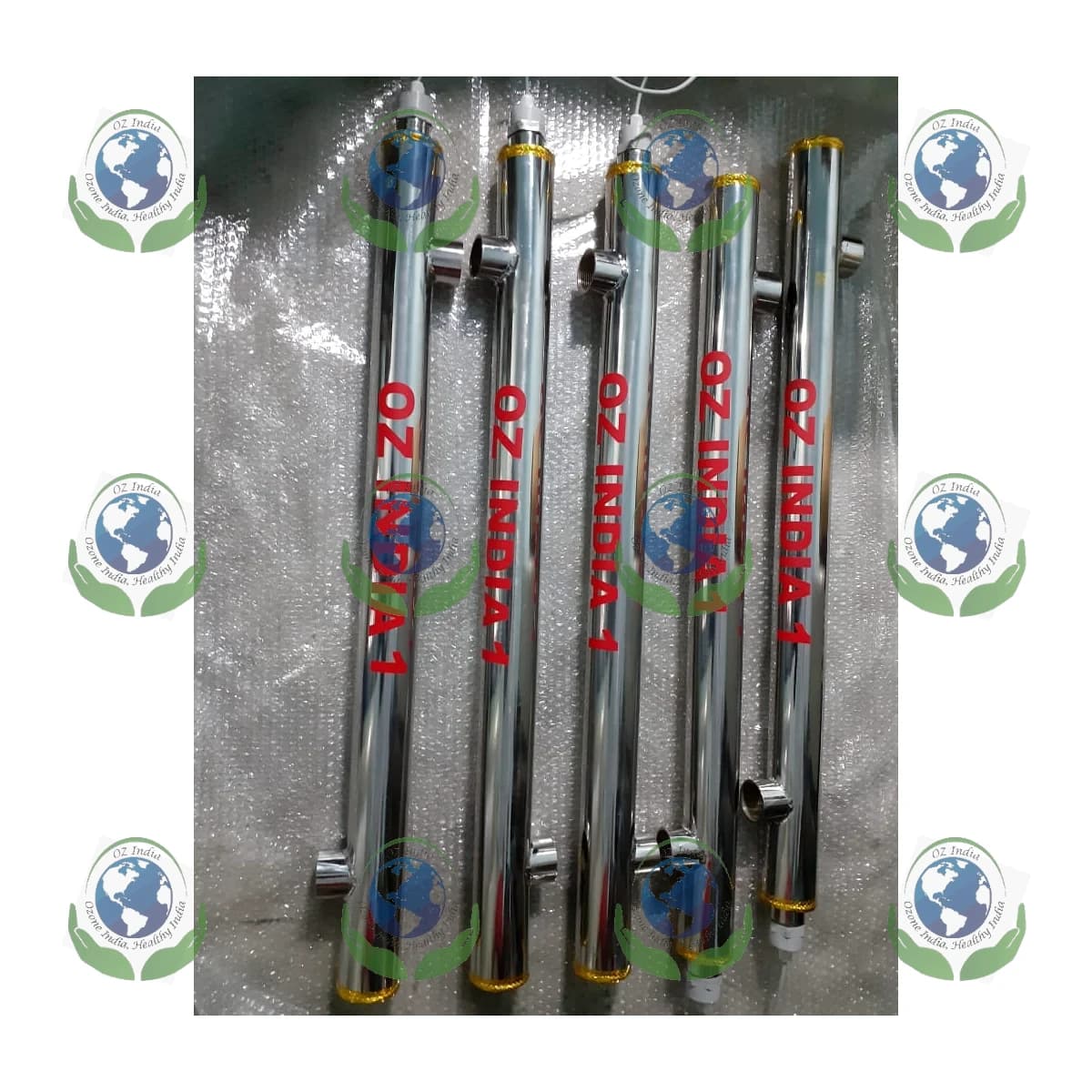
UV water disinfection for hotels, restaurants, offices, and educational institutions. HACCP and FSSAI compliant documentation. Trusted by Taj Hotels, McDonald's India, and IIT Kanpur.
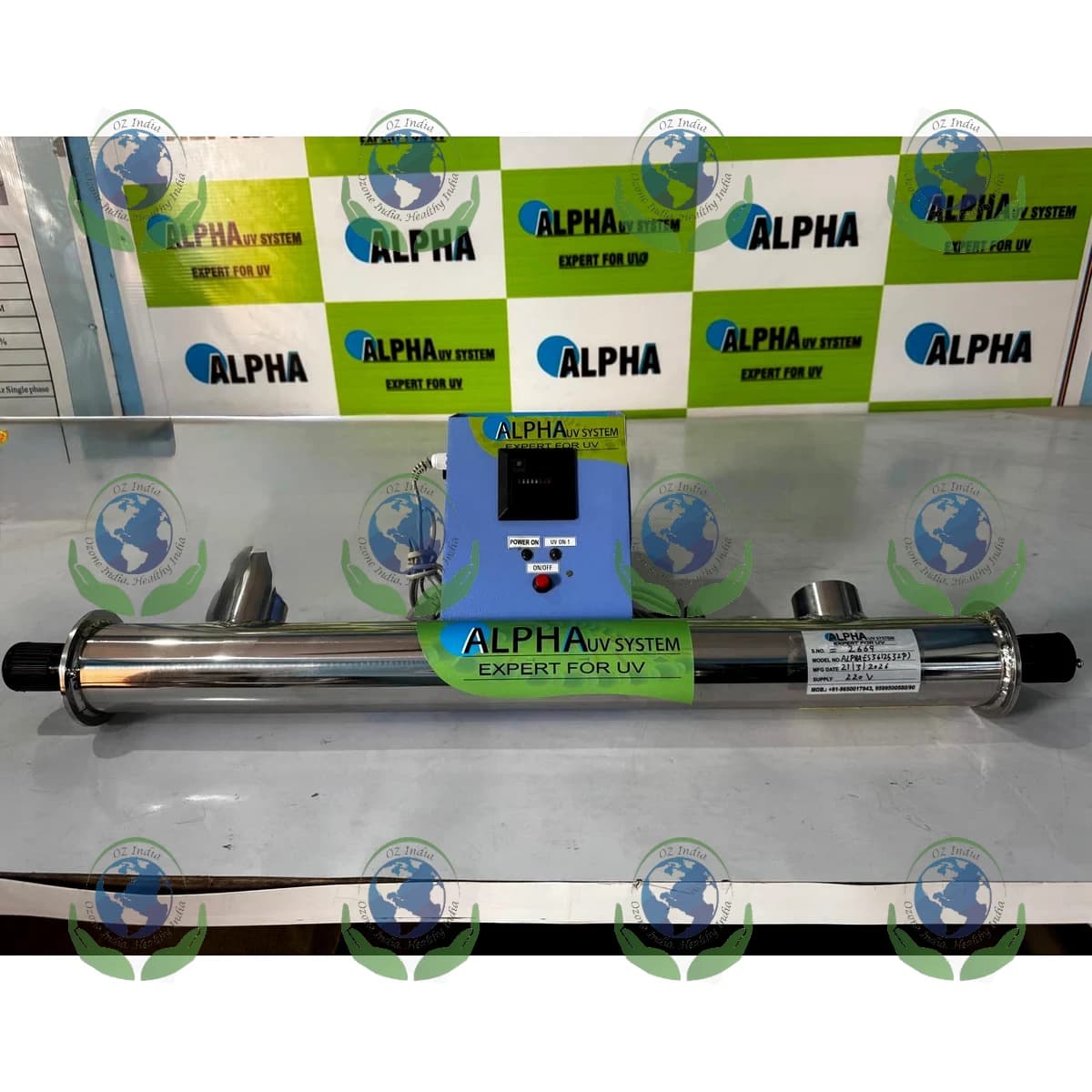
WHO-compliant UV disinfection for drinking water across all scales. From 100 LPH residential units to 50,000 LPH systems. No chemicals, no taste change, 100% water efficiency. Philips UV-C lamps.
IIT Patna Engineering
Alpha UV System IIT Patna engineers calculate UV dose from your actual water quality parameters — measured UVT, flow rate, target log reduction, and the specific compliance standard that governs your facility. Not from catalogue sizing tables or generic assumptions. Every system ships with a signed UV dose calculation report, a Philips certificate of authenticity, and compliance documentation prepared for the regulatory framework applicable to commercial uv operations.
From measured UVT, flow rate, and target log-reduction. Signed by IIT Patna engineer.
FSSAI · HACCP · WHO · BIS IS 10500 — documentation prepared to the audit checklist, not generic templates.
WhatsApp your flow rate, water quality, and compliance requirement — engineering-backed quote in 2 hours.
Mon–Sat · 9 AM–6 PM IST · IIT Patna alumni on call
Send us your flow rate and compliance requirement — quote with engineering rationale in 2 hours.
+91 93183 05878
Get Quote →
Call Direct
+91 95995 00580
Tap to Call →
Send Enquiry
Detailed specifications form
Open Form →
