Quick Answer: Dhaka — Bangladesh's capital and one of the world's most densely populated megacities (22+ million metro population) — presents a UV water treatment system Dhaka market shaped by critical water infrastructure gaps: DWASA (Dhaka Water Supply and Sewerage Authority) sources approximately 87% of supply from 700+ deep tube wells (Dupitila aquifer, 150–300 m depth) due to the near-total ecological collapse of Buriganga, Turag, and Balu rivers; remaining surface water UVT at DWASA WTPs is 62–74% (dry season Buriganga BOD exceeds 25 mg/L). Key demand drivers include export garment manufacturing (Gazipur, Savar, Narayanganj — 4,000+ BGMEA member factories requiring GOTS and OEKO-TEX process water compliance), pharmaceutical manufacturing (Square, BEXIMCO, Incepta, ACI — WHO GMP prequalified, USP Purified Water standards), and food and beverage production (PRAN-RFL Group, Transcom Beverages, Coca-Cola Bangladesh). BSTI BDS 1475:2009 (aligned to WHO Drinking Water Guidelines 4th ed.) governs drinking water quality. NSF/ANSI 55 Class A at 40 mJ/cm² is the commercial specification. Alpha UV ships to Hazrat Shahjalal International Airport within 48 hours from India.
Dhaka's UV Water Treatment System Landscape
Dhaka — founded as a Mughal provincial capital in 1608 and now South Asia's fourth-largest city — operates water supply infrastructure that serves fewer than 35% of the metro population via piped connections. DWASA's formal network reaches approximately 7.5 million residents; the remaining 15 million depend on private tube wells, water vendors, and increasingly contaminated shallow aquifers shared with industrial zones.
The UV water treatment system Dhaka market is defined by the collision of three factors: severe surface water contamination (Buriganga oxygen depletion near Sadarghat ferry terminal approaches zero DO in dry season), deep aquifer dependence with arsenic risk (Dupitila aquifer is generally arsenic-free, but shallow Holocene aquifers across greater Dhaka — Narayanganj, Keraniganj — register arsenic above 0.05 mg/L WHO limit), and a massive export-oriented industrial base whose international buyers impose water quality standards far exceeding Bangladesh domestic minimums.
DWASA's 700+ tube wells collectively pump approximately 2,200 MLD (million litres per day) against a city demand of 2,800+ MLD. The 600 MLD gap is filled by private extraction — unregulated, untested, and particularly vulnerable to microbiological contamination from Dhaka's inadequate sewerage network (only 25% of the city is sewered). BSTI BDS 1475:2009 requires <1 CFU/100 mL for total coliforms in drinking water; DWASA network water meets this at WTP outlets but routinely fails at point of use due to distribution network age (cast iron mains, 1950s vintage in old Dhaka).
DWASA Supply Zones and Groundwater Quality
| Water Source | Coverage Area | UVT Range | Key Contaminant | Alpha UV System |
|---|---|---|---|---|
| DWASA deep tube wells (Dupitila aquifer, 150–300 m) | Gulshan, Banani, Uttara, Mirpur | 82–90% | Iron 0.4–2.8 mg/L; manganese; no arsenic | AU-S 15, NSF/ANSI 55 Class A post iron-removal |
| DWASA surface WTP (Syedabad, Saidabad) | Old Dhaka, Lalbagh, Demra | 62–74% | Buriganga BOD 20–30 mg/L; turbidity spikes | AU-M 30, auto de-rating, duty/standby |
| Gazipur industrial zone private tube wells | Tongi, Kaliakoir EPZ, Kashimpur | 74–83% | Nitrate (garment effluent plume); E. coli | AU-M 25, MODBUS RS485, continuous logging |
| Savar/Ashulia EPZ groundwater | Export garment factories, Ashulia corridor | 76–84% | Surfactant contamination; coliform | AU-M 30, NSF/ANSI 55 Class A, duty/standby |
| Narayanganj shallow private wells | Old textile/dyeing zone | 58–72% | Chromium (textile), arsenic (Holocene), BOD | AU-M 40, upstream pre-treatment mandatory |
The Dhaka WASA Act 1996 mandates DWASA to supply water meeting BSTI BDS 1475 standards. In practice, distribution-end compliance is inconsistent — 2022 ICDDR,B (International Centre for Diarrhoeal Disease Research, Bangladesh) monitoring found 38% of household tap samples in Mirpur and Mohammadpur exceeded coliform limits. For the industrial and commercial sector, this reality makes point-of-use or point-of-process UV disinfection not optional but operationally essential.
Export Garment Manufacturing — BGMEA, GOTS and OEKO-TEX Water Standards
Bangladesh's garment sector — USD 46+ billion in annual exports, 80% of Bangladesh's total export earnings — is concentrated in a ring of industrial districts surrounding Dhaka: Gazipur, Savar, Ashulia, Narayanganj, Tongi, and Hemayetpur. The UV water treatment system Dhaka market's largest industrial segment is driven by international buyer audit requirements:
| Standard / Buyer Audit | Water Quality Requirement | Relevant Processes | Alpha UV Specification |
|---|---|---|---|
| GOTS (Global Organic Textile Standard) v7.0 | Process water: zero chlorine; coliform <100 CFU/100 mL at point of use | Knit/woven dyeing, washing, wet processing | AU-M 25/30, zero residual Cl, 40 mJ/cm², MODBUS logging |
| OEKO-TEX Standard 100 Annex 6 | Zero chlorine in water used for fabric contact processes; no halogenated by-products | Finishing, rinsing, cooling | AU-M 25, chlorine-free, NSF/ANSI 55 Class A |
| H&M Sustainability Index / Higg FEM | Water management: metered UV or equivalent tertiary treatment for process water | Wet processing, dyeing | AU-M 30, Higg FEM energy metering compatible, MODBUS RS485 |
| Inditex (Zara) Green to Wear 2.0 | Zero chlorine; ZDHC MRSL v3.3 wastewater compliance for discharge; process water microbial control without chlorine | All wet processing stages | AU-M 25/30, zero Cl, continuous sensor logging |
| BKMEA / BGMEA internal QC (buyer-facing) | Buyer audit pass: process water microbial count <50 CFU/mL for knit fabric contact | Knit fabric washing, rinsing | AU-S 15 (small knit units); AU-M 25 (integrated factories) |
The UV water treatment system Dhaka garment sector requirement centres on eliminating chlorine from wet processing. Chlorinated process water causes fabric discoloration, reduces tensile strength in natural fibre blends, and triggers GOTS audit failure. UV disinfection at 40 mJ/cm² (NSF/ANSI 55 Class A) with zero chemical residual is the established solution across Gazipur's major integrated composite mills — operators of ring-spinning, knitting, dyeing, and finishing under one roof for buyers including H&M, Primark, Marks & Spencer, Next, and LiDL.
BGMEA's Sustainability Committee (2023 roadmap) explicitly endorses UV-based water disinfection for member factories pursuing GOTS or OEKO-TEX certification — the committee's recommendation aligns with the ZDHC (Zero Discharge of Hazardous Chemicals) Programme Manufacturing Restricted Substances List, which classifies chlorine-based disinfectants as restricted when used in wet processing water.
Pharmaceutical Manufacturing — DGDA, WHO GMP and USP Water
Bangladesh's pharmaceutical sector is the world's second-largest generic drug exporter by number of WHO-prequalified manufacturers (after India). The sector is concentrated in Tongi (Gazipur), Dhamrai (Savar), and Joydevpur industrial areas — all within Dhaka Division. DGDA (Directorate General of Drug Administration) enforces GMP standards equivalent to Schedule M (Bangladesh Drugs Rules 1946, amended 2021) and WHO GMP TRS 986.
The UV water treatment system Dhaka pharmaceutical requirement is stringent: USP <1231> Purified Water — conductivity <1.3 µS/cm at 25°C, TOC <500 ppb, zero coliforms, zero E. coli, zero Pseudomonas. Pharmaceutical manufacturers use multi-stage water purification: raw well water → multimedia pre-filter → activated carbon → softener → RO (two-pass for API manufacture) → UV (254 nm, 40 mJ/cm²) → EDI (electrodeionisation) → distribution loop with recirculation UV.
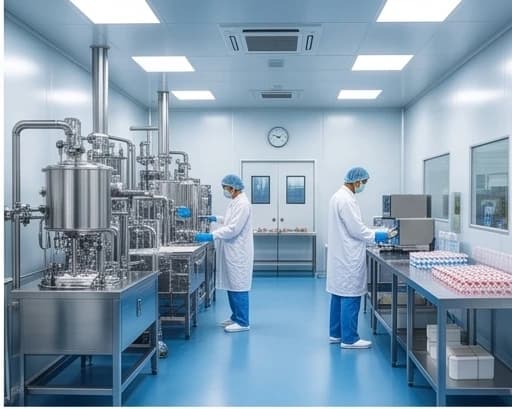
Alpha UV's AU-M 25 and AU-M 30 systems in pharmaceutical applications are specified with 316L stainless steel chambers, tri-clamp sanitary fittings (3A/DIN 11850), PTFE gaskets, and MODBUS TCP data logging (21 CFR Part 11 audit trail compatibility). The UV dose of 40 mJ/cm² provides a >4 log reduction in Pseudomonas aeruginosa — the primary concern in pharmaceutical process water loops — confirmed by CFD (computational fluid dynamics) reactor modelling that validates dose distribution across the full operational flow range with <15% UV intensity variation.
Food and Beverage Manufacturing — BFSA and Export Compliance
| Manufacturer / Sector | Location in Dhaka Division | Standard | Alpha UV System |
|---|---|---|---|
| PRAN-RFL Group (PRAN juices, dairy, snacks) | Narsingdi, Palash — Dhaka division peri-urban | BFSA 2013, BSTI, ISO 22000, FSSC 22000 | AU-M 30, zero Cl, NSF/ANSI 55 Class A |
| Transcom Beverages (PepsiCo bottler — Pepsi, 7Up, Mountain Dew) | Hemayetpur, Savar | PepsiCo global FSSC 22000, zero Cl, HACCP | AU-M 30, zero Cl, MODBUS TCP, duty/standby |
| Abdul Monem Ltd (Igloo ice cream, Coca-Cola bottler — ABCL) | Comilla EPZ (Dhaka distribution) | Coca-Cola KORE standard, BFSA, HACCP | AU-M 30, zero residual Cl |
| Danish Foods (dairy — drinking yoghurt, UHT milk) | Savar, Dhaka | BSTI BDS dairy, ISO 22000, zero Cl dairy wash | AU-M 25, zero Cl, NSF/ANSI 55 Class A |
| Square Food & Beverage (Radhuni spice, Chashi rice bran oil) | Pabna (Dhaka distribution hub) | BFSA 2013, BSTI, HACCP | AU-M 25, MODBUS RS485 |
Bangladesh Food Safety Authority (BFSA) Regulations 2014 require food manufacturers to use water meeting BSTI BDS 1475:2009 in all food contact applications. For export manufacturers — particularly those shipping to EU, USA, and Middle East — the import requirements of destination countries (EU Regulation 852/2004/EC, FDA 21 CFR Part 117, GCC GSO 149) effectively mandate UV treatment as the primary or secondary disinfection step. The UV water treatment system Dhaka food sector is also driven by the global buyers' audit requirements embedded in FSSC 22000 v6 and BRC Global Standard Food Issue 9.
Commercial and Hospitality Sector
Dhaka's commercial real estate and hospitality sectors — 5-star hotels (Westin Dhaka, Radisson Blu, Le Méridien, Sheraton Dhaka/Marriott), hospital networks (Apollo Dhaka, Evercare, United Hospital), and university campuses — are significant UV water treatment system Dhaka market segments. DWASA supply interruptions (average 6–10 hours per day in residential areas; less frequent in commercial zones with dedicated DWASA supply lines) drive rooftop storage tank usage, which reintroduces microbiological risk even from initially clean water.
Hotel operators at international brands comply with parent company water quality policies (Marriott Global Water Quality Standard, IHG WaterSense Policy) mandating point-of-use UV or equivalent. Hospital operators apply WHO Health Care Waste Management standards and BNBC (Bangladesh National Building Code) water safety provisions. Alpha UV's AU-S 15 is widely specified for hotel kitchens (3–15 m³/hour), with AU-M 25 for laundry and cooling tower make-up water.
Rooftop Tank Re-contamination: Dhaka's Critical Vulnerability
Unlike Indian or Southeast Asian cities where piped supply is continuous (or near-continuous) in commercial zones, Dhaka's intermittent supply model means virtually every building — residential or commercial — stores water in rooftop or underground tanks with capacities of 1,000–10,000 litres. ICDDR,B studies consistently show that stored tank water re-contamination adds 50–200 CFU/100 mL coliforms even from initially clean DWASA supply — biofilm formation in PVC and GI tanks is the primary mechanism. The UV water treatment system Dhaka solution for this risk is post-tank UV at the building inlet or at each point of use.
Alpha UV's AU-S 8 (small commercial, 1–3 m³/hour) and AU-S 15 (medium commercial, 3–8 m³/hour) are engineered for tank-outlet installation: compact stainless chambers, 254 nm germicidal wavelength, 40 mJ/cm² dose at rated flow, CE-certified lamp and ballast, digital UV intensity display, and lamp-life alarm. Post-tank UV at 40 mJ/cm² achieves >4 log E. coli reduction and >3 log Cryptosporidium reduction — sufficient to meet BSTI BDS 1475:2009 compliance at point of consumption.
Regulatory Framework and Alpha UV Specifications for Dhaka
Bangladesh's water quality regulatory framework for the UV water treatment system Dhaka market includes:
- BSTI BDS 1475:2009 — Bangladesh drinking water standard (WHO Guidelines 4th ed. aligned); E. coli 0 CFU/100 mL, turbidity <1 NTU, pH 6.5–8.5
- BFSA Food Safety Regulations 2014 — water in food production must meet BDS 1475; UV documented as acceptable primary disinfection in CODEX Alimentarius framework
- DGDA Drugs Rules 1946 (amended 2021, Schedule M) — pharmaceutical water: USP Purified Water + WHO GMP TRS 986 compliance; UV mandatory in pharmaceutical water system design
- DOE Environment Conservation Rules 1997 (ECR 2023 update) — ETP effluent quality for garment sector; UV post-ETP disinfection for discharge compliance
- NSF/ANSI 55 Class A — 40 mJ/cm², >4 log E. coli reduction — international specification applied by all BGMEA export factories and WHO GMP pharmaceutical plants
Alpha UV units for Dhaka are specified as follows: 316L SS chamber, PTFE/silicone seals, 254 nm amalgam or low-pressure lamp (application-dependent), digital UVI sensor with 4–20 mA output, MODBUS RS485/TCP data output, CE/ISO 9001 certification, and IEC 61000-4 EMC compliance for Bangladesh grid conditions (voltage fluctuation 180–250V is common — all Alpha UV ballasts accept 100–240V, 50 Hz). Shipping: 2–3 day air freight (Hazrat Shahjalal International Airport, IATA: DAC), or 18–22 day sea freight (Chittagong Port, IATA: CGP).
Installation Considerations in Dhaka
Dhaka's operating environment presents specific installation challenges for the UV water treatment system Dhaka market: (1) voltage fluctuation — 180–250V common in industrial areas (Tongi, Gazipur) during peak industrial demand periods; Alpha UV's universal-input ballasts (100–240V) eliminate the need for AVR (automatic voltage regulator) in most installations; (2) dust and humidity — IP65-rated ballast housings standard for Dhaka's monsoon season (June–October, 85–95% relative humidity); (3) limited maintenance access — compact designs (<450 mm lamp access clearance) suit Dhaka's dense factory floor layouts; (4) water supply intermittency — flow sensor interlocks prevent UV lamp-off dry-run situations when DWASA supply is interrupted.
Commissioning support is available from Alpha UV's Dhaka distributor network; pre-commissioning CFD reactor validation is provided for pharmaceutical and large industrial installations (>50 m³/hour) where dose distribution audit trails are required for DGDA or buyer quality system documentation.
FAQ
What UV dose is required for BSTI BDS 1475:2009 drinking water compliance in Dhaka?
BSTI BDS 1475:2009 requires zero E. coli and zero total coliforms per 100 mL. UV at 40 mJ/cm² (NSF/ANSI 55 Class A) achieves >4 log E. coli reduction and >3 log total coliform reduction — sufficient to meet BSTI standards from Dhaka's groundwater and DWASA supply sources. For surface water with UVT below 70% (Saidabad WTP treated water), upstream pre-filtration to achieve UVT above 75% is required before UV sizing.
Do BGMEA garment factories in Gazipur need UV for GOTS certification?
Yes. GOTS v7.0 requires process water for fabric contact processes to be free of chlorine and chlorine-based disinfectants. UV at 40 mJ/cm² is the industry-standard method for achieving GOTS-compliant process water disinfection without chlorine. UV also satisfies OEKO-TEX Standard 100 Annex 6 and ZDHC MRSL requirements for zero halogenated compounds in wet processing water. BGMEA Sustainability Committee guidance explicitly endorses UV for member factories.
Can Alpha UV systems handle Dhaka's voltage fluctuations?
Yes. Alpha UV ballasts accept 100–240V, 50/60 Hz with automatic voltage regulation built into the electronic driver. Dhaka's industrial zone voltage typically fluctuates between 185–240V — within the operating range of all Alpha UV models without requiring an external AVR. For particularly unstable power supplies (rural Gazipur fringe areas), a servo-type AVR upstream of the UV system is recommended.
What is the lead time and delivery process for Alpha UV to Dhaka?
Standard delivery is 48 hours by air freight to Hazrat Shahjalal International Airport (DAC). Sea freight via Chittagong Port is 18–22 days. Pre-shipment documentation (commercial invoice, packing list, certificate of origin, calibration certificate) is provided for Bangladesh Customs clearance. Dhaka-based distributor partners manage local customs and last-mile delivery to factories in Gazipur, Savar, Narayanganj, or Dhaka city.
Does Dhaka's deep aquifer water (Dupitila) still need UV treatment?
Yes. Dupitila aquifer water (150–300 m depth) is generally arsenic-free and has better microbiological quality than shallow wells, but is not sterile. Routine DWASA monitoring finds E. coli in 8–12% of deep tube well samples due to wellhead contamination from surface runoff during monsoon season. For any food, pharmaceutical, or potable application, UV at 40 mJ/cm² is required regardless of source type. Post-pump wellhead UV systems are the standard configuration for Dhaka's industrial tube wells.
What is the difference between the UV water treatment system Dhaka requirements for a garment factory vs. a pharmaceutical plant?
Garment factories (BGMEA members) require UV at 40 mJ/cm² for process water disinfection without chlorine — AU-M 25/30 with MODBUS logging for buyer audit trails. Pharmaceutical plants (DGDA Schedule M / WHO GMP) require UV as part of a multi-stage purification train (RO + UV + EDI), with 316L SS sanitary chambers, tri-clamp fittings, 21 CFR Part 11 compatible data logging, and CFD-validated dose distribution. The UV dose target is the same (40 mJ/cm²) but the chamber design, documentation, and integration differ significantly. Alpha UV supplies both configurations from Dhaka's industrial distributor network.
Standards, authorities & further reading
External references used to inform this guide. Regulations evolve — check the latest revision on each authority's site before compliance decisions.
Recommended UV Systems
Alpha UV System products for this application — powered by genuine Philips UV-C lamps.
Commercial UV Water Purification System
500 – 5,000 LPH
HACCP-compliant UV water purification for hotels, restaurants, and offices
Industrial UV Water Treatment System
5,000 – 50,000 LPH
Schedule M 2025 and HACCP compliant UV for pharma, food & beverage, and process water
Not sure which system suits your application? WhatsApp our engineers for a free recommendation →
Related solutions
See how Alpha UV System applies this to your industry or city.
Need a UV system?
Talk to our UV engineers — WhatsApp for a quote in 2 hours, or browse the full catalog on IndiaMART.