Quick Answer: UV water treatment in Bangladesh is the critical microbiological polishing step after arsenic removal systems, serving as the final barrier against Vibrio cholerae, E. coli, and typhoid in a country that carries one of the world's highest waterborne disease burdens. Alpha UV's NSF/ANSI 55 Class A certified systems deliver 40 mJ/cm² minimum dose with SS 316L chambers suited to Bangladesh's humid tropical climate. Systems ship from Ahmedabad via Kolkata's Petrapole-Benapole land border (24–36 hours) or Chittagong Port (3–5 days), attracting zero preferential duty under SAFTA.
Bangladesh Water Safety: The Arsenic-Microbial Double Crisis
Bangladesh faces a water safety challenge unlike any other country in South Asia. The nation sits atop one of the world's largest alluvial aquifer systems — the Bengal Basin — where millions of shallow tube wells were installed during the 1970s and 1980s as a solution to surface water contamination. These wells worked in addressing surface water-borne diseases in the short term, but by the 1990s a devastating revelation emerged: the Bengal Basin aquifer is naturally contaminated with arsenic at levels far exceeding the WHO guideline of 10 μg/L, in many cases reaching 100–500 μg/L. An estimated 20–40 million Bangladeshis drink arsenic-contaminated groundwater daily.
In response, DPHE (Department of Public Health Engineering), NGOs, and international agencies deployed arsenic removal systems (ARS) — sand filters, iron-coagulation systems, and activated alumina filters — across rural Bangladesh. These systems reduce dissolved arsenic but do not kill pathogens. The combination creates a critical need for UV water treatment Bangladesh: a disinfection step that addresses the microbiological hazard downstream of the arsenic removal unit, without adding chemical complexity to what are already technically demanding community water systems.
Bangladesh's rivers — the Padma, Meghna, Jamuna, and their tributaries — deliver some of the highest pathogen loads of any river system in Asia. Annual monsoon flooding (June–October) inundates latrines, animal grazing land, and solid waste dumps, washing contamination directly into surface water intakes and shallow tube wells simultaneously. UV water treatment Bangladesh in the post-monsoon period addresses pathogen spikes that overwhelm simple chlorination systems.
Waterborne Disease Epidemiology in Bangladesh
Bangladesh is one of the original "cholera countries" — Vibrio cholerae El Tor biotype was first described in samples from Bangladesh's Mathbaria area. The icddr,b (International Centre for Diarrhoeal Disease Research, Bangladesh) in Dhaka operates the world's longest continuously running diarrhoeal disease surveillance programme, treating 250,000-plus patients annually at its Dhaka and Matlab hospitals. The pathogen profile from this surveillance is directly relevant to specifying UV water treatment Bangladesh dose requirements:
- Vibrio cholerae: Requires 6.2 mJ/cm² for 4-log inactivation (exceeded at 40 mJ/cm²)
- Salmonella typhi (typhoid): Requires 6.0 mJ/cm² for 4-log inactivation (exceeded)
- Hepatitis A virus: Requires 21 mJ/cm² for 4-log inactivation (exceeded)
- Norovirus: Requires 39 mJ/cm² for 4-log inactivation (barely exceeded — dose margin minimal)
- Cryptosporidium parvum: Requires 10 mJ/cm² for 3-log inactivation (exceeded)
- Giardia intestinalis: Requires 5.0 mJ/cm² for 3-log inactivation (exceeded)
Alpha UV's validated minimum dose of 40 mJ/cm² satisfies all six pathogen targets simultaneously, providing a single specification that covers the complete Bangladesh pathogen spectrum without requiring separate dosing calculations for each organism.
DPHE and Regulatory Standards for UV Disinfection
The Department of Public Health Engineering under Bangladesh's Ministry of Local Government, Rural Development and Co-operatives sets the drinking water quality standards for Bangladesh under the Bangladesh National Drinking Water Standards (2012, updated 2020). These standards align closely with WHO 2011 guidelines and impose specific requirements for point-of-entry and point-of-use water treatment systems.
| Parameter | Bangladesh Standard (DPHE) | WHO Guideline | Alpha UV Performance |
|---|---|---|---|
| E. coli | 0 CFU/100 mL | 0 CFU/100 mL | 6-log inactivation at 40 mJ/cm² |
| Total coliforms | 0 CFU/100 mL (piped supply) | <1 CFU/100 mL | Eliminated at 40 mJ/cm² |
| Arsenic | 50 μg/L (national) / 10 μg/L (WHO) | 10 μg/L | Not addressed by UV — requires upstream ARS |
| Turbidity (pre-UV) | <5 NTU (treated) | <1 NTU recommended before UV | Pre-filter required if >1 NTU |
| UV dose (DPHE spec) | 40 mJ/cm² minimum | 40 mJ/cm² (WHO/AWWA) | Validated 40 mJ/cm² at EoL, minimum UVT |
| Lamp life documentation | Operating hours log required | Hours counter recommended | Digital counter with 8,500-hour alarm |
The Bangladesh Standards and Testing Institution (BSTI) issues product certification for water treatment equipment sold in Bangladesh. International certifications (NSF/ANSI 55 Class A, CE, ISO 9001) are accepted as equivalent in DPHE specifications and World Bank/ADB-funded project tender documents, which represent the majority of large-scale UV procurement in Bangladesh.
Key Application Sectors
Readymade Garment (RMG) Industry Water Safety
Bangladesh's garment sector, which exports approximately USD 46 billion annually (representing 84 percent of total export earnings), is subject to rigorous supply chain audits from buyers including H&M, Zara (Inditex), Walmart, Target, and Marks & Spencer. These audits increasingly include water safety verification — both for worker welfare (drinking water quality) and for product quality (fabric washing and dyeing water affecting colour consistency and chemical residue levels).
UV water treatment Bangladesh in garment factories addresses both dimensions:
- Worker drinking water: 40 mJ/cm² UV at factory canteen, water station, and toilet hand-wash water supplies ensures LEED and BREEAM compliance in green building-certified factories
- Process water: UV treatment of Dhaka WASA or DESCO municipal supply (which carries residual chlorine but may have microbial exceedances after distribution pipe degradation) prevents biofilm formation in fabric processing tanks
- Effluent treatment plant (ETP) reuse: UV disinfection of treated ETP effluent before reuse in fabric washing reduces freshwater consumption — a growing requirement under Alliance/Accord brand sustainability programmes
Dhaka and Chittagong Pharmaceutical Industry
Bangladesh has a significant pharmaceutical manufacturing sector — companies including Square Pharmaceuticals, Beximco, Incepta, and Opsonin export drugs to the EU, USA, and regulated markets. WHO-GMP and EU GMP pharmaceutical water standards require Purified Water (PW) and Water for Injection (WFI) to meet strict microbiological limits. UV disinfection at 80 mJ/cm² is standard in pharmaceutical RO-EDI water systems to prevent bacterial regrowth between the polishing system and the point of use.
Hospital and Healthcare Sector
Bangladesh's Directorate General of Health Services (DGHS) oversees hospital accreditation under the Bangladesh Quality Improvement Initiative (BQII). UV water treatment Bangladesh in hospitals addresses two critical applications: potable water supply disinfection (protecting immunocompromised inpatients) and water for dialysis machines (where Pseudomonas and non-tuberculous mycobacteria in supply water are documented causes of patient mortality). Alpha UV's high-dose AU-H series units at 80 mJ/cm² are specified for dialysis centre water systems.
Shrimp and Fish Processing for Export
Bangladesh's aquaculture sector — particularly frozen shrimp exports to the EU, USA, and Japan — operates under HACCP food safety systems and EU Regulation (EC) 853/2004 on food hygiene. EU market access requires that process water meets EU drinking water standards (Directive 98/83/EC). UV disinfection at 60 mJ/cm² is mandatory in HACCP plans for shrimp processing facilities at Khulna, Mongla, and Chittagong. The Bangladesh Export Processing Zones Authority (BEPZA) has included UV water treatment as a recommended specification in its seafood processing zone infrastructure guidelines.
System Sizing Guide for Bangladesh Applications
| Application | Typical Flow Rate | Required UV Dose | Recommended Alpha UV Series |
|---|---|---|---|
| Rural ARS post-treatment (community) | 0.5–2 m³/hr | 40 mJ/cm² | AU-S Series |
| Urban apartment/building supply | 2–10 m³/hr | 40 mJ/cm² | AU-S / AU-M Series |
| Garment factory drinking water | 5–20 m³/hr | 40 mJ/cm² | AU-M Series |
| Garment ETP reuse water | 20–100 m³/hr | 40 mJ/cm² | AU-L Series |
| Pharmaceutical PW/WFI | 1–10 m³/hr | 80 mJ/cm² | AU-H Series (SS 316L, sanitary) |
| Shrimp processing (HACCP) | 5–30 m³/hr | 60 mJ/cm² | AU-FP Series (food process) |
| Hospital dialysis centre | 0.5–5 m³/hr | 80 mJ/cm² | AU-H Series |
UV-Arsenic Combined Treatment System Design
For rural Bangladesh applications where arsenic removal and microbiological safety must both be addressed, Alpha UV recommends and designs the following treatment train, widely adopted in DPHE and NGO-implemented community water stations:
- Raw groundwater pump (submersible, 0.5–2 m³/hr)
- Iron coagulation / oxidation step — if iron >1 mg/L (very common in Bengal Basin water), oxidation via aeration or potassium permanganate addition, followed by settlement
- Arsenic removal filter — granular ferric hydroxide (GFH) or activated alumina media, sized for target arsenic reduction to <10 μg/L
- 5-micron cartridge filter — removing media fines and reducing turbidity to <1 NTU before UV
- Alpha UV reactor — AU-S series at 40 mJ/cm², providing validated microbial inactivation
- Clean storage tank — with top-cover and float-valve to prevent recontamination
This six-stage train addresses both the arsenic (chemical) and microbial (biological) hazards simultaneously and has been validated against DPHE drinking water standards. Alpha UV supplies the UV component with full documentation for inclusion in DPHE project completion reports.
CFD-Validated Performance for Bangladesh Water Matrix
Bangladesh groundwater from the Bengal Basin aquifer carries elevated iron (1–15 mg/L in untreated state) and manganese levels that can precipitate on the UV reactor quartz sleeve if not adequately removed in pre-treatment. Alpha UV's CFD analysis using ANSYS Fluent evaluated the impact of sleeve fouling scenarios on reactor dose — a critical study for Bangladesh where the quality of upstream pre-treatment cannot always be guaranteed.
The CFD-derived fouling sensitivity analysis showed that Alpha UV's annular reactor design maintains dose above 40 mJ/cm² until sleeve transmittance drops to 65 percent — providing an operational buffer well beyond the typical sleeve fouling rate seen in iron-removal-treated Bangladesh groundwater. The Reduction Equivalent Dose (RED) efficiency of 0.91 in clean-water conditions drops to 0.84 at 65 percent sleeve transmittance — still within the acceptable dose range, and triggering the UV intensity sensor alarm before dose falls below the minimum threshold. This alarm-before-failure characteristic is essential in Bangladesh where maintenance visits to rural community systems may be infrequent.
Importing UV Water Treatment Systems from India to Bangladesh
The India-Bangladesh trade relationship is the most active bilateral trade corridor in South Asia by volume, with established logistics infrastructure that makes sourcing UV water treatment Bangladesh equipment from India straightforward and cost-efficient.
Land Route — Petrapole (India) to Benapole (Bangladesh)
The Petrapole-Benapole Integrated Check Post (ICP) on the West Bengal-Bangladesh border is the busiest land port in Asia by trade value. Alpha UV road-freights from Ahmedabad to Petrapole (approximately 2,000 km, 36–48 hours) for clearance at Benapole customs. Typical Bangladesh customs clearance time: 1–3 days. Door-to-Dhaka total: 4–6 working days. Under SAFTA, UV water treatment systems (HS code 8421.29.90) from India attract zero to 5 percent preferential duty in Bangladesh versus the standard rate of 10–15 percent.
Sea Route — Kolkata/JNPT to Chittagong Port
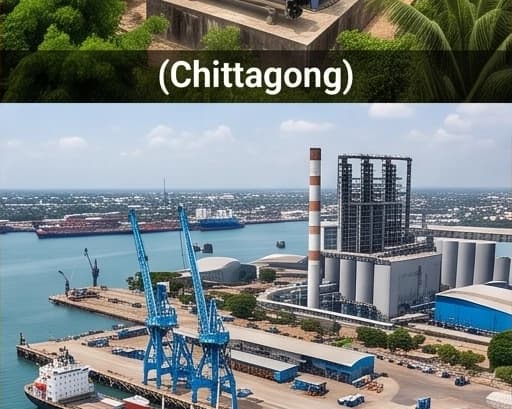
For larger project consignments (full container loads), Alpha UV ships via Kolkata Port (Haldia) or JNPT (Mumbai) to Chittagong Port, Bangladesh's main seaport handling 90 percent of the country's international trade. Sea transit from Kolkata: 3–5 days. From JNPT: 5–7 days. Chittagong customs: 2–4 days. Door-to-destination total: 7–12 days.
| Parameter | Benapole Land Route | Chittagong Sea Route |
|---|---|---|
| Transit time to Bangladesh | 4–6 working days | 7–12 working days |
| Preferred for | Urgent, single units, small projects | Bulk orders, project cargo |
| SAFTA duty benefit | Applicable (0–5%) | Applicable (0–5%) |
| Customs documentation | SAFTA COO + commercial invoice + packing list | SAFTA COO + BL + commercial docs |
Frequently Asked Questions
Does UV treatment also remove arsenic from Bangladesh groundwater?
No. UV radiation inactivates microorganisms by damaging their DNA — it has no effect on dissolved chemical contaminants including arsenic. UV must be positioned after arsenic removal treatment (coagulation-filtration or activated alumina adsorption) in the treatment train. The UV reactor provides microbiological disinfection only. The correct treatment sequence is: arsenic removal → cartridge filtration → UV disinfection. Alpha UV advises on integrated treatment train design and can supply the UV component with connections compatible with standard DPHE-specified ARS systems.
Is BSTI certification required for UV systems sold in Bangladesh?
BSTI (Bangladesh Standards and Testing Institution) does not have a specific UV disinfection equipment standard. For DPHE-tendered government projects, NSF/ANSI 55 Class A certification (USA) is accepted as the primary performance validation standard. For World Bank and ADB-funded projects, NSF/ANSI 55 Class A and ISO 9001 quality system certification are standard requirements. Alpha UV provides both certificates. BSTI may require product registration for commercial distribution in Bangladesh — Alpha UV's appointed Dhaka-based distribution partner handles this registration process.
How does high monsoon turbidity affect UV performance in Bangladesh?
During the Bangladesh monsoon (June–October), surface water turbidity can exceed 100 NTU in flood-affected areas. UV disinfection requires turbidity below 1 NTU at the reactor inlet — meaning pre-treatment (sedimentation, coagulation, filtration) is mandatory before UV for surface water or turbid groundwater. Alpha UV's systems include a turbidity alarm input: if upstream turbidity exceeds the design limit, the alarm activates without shutting off flow (to prevent water supply disruption) while alerting operators to check pre-treatment. For monsoon-season operation, a pre-season pre-filter media inspection is strongly recommended.
Can Alpha UV systems integrate with Bangladesh's SCADA/telemetry systems for remote monitoring?
Yes. Alpha UV systems include RS-485 Modbus RTU output for integration with SCADA systems, including those used by DPHE for urban water network telemetry and by WASA (Dhaka Water Supply and Sewerage Authority) for distribution network monitoring. UV intensity readings, lamp hours, flow rate (if flow meter is fitted), and alarm status are all available as Modbus registers. For garment factory BMS integration, BACnet IP gateway modules are available as an option.
What is the warranty and after-sales support arrangement for UV systems in Bangladesh?
Alpha UV provides an 18-month warranty on the UV chamber, control electronics, and UV lamp. After-sales support in Bangladesh is provided through Alpha UV's Dhaka-based authorised service partner, who carries replacement lamps, quartz sleeves, and O-ring service kits in local stock. WhatsApp-based technical support from Alpha UV's IIT-trained engineers in Ahmedabad is available in English and Hindi during business hours. For critical applications (hospitals, pharmaceutical facilities), Alpha UV can arrange a service agreement covering annual calibration verification and preventive maintenance visits.
Do garment factory CSR audits require specific UV certification documentation?
Most RMG buyer sustainability audits (following Higg Index, ZDHC, or SAC frameworks) require that drinking water at factories meets local standards (DPHE) plus WHO standards where local standards are less stringent. UV system compliance documentation required by auditors typically includes: NSF/ANSI 55 Class A certificate, most recent water quality test report (from a DPHE-accredited laboratory) showing E. coli non-detectable post-UV, and UV system maintenance log (lamp hours, last replacement date). Alpha UV provides a compliance documentation package at commissioning designed for RMG audit submission.
Conclusion: UV Water Treatment Bangladesh — Completing the Safe Water Chain
Bangladesh's water safety challenge is layered and persistent: a naturally arsenic-contaminated aquifer, the world's most cholera-endemic river system, and an annual monsoon that simultaneously delivers life-giving water and devastating pathogen contamination. UV water treatment Bangladesh is not a standalone solution to this complexity — it is the essential final link in a treatment chain that must address each hazard in sequence. After arsenic removal, after coagulation, after filtration, the UV reactor stands as the last biological barrier before water reaches people.
Alpha UV delivers that barrier with NSF/ANSI 55 Class A validation at 40 mJ/cm² minimum dose, CFD-optimised reactor hydraulics achieving 0.91 RED efficiency, and a supply chain from Ahmedabad to Dhaka via Benapole in 4–6 working days. From DPHE rural water stations to Dhaka pharmaceutical plants, from Chittagong shrimp processors to garment factories facing global buyer audits — UV water treatment Bangladesh from Alpha UV provides the certified, documented, maintainable disinfection that safe water delivery in this country demands.
Contact Alpha UV's South Asia export team for Bangladesh pricing, DPHE-format technical documentation, and project consultation.
Recommended UV Systems
Alpha UV System products for this application — powered by genuine Philips UV-C lamps.
Commercial UV Water Purification System
500 – 5,000 LPH
HACCP-compliant UV water purification for hotels, restaurants, and offices
Industrial UV Water Treatment System
5,000 – 50,000 LPH
Schedule M 2025 and HACCP compliant UV for pharma, food & beverage, and process water
Not sure which system suits your application? WhatsApp our engineers for a free recommendation →
Related solutions
See how Alpha UV System applies this to your industry or city.
Need a UV system?
Talk to our UV engineers — WhatsApp for a quote in 2 hours, or browse the full catalog on IndiaMART.