Quick Answer: Yes, UV systems can treat well water and borewell water — but pre-treatment is mandatory. UV-C light cannot penetrate turbid, iron-rich, or high-TDS water. Install a 5-micron sediment filter (and iron removal filter if iron exceeds 0.3 mg/L) before the UV unit to ensure effective pathogen inactivation.
Why Well Water Needs Special Consideration
Homeowners and facility managers across India increasingly ask: can I use UV on well water from a borewell or open dug well? The answer is yes — but well water and borewell water present a fundamentally different treatment challenge compared to municipal tap water. Municipal supply is pre-treated (coagulation, sedimentation, filtration, residual chlorine) before it reaches your tap. Borewell and open well water receives none of that upstream treatment. What comes out of the borewell is raw groundwater — and raw groundwater in India routinely contains bacteria, dissolved iron, manganese, turbidity, humic acids, and in many regions, elevated fluoride or TDS.
Open wells and borewells are directly exposed to the surrounding aquifer and, in the case of shallow open wells, to surface runoff. Pathogens from agricultural runoff, open defecation, and animal waste contaminate shallow groundwater extensively — a reality confirmed by CGWB surveys. Seasonal variation compounds the problem: during monsoon, turbidity and pathogen load in open wells can spike tenfold within 24 hours as surface water infiltrates the water table. This is precisely the context in which the question can I use UV on well water becomes most urgent — and most consequential.
The answer is yes, and UV disinfection is one of the most practical and chemical-free solutions for borewell water. It does not require chlorine storage, dosing pumps, or chemical testing. It leaves no taste or odour. The critical requirement is that the water entering the UV chamber must meet certain quality thresholds — which is why pre-treatment is non-negotiable when you intend to use UV on well water safely.
Common Indian Borewell Contaminants vs. BIS/WHO Limits
| Contaminant | Typical Borewell Range (India) | BIS IS 10500 Limit | WHO Guideline | UV Treats It? | Notes |
|---|---|---|---|---|---|
| Total Coliform | 10–10,000 MPN/100 mL | Absent in 100 mL | Not detectable | Yes | Primary UV target |
| Iron (total) | 0.1–5 mg/L | 0.3 mg/L | 0.3 mg/L | No | Pre-treatment required above 0.3 mg/L |
| Turbidity | 1–50 NTU (monsoon peaks higher) | 1 NTU (5 NTU permissible) | 1 NTU | No | Sediment filter required above 1 NTU |
| Fluoride | 0.5–5 mg/L | 1 mg/L (1.5 mg/L max) | 1.5 mg/L | No | RO required for fluoride removal |
| Manganese | 0.01–1 mg/L | 0.1 mg/L (0.3 mg/L max) | 0.08 mg/L | No | Stains quartz sleeve above 0.05 mg/L |
| TDS | 200–3,000 mg/L | 500 mg/L (2,000 mg/L max) | 600 mg/L | No | RO required above 500 mg/L for potable use |
How UV Works on Well Water
Understanding whether you can use UV on well water requires understanding how UV-C disinfection works at the physics level. A UV-C lamp inside the system emits light at 254 nm — the wavelength most efficiently absorbed by the nucleic acids (DNA and RNA) of pathogens. When a pathogen absorbs a sufficient dose of UV-C energy (expressed in millijoules per square centimetre, mJ/cm²), its genetic material is damaged beyond repair. The pathogen cannot replicate and cannot cause infection. This mechanism is effective against bacteria, viruses, and protozoa alike — including organisms that are chlorine-resistant.
UV is effective against all of the following pathogens commonly found in contaminated borewell water: E. coli, fecal coliforms, Salmonella typhi (typhoid), Vibrio cholerae (cholera), Rotavirus, Hepatitis A virus, Giardia lamblia, and Cryptosporidium parvum. The standard dose for safe drinking water disinfection is 40 mJ/cm², which all Alpha UV System units are engineered to deliver at their rated flow.
What UV does not do is equally important to understand when you ask can I use UV on well water: UV does not remove dissolved iron, fluoride, TDS, hardness, arsenic, nitrates, or pesticides. UV is a disinfection technology — not a filtration or chemical removal technology. For well water with dissolved chemical contaminants above safe limits, UV must be combined with appropriate pre-treatment (iron removal filter, RO system) to deliver safe drinking water.
UV Transmittance and Well Water
The key concept linking well water quality to UV effectiveness is UV Transmittance (UVT). UVT measures what percentage of UV-C light at 254 nm passes through a 1 cm water column. Clean municipal water typically has UVT of 85–95%. Raw borewell water with iron, turbidity, and humic acids may have UVT as low as 30–50%. When UVT is low, the UV lamp has to work much harder to deliver 40 mJ/cm² to the far side of the UV chamber. At low enough UVT, the system cannot deliver adequate dose at its rated flow — and pathogen inactivation is incomplete. This is the single most important technical reason why you cannot simply use UV on well water without testing and pre-treating first.
Pre-treatment — raising UVT to above 75% before water enters the UV chamber — is the non-negotiable foundation of any installation where you intend to use UV on well water for drinking and cooking.
| Contaminant | Effect on UV Performance | Pre-Treatment Solution |
|---|---|---|
| Iron above 0.3 mg/L | Oxidises under UV-C and coats quartz sleeve with orange-brown scale, blocking UV transmission into the water | Iron removal filter (greensand, birm, or aeration + media) |
| Turbidity above 1 NTU | Particles absorb UV-C and physically shield pathogens inside particle aggregates from UV exposure | 5-micron sediment cartridge filter |
| Manganese above 0.05 mg/L | Deposits black-brown staining on quartz sleeve, permanently reducing UVT through the sleeve | Manganese greensand filter or oxidation + filtration |
| Humic acids (yellow/brown water) | Strong UV-C absorbers — dramatically reduce UVT; coloured water can have UVT below 40% | Coagulation-flocculation + activated carbon filter |
| TDS above 500 ppm | Elevated dissolved solids reduce UVT marginally; at very high TDS the combined effect with other dissolved species is significant | RO pre-treatment (also addresses fluoride and hardness) |
Pre-Treatment Requirements for Well Water UV
When evaluating whether you can use UV on well water, the pre-treatment specification is the most consequential decision in the system design. The minimum requirement for any borewell installation is a 5-micron polypropylene sediment cartridge filter, replaced every three months. This alone is sufficient only if iron is below 0.3 mg/L, turbidity is below 1 NTU, and TDS is below 500 ppm. Most Indian borewells require additional pre-treatment stages.
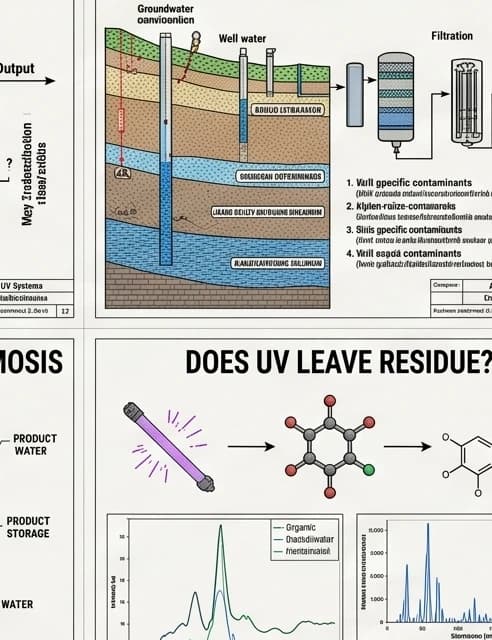
The complete flow sequence when you use UV on well water is: Borewell pump outlet → Iron removal filter → 5-micron sediment filter → UV system → Storage tank / point of use. If TDS or fluoride is also elevated, an RO system is inserted between the iron filter and the UV unit.
| Water Parameter | Level | Pre-Treatment Required | UV Compatible After Treatment? |
|---|---|---|---|
| Iron | Below 0.3 mg/L | 5-micron sediment filter only | Yes |
| Iron | 0.3–3 mg/L | Iron removal filter + 5-micron sediment filter | Yes |
| Turbidity | 1–10 NTU | 5-micron or 1-micron sediment filter | Yes |
| Turbidity | Above 10 NTU | Sand/multimedia filter + 5-micron sediment filter | Yes, after filtration |
| TDS / Fluoride | TDS above 500 ppm or Fluoride above 1 mg/L | RO membrane system before UV | Yes — UV post-RO adds microbiological safety |
| Humic acids / Colour | Water visibly yellow or brown | Coagulation + activated carbon filter + 5-micron sediment filter | Yes, after carbon filtration |
A critical point often overlooked: if you already have an RO system on your borewell water, you should still use UV on well water post-RO. RO membranes can harbour biofilm and do not guarantee zero bacteria in the permeate. UV post-RO is the industry standard for safe drinking water and is the configuration used in all certified packaged drinking water plants in India.
India Region-by-Region Well Water Guide
The question of can I use UV on well water has a different practical answer depending on where in India the borewell is located. Indian groundwater quality is highly regional — driven by geology, agricultural practices, and proximity to industrial areas. The table below summarises the dominant issues and recommended treatment setup by region.
| Region | States | Typical Borewell Issues | Recommended Treatment Setup |
|---|---|---|---|
| North India (Indo-Gangetic Plain) | UP, Bihar, Jharkhand, West Bengal | High dissolved iron (often 1–5 mg/L), fecal bacteria, turbidity | Iron removal filter + 5-micron sediment filter + Alpha UV System |
| Rajasthan / Gujarat | Rajasthan, Gujarat | High fluoride (up to 5 mg/L), very high TDS (500–3,000 ppm), hardness | RO system + Alpha UV System (post-RO microbiological safety) |
| South India — Coastal | Tamil Nadu (coastal), Kerala, coastal Andhra Pradesh | Elevated salinity / TDS, fecal bacteria in shallow wells | RO system + Alpha UV System |
| South India — Inland | Karnataka, Telangana, inland Andhra Pradesh | Fluoride (1–3 mg/L), iron, bacteria | RO (for fluoride) or iron removal filter + Alpha UV System depending on fluoride level |
| Northeast India | Assam, Meghalaya, Arunachal Pradesh | High humic acids (tea belt soils), bacteria, monsoon turbidity spikes | Coagulation + activated carbon filter + 5-micron sediment filter + Alpha UV System |
| West India | Maharashtra, Goa | Variable iron (0.2–2 mg/L), bacteria, seasonal turbidity | 5-micron sediment filter + Alpha UV System (add iron filter if iron above 0.3 mg/L) |
| Hill and Mountain Areas | Uttarakhand, Himachal Pradesh, J&K | Bacteria, high monsoon turbidity, cold water (lower UV lamp output at very low temperatures) | 5-micron sediment filter + Alpha UV System (verify lamp warm-up in cold months) |
UV Sizing for Borewell Pump Flow
One of the most common sizing mistakes when specifying whether you can use UV on well water is selecting a UV system based on household size rather than on the borewell pump's actual output flow rate. Borewell submersible pumps typically deliver 500 to 3,000 LPH depending on pump size and bore yield — and the UV system must be rated to handle the pump's full output. An undersized UV system receiving flow higher than its rating delivers an inadequate UV dose: water passes through too quickly for the Philips UV-C lamp to inactivate pathogens to the required 40 mJ/cm².
Always check the pump nameplate or technical data sheet for the rated flow in LPH. Size the UV system at or above that flow rate. A correctly sized unit is the key to being able to use UV on well water reliably for years without dose failures. For borewell installations, it is standard practice to install the UV on the pump outlet line — after pre-treatment filters, before the overhead tank — so that all pumped water is disinfected before it enters the household distribution system.
| Borewell Pump Capacity | Typical Household / Application Size | Recommended Alpha UV Model | UV Dose Guaranteed |
|---|---|---|---|
| Up to 500 LPH | 1–2 persons / small apartment | Alpha UV 7W | 40 mJ/cm² at rated flow |
| Up to 1,000 LPH | 4–6 persons / mid-size household | Alpha UV 11W | 40 mJ/cm² at rated flow |
| Up to 2,000 LPH | 8–12 persons / large household or villa | Alpha UV 25W | 40 mJ/cm² at rated flow |
| Up to 3,000 LPH | Community borewell, small industry, hostel | Alpha UV 55W | 40 mJ/cm² at rated flow |
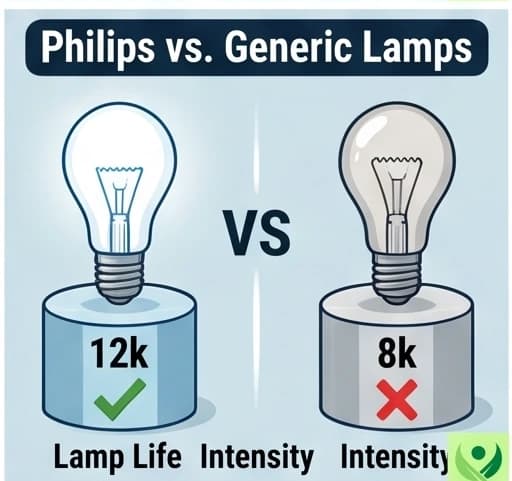
All Alpha UV System models use a Philips UV-C lamp as the light source. Philips TUV lamps are validated for consistent 254 nm output and maintain rated UV intensity across the lamp's operating life, ensuring your dose guarantee holds through the full service interval.
Seasonal Considerations for Well Water UV
For anyone asking can I use UV on well water year-round, the answer is yes — but seasonal maintenance discipline is essential, particularly in India's climate.
Monsoon (June–September): This is the highest-risk period for anyone who uses UV on well water or borewell water. Surface water infiltration dramatically increases turbidity and pathogen load in shallow wells. Open wells can see turbidity jump from 2 NTU to 30 NTU or higher within hours of heavy rain. Pre-filter cartridges may need replacement every 4–6 weeks during peak monsoon rather than the standard 3-month interval. Inspect the quartz sleeve monthly during this period.
Summer (March–May): Water tables drop, concentrating dissolved minerals including iron and manganese. Well water that was borderline (iron at 0.25 mg/L) in winter may exceed the 0.3 mg/L threshold in summer. If you notice orange staining in sinks or the UV sleeve, have the water retested and add iron pre-treatment if needed.
Post-monsoon (October–November): Pathogen load in shallow wells peaks in the weeks after monsoon as contaminated water that infiltrated during the rains reaches the water table. UV is most critical during this period. Do not skip maintenance.
UV lamp service life: The Philips UV-C lamp in Alpha UV System units is rated for 9,000 operating hours. For a borewell pump running 8 hours per day, this corresponds to approximately 3 years of lamp life. For continuous-flow commercial or community installations, plan for annual lamp replacement. The Philips TUV lamp's UV output degrades gradually over its life — always replace before output falls below the level required to maintain 40 mJ/cm² dose.
Water Testing Before Installing UV on Well Water
Before specifying whether you can use UV on well water at a given site, a basic water quality test is essential. Testing tells you exactly what pre-treatment is needed — and confirms whether UV alone is sufficient or whether RO is required. NABL-accredited laboratories in all major Indian cities offer a borewell water quality panel for approximately Rs. 500–2,000 depending on parameters tested.
| Parameter to Test | Acceptable Limit for UV-Only Treatment | Why It Matters for UV |
|---|---|---|
| Turbidity | Below 1 NTU entering UV chamber | Above 1 NTU, UV dose delivery is significantly impaired — pathogens can survive |
| Iron (total) | Below 0.3 mg/L | Iron deposits on quartz sleeve reduce UV transmission into water column |
| Total Coliform | Any level — UV will treat | Confirms biological contamination requiring disinfection; UV target parameter |
| E. coli | Any level — UV will treat | Primary fecal contamination indicator; UV inactivates E. coli at 40 mJ/cm² |
| TDS | Below 500 ppm for UV alone | Above 500 ppm, additional chemical contaminants likely present; RO required before UV |
| Manganese | Below 0.05 mg/L | Manganese stains and permanently damages quartz sleeve above this level |
| pH | 6.5 to 8.5 | UV performance is stable across this range; outside this range, corrosion and other issues arise |
Maintenance for Well Water UV Systems
When you use UV on well water, the system requires more frequent maintenance than on municipal water, because the pre-treatment filters work harder and the quartz sleeve faces higher mineral fouling risk. Following the schedule below keeps the system performing at the 40 mJ/cm² dose guarantee.
Quartz sleeve inspection and cleaning: Every 2–3 months for well water installations, compared to every 6 months for municipal water. Inspect for iron or manganese staining. Clean with a citric acid solution (10% concentration) — soak the sleeve for 30 minutes, rinse thoroughly, and reinstall. If staining is black and does not respond to citric acid, the manganese is permanent and the sleeve must be replaced.
Sediment pre-filter cartridge replacement: Every 3 months under normal conditions; every 4–6 weeks during monsoon if turbidity is high. A blocked sediment filter reduces flow through the UV chamber, which can actually increase UV dose (as water slows), but the real risk is that a completely blocked filter causes the pump to run against backpressure — damaging the pump and potentially bypassing the filter. Replace on schedule, not only when flow drops noticeably.
Iron removal filter media: Follow the manufacturer's regeneration or backwash schedule — typically every 1–4 weeks depending on iron load and media type. High-iron borewells (above 1 mg/L) may need weekly backwashing.
Annual water quality test: Test treated water at a NABL lab for total coliform and E. coli once per year to verify that the complete treatment train — pre-treatment plus UV — is delivering safe drinking water. This is the definitive check that the answer to "can I use UV on well water at my site" remains yes.
Frequently Asked Questions
Can I use UV on open well water directly?
Open dug wells typically have much higher turbidity than borewells, especially during and after monsoon. Direct UV installation on open well water without pre-treatment will result in rapid quartz sleeve fouling — often within days — and the UV dose delivered will be far below 40 mJ/cm², leaving pathogens alive in the treated water. So while you can use UV on well water from open wells, a sand filter or multimedia filter stage must be installed upstream of the UV system. For open wells with consistently high turbidity, a slow sand filter or a multimedia pressure filter (sand + anthracite) followed by a 5-micron cartridge filter is the correct pre-treatment sequence. Contact Alpha UV System with your water quality test results for a site-specific design.
My well water looks clear — do I still need pre-filtration?
Yes. Water can appear visually clear and still contain dissolved iron (colorless at low concentrations in reduced form), dissolved manganese, and high levels of bacteria — all of which affect UV performance or indicate the need for UV disinfection. Dissolved iron at 0.5 mg/L is typically invisible until it oxidises (in air or under UV-C), at which point it deposits on the quartz sleeve. You cannot assess whether you can use UV on well water based on visual clarity alone. A basic water quality test (turbidity, iron, TDS, coliform) is the correct starting point.
Can UV treat fluoride-contaminated well water?
No. UV is a disinfection technology — it inactivates pathogens through DNA damage but has no mechanism for removing dissolved ions such as fluoride. If your borewell water has fluoride above 1 mg/L (BIS limit), you need RO pre-treatment to reduce fluoride before the UV unit. The correct answer to "can I use UV on well water with fluoride" is: yes, but only with an RO system upstream. The UV unit post-RO then provides microbiological safety in case the RO membrane develops a pinhole or biofilm. Many customers in Rajasthan, Gujarat, and parts of Karnataka use this RO + UV configuration successfully.
How often should I test my well water?
For borewell water used for drinking and cooking, test at minimum once a year and immediately after any of the following: heavy flooding or monsoon event, visible change in water colour or smell, illness in household members that may be waterborne, or any maintenance work on the borewell (pump replacement, bore redrilling). Pre-treatment systems (iron filter, RO) should also be tested periodically to verify they are performing correctly — a failed iron filter will allow iron to reach the UV sleeve without triggering an alarm. If you use UV on well water year-round, annual NABL lab testing of both raw borewell water and treated output water is the best practice to confirm the system continues to deliver safe water.
What if my borewell pump runs at variable flow?
Borewell submersible pumps with VFDs (variable frequency drives) or pressure-based on/off cycling deliver variable flow to the UV system. When flow drops below the UV system's rated capacity, the UV dose per litre actually increases — this is safe. The risk is the opposite: if the pump delivers flow higher than the UV system rating, dose drops. When you use UV on well water with a variable-speed pump, size the UV system at the pump's maximum possible flow rate, not its average flow. If you are unsure of your pump's maximum output, share the pump model number with Alpha UV System and we will confirm the correct UV unit for your application within 24–48 hours.
Is UV safe for well water used in cooking and drinking?
Yes — properly sized and maintained UV disinfection is safe and produces no chemical byproducts, no residual taste or odour, and no change to water chemistry. UV simply inactivates pathogens; the water is otherwise unaltered. For cooking, bathing, and drinking, UV-treated well water that meets pre-treatment requirements is equivalent in microbiological safety to chlorinated municipal water — without chlorine's disinfection byproducts (trihalomethanes) or chemical taste. The important qualifier is "properly sized and maintained": the Philips UV-C lamp must be within its rated service life, the quartz sleeve must be clean, and pre-filters must be serviced on schedule. When these conditions are met, UV is among the safest methods to disinfect well water for household use.
Get a Well Water UV System Recommendation
If you are evaluating whether you can use UV on well water at your specific location — borewell, open well, or dug well — share your water test results with our team and we will recommend the correct pre-treatment configuration and Alpha UV System model for your flow rate and water quality. We respond within 24–48 hours with a complete system specification at no charge.
WhatsApp us your water test results for a free UV system recommendation
Standards, authorities & further reading
External references used to inform this guide. Regulations evolve — check the latest revision on each authority's site before compliance decisions.
Recommended UV Systems
Alpha UV System products for this application — powered by genuine Philips UV-C lamps.
Commercial UV Water Purification System
500 – 5,000 LPH
HACCP-compliant UV water purification for hotels, restaurants, and offices
Industrial UV Water Treatment System
5,000 – 50,000 LPH
Schedule M 2025 and HACCP compliant UV for pharma, food & beverage, and process water
Not sure which system suits your application? WhatsApp our engineers for a free recommendation →
Need a UV system?
Talk to our UV engineers — WhatsApp for a quote in 2 hours, or browse the full catalog on IndiaMART.