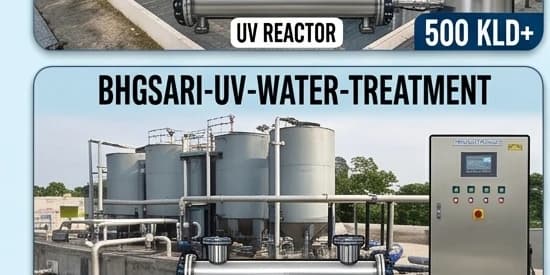
UV water treatment in Bhosari and Pimpri-Chinchwad (PCMC) industrial belt addresses 5 critical needs: (1) auto component manufacturers (Tata Motors, Bajaj, Mercedes-Benz, Volkswagen suppliers) cooling tower ASHRAE 188 Legionella UV; (2) Pharma MIDC Bhosari and Chakan — Schedule M 2025 pharmaceutical pure water with 185+254 nm dual-wavelength UV for TOC <500 µg/L and bacteria <100 CFU/mL; (3) Pavana River alluvial borewell iron (Fe 0.3–1.2 mg/L) requiring iron pre-treatment before UV; (4) PCMC township and IT park drinking water UV at 40 mJ/cm² for 2+ million residents; and (5) Yashwantrao Chavan Memorial Hospital and private hospital NABH water at 80 mJ/cm² ICU/OT. Philips TUV 16W–95W and 185+254 nm UV systems serve all these segments.
Pimpri-Chinchwad, governed by PCMC (Pimpri Chinchwad Municipal Corporation) and comprising the industrial townships of Bhosari, Pimpri, Chinchwad, Akurdi, Nigdi, and Chakan, is India's largest concentration of automotive manufacturing and one of Asia's most significant industrial corridors. Tata Motors' historic truck and bus plant, Bajaj Auto's Akurdi headquarters, Mercedes-Benz India, Volkswagen India, and hundreds of Tier-1 and Tier-2 automotive suppliers form the core of this economy. The MIDC (Maharashtra Industrial Development Corporation) areas of Bhosari, Chinchwad, and Chakan additionally host a significant pharmaceutical cluster — contract manufacturing organisations (CMOs) and formulation units supplying domestic and export markets.
The water treatment implications of this industrial density are significant. Auto manufacturing cooling towers need ASHRAE 188 Legionella management at scale. Pharmaceutical units need Schedule M 2025-compliant pharmaceutical-grade pure water. The 2+ million residents of PCMC need safe drinking water from the Pavana and Mula rivers. And the healthcare sector — PCMC's YCM Hospital and dozens of NABH-accredited private hospitals — needs clinical-grade water at 80 mJ/cm² UV dose.
PCMC and Bhosari Water Quality: Zone-by-Zone Profile
| Zone / Area | Primary Water Source | Key Parameters | UV Treatment Need |
|---|---|---|---|
| PCMC township (residential areas) | Pavana Dam / Indrayani River (PCMC WTP) | TDS 150–350 mg/L, turbidity 1–5 NTU post-WTP, Fe 0.05–0.3 mg/L | UV 40 mJ/cm² POU; PCMC supply generally good quality |
| Bhosari MIDC / Chinchwad MIDC (industrial) | PCMC / MIDC industrial supply + borewell backup | TDS 200–500 mg/L, Fe 0.1–0.8 mg/L (borewell), hardness 150–350 mg/L | Iron filter (if borewell) + UV 40 mJ/cm² |
| Pharma MIDC Bhosari (Schedule M PW) | PCMC supply → in-plant RO → UV | Post-RO TDS 1–10 mg/L, bacteria must be <100 CFU/mL, TOC <500 µg/L | 185+254 nm dual-wavelength UV for TOC + disinfection |
| Auto plant cooling circuits (Tata, Bajaj, MB, VW) | PCMC / Pavana treated, recirculating in CT | TDS 400–2,000 mg/L (concentrated), T = 30–45°C, Legionella risk | ASHRAE 188 sidestream UV at 10–25% |
| Chakan MIDC new industrial zone | Borewell (Pavana alluvial + Deccan basalt) | TDS 300–700 mg/L, Fe 0.2–0.8 mg/L, hardness 200–450 mg/L | Softener + iron filter + UV 40 mJ/cm² |
Auto Component Manufacturers: ASHRAE 188 Cooling Tower UV
Bhosari and Chinchwad MIDC host India's largest concentration of automotive manufacturing outside of Gurgaon-Manesar. The cooling water systems at this cluster are among the most diverse and complex UV applications:
Tata Motors Pimpri plant: Commercial vehicle (truck, bus) manufacturing with press shops, engine assembly, paint shop, and body-in-white — each with dedicated cooling water circuits. Cooling tower recirculation 5,00,000–20,00,000 LPH. ASHRAE 188 UV sidestream requirement: 1,25,000–5,00,000 LPH UV treatment flow = 14–56 Philips TUV 95W lamps.
Bajaj Auto Akurdi: Two-wheeler manufacturing with casting, machining, and assembly halls. Cooling tower circuits 2,00,000–5,00,000 LPH. ASHRAE 188 UV sidestream: 50,000–1,25,000 LPH = 6–14 TUV 95W lamps.
Mercedes-Benz India and Volkswagen Chakan: Premium passenger car manufacturing with paint shop (highest Legionella risk area — humidity chambers run at 40–50°C). Paint shop cooling tower Legionella risk is heightened because of elevated temperature and chemical-rich water. ASHRAE 188 compliance at these plants requires UV sidestream with quarterly Legionella culture (ISO 11731) testing — as premium brand facilities with ISO 14001, ISO 45001, and IATF 16949 certification, these plants document Legionella WMP rigorously.
Tier-1 automotive supplier cooling: Hundreds of Tier-1 suppliers (forging, casting, injection moulding, surface treatment, painting) across PCMC MIDC have smaller cooling tower circuits (10,000–50,000 LPH each), requiring 2–6 Philips TUV 95W lamps per facility for ASHRAE 188 sidestream compliance.
Pharmaceutical Pure Water: Schedule M 2025 UV
India's revised Schedule M (GMP) notified in 2023 and effective 2025 mandates Pharmaceutical Water (PW) quality for formulation manufacturing: bacteria <100 CFU/mL, endotoxin <0.25 EU/mL, TOC <500 µg/L. This requires dual-stage purification: RO membrane (TDS reduction to 1–10 mg/L) followed by 185+254 nm dual-wavelength UV for simultaneous bacteria inactivation (254 nm) AND TOC photo-oxidation (185 nm). The 185 nm UV generates hydroxyl radicals that oxidize organic TOC molecules to CO₂ and H₂O. Standard 254 nm UV-only systems do NOT meet Schedule M TOC requirements. Bhosari and Chakan MIDC pharma CMOs must use 185+254 nm dual-wavelength Philips TUV UV systems, verified by in-line TOC monitor, for Schedule M 2025 PW compliance. IQ/OQ/PQ (Installation Qualification, Operational Qualification, Performance Qualification) documentation is mandatory for CDSCO audit.
Bhosari MIDC hosts a significant pharma cluster — Lupin, Cipla, Wockhardt, Emcure, Glenmark formulation facilities and 30+ CMOs. The Chakan MIDC area is developing a new pharma zone. Each facility's pharmaceutical pure water (PW) system requires 185+254 nm UV as an IQ/OQ/PQ-validated unit operation.
Schedule M 2025 PW system validation documentation for CDSCO:
- IQ (Installation Qualification): UV model, serial number, lamp wattage, chamber material (SS316), installation drawings
- OQ (Operational Qualification): Validated flow rate, UV dose measurement at minimum rated flow, alarm functionality test, lamp-hours counter calibration
- PQ (Performance Qualification): 30-day operational data showing bacteria <100 CFU/mL at system outlet, TOC <500 µg/L in-line monitoring log
Philips TUV 185+254 nm UV lamps — specifically designed for pharma pure water TOC reduction — are the industry-standard choice for CDSCO pharma audit compliance in Bhosari MIDC units. The documented lamp traceability (Philips product code, batch number, emission spectrum certificate) forms part of the PQ documentation package.
Pavana River Alluvial Iron: PCMC Borewell Pre-Treatment
PCMC residential areas and MIDC industrial units relying on private borewell backup (rather than PCMC piped supply) may draw from Pavana River alluvial aquifer (Fe 0.2–1.0 mg/L) or the Deccan basalt fractured aquifer (Fe 0.1–0.5 mg/L). Iron above 0.3 mg/L deposits on UV quartz sleeves within 4–8 weeks. For pharma PW applications, even iron at 0.1 mg/L can compromise the RO membrane life and TOC readings. Install a greensand or birm iron filter before RO (for pharma) or before UV (for drinking water applications) on any borewell water source in PCMC. PCMC piped supply from Pavana Dam (after WTP treatment) typically has iron <0.1 mg/L and does not require iron pre-treatment before UV.
YCM Hospital PCMC and Healthcare NABH Compliance
Yashwantrao Chavan Memorial Hospital (YCM Hospital) — PCMC's 900-bed municipal hospital — is NABH-accredited and serves as the primary government hospital for the 2.5 million PCMC population. The hospital's scale (multiple ICU bays, multiple OT suites, NICU, dialysis centre, CSSD, blood bank) requires a comprehensive UV water quality system.
YCM Hospital UV configuration under NABH IPSG-8:
- Main hospital supply: TUV 55W (5,000 LPH) at 40 mJ/cm²
- ICU (MICU, SICU, Neuro-ICU, Cardiac ICU): Dedicated TUV 16W per ICU bay cluster at 80 mJ/cm²
- Multiple OT suites: Dedicated 80 mJ/cm² UV loops per OT block
- NICU and Level III nursery: 80 mJ/cm² dedicated loop
- Dialysis centre (30+ machines): RO → UV → UF chain (AAMI ISO 13959)
- CSSD: 80 mJ/cm² UV for autoclave water and instrument rinse water
Private hospitals in PCMC — Aditya Birla Memorial Hospital, Columbia Asia Pune, Sahyadri Chinchwad, Lokmanya Hospital — are all NABH-accredited and maintain equivalent UV water quality systems. The PCMC healthcare market is sophisticated: biomedical engineers at these facilities specify Philips TUV systems by model number in their annual maintenance contracts, with NABL-lab quarterly water testing a standard procurement requirement.
UV System Sizing for Bhosari / PCMC Applications
| Application | Flow Rate Required | Philips TUV Model | UV Dose | Pre-Treatment |
|---|---|---|---|---|
| PCMC residential household | 30–60 LPH | TUV 16W compact | 40 mJ/cm² | 5µ sediment + carbon |
| Pharma MIDC PW (Schedule M 2025) | 100–500 LPH | TUV 16W (185+254 nm) | 40 mJ/cm² + TOC reduction | RO → 5µ post-RO filter → UV |
| Auto plant worker welfare (2,000 workers) | 2,000–4,000 LPH | TUV 36W | 40 mJ/cm² | 5µ sediment + carbon |
| YCM hospital / NABH ICU-OT loop | 500–1,000 LPH | TUV 16W (reduced flow) | 80 mJ/cm² | 5µ + 1µ microfiltration |
| Tata/Bajaj/MB/VW cooling tower sidestream | 50,000–5,00,000 LPH per plant | TUV 95W × 6–56 per plant | 40 mJ/cm² (ASHRAE 188) | 5µ SS strainer |
| MIDC industrial ETP polishing (MPCB) | 5,000–50,000 LPH | TUV 55W–TUV 95W × 1–6 | 40 mJ/cm² | Biological + sand + 5µ |
Philips TUV Product Recommendations for Bhosari / PCMC
| Philips TUV Model | Rated Flow | UV Output | Best Fit in PCMC | Lamp Life |
|---|---|---|---|---|
| Philips TUV 16W (254 nm) | Up to 1,500 LPH | 16W, 254 nm | Residential POU, hospital ICU loop, worker canteen | 9,000 hours |
| Philips TUV 16W (185+254 nm) | Up to 500 LPH (at PW flow rates) | 185 nm + 254 nm dual-wavelength | Pharma Schedule M 2025 PW — TOC + bacteria | 9,000 hours |
| Philips TUV 36W | Up to 3,000 LPH | 36W, 254 nm | Auto plant worker welfare, hospital OPD supply, Tier-1 supplier welfare | 9,000 hours |
| Philips TUV 55W | Up to 5,000 LPH | 55W, 254 nm | YCM hospital main supply, large auto plant canteen, PCMC apartment complex | 9,000 hours |
| Philips TUV 95W | Up to 9,000 LPH per lamp | 95W, 254 nm | Tata/Bajaj/MB/VW cooling tower (6–56 lamp banks), MIDC ETP polishing | 12,000 hours |
Regulatory Compliance for Bhosari / PCMC Industrial Zone
| Regulation | Applicable Sector | Key Requirement | UV Role |
|---|---|---|---|
| Schedule M 2025 (CDSCO) | Pharma CMOs, Bhosari/Chakan MIDC formulation units | PW bacteria <100 CFU/mL, TOC <500 µg/L, IQ/OQ/PQ validated | 185+254 nm UV after RO — TOC reduction + disinfection |
| ASHRAE 188:2018 | Tata Motors, Bajaj, Mercedes-Benz, VW, Tier-1 suppliers | Legionella WMP with sidestream UV at 10–25% of CT recirculation | High-flow TUV 95W sidestream banks |
| NABH IPSG-8 | YCM Hospital, Aditya Birla, Columbia Asia, Sahyadri | 80 mJ/cm² ICU/OT, monthly NABL water test records | Dedicated critical-care UV loops per ICU/OT block |
| MPCB CTO / OCEMS | Bhosari/Chinchwad MIDC industrial ETP | Coliform <1,000 MPN/100 mL; OCEMS real-time monitoring | ETP terminal polishing UV with OCEMS-integratable flow meter |
| IATF 16949 (Auto Quality) | Auto manufacturing, surface treatment, paint shop | Process water quality impacting product quality documented | UV as documented CCP in IATF-audited process water chain |
Frequently Asked Questions
Q1: What is the difference between 254 nm UV and 185+254 nm UV for pharma in Bhosari MIDC?
Standard Philips TUV lamps emit primarily at 254 nm — the germicidal wavelength that inactivates bacteria and viruses by disrupting DNA. For pharmaceutical pure water, 254 nm UV provides microbiological control (bacteria <100 CFU/mL under Schedule M 2025). However, Schedule M also requires TOC (Total Organic Carbon) <500 µg/L in PW. TOC from residual organics — dissolved pipe lubricants, plasticizers, biofilm fragments — is NOT reduced by 254 nm UV alone. The 185 nm wavelength, present in certain Philips TUV lamp types, generates ozone and hydroxyl radicals that oxidize organic molecules (TOC) to CO₂ and H₂O. This is the "UV photooxidation" mechanism that simultaneously achieves bacteria inactivation (254 nm) AND TOC reduction (185 nm). Bhosari MIDC pharma units needing Schedule M 2025 PW must specify 185+254 nm dual-wavelength Philips TUV lamps — not standard 254 nm UV. The lamp must be installed in a UV-transparent chamber without an inner protective glass sleeve (which would block the 185 nm radiation), and flow rate must be calibrated so water receives adequate 185 nm dose for TOC oxidation to the <500 µg/L target.
Q2: How many TUV 95W lamps does Tata Motors Pimpri cooling tower UV need?
Tata Motors' Pimpri plant — one of India's largest commercial vehicle manufacturing complexes with press shops, paint shops, engine assembly, and final assembly lines — has cooling tower recirculation in the range of 5,00,000–20,00,000 LPH across all cooling circuits combined. ASHRAE 188 requires sidestream UV at 25% of recirculation: 1,25,000–5,00,000 LPH UV treatment flow. Each Philips TUV 95W handles 9,000 LPH. Total lamps: 1,25,000 ÷ 9,000 ≈ 14 lamps (minimum for 5 million LPH circuit, 25% sidestream) to 5,00,000 ÷ 9,000 ≈ 56 lamps (full 20 million LPH circuit, 25% sidestream). In practice, Tata Motors deploys UV systems by cooling tower unit — separate UV banks for paint shop cooling, engine test cell cooling, and plant utility cooling, with each bank sized for that circuit. Total installed TUV 95W lamps across the Pimpri plant complex is typically in the 20–60 lamp range. The TUV 95W's 12,000-hour lamp life means replacement approximately every 16–18 months at 24/7 operation — typically timed with annual plant maintenance shutdowns.
Q3: Does PCMC municipal supply need additional UV treatment for residential use?
PCMC's water supply, drawn from Pavana Dam and treated at PCMC's multiple WTPs, is one of the better-quality municipal supplies in Maharashtra — TDS 150–350 mg/L, turbidity <1 NTU post-treatment, residual chlorine 0.2–0.5 mg/L at the WTP output. However, the distribution network in PCMC — serving 2.5 million people through ageing pipes in some older sectors of Pimpri and Chinchwad — can introduce recontamination between the WTP and the household tap. Chlorine residual dissipates through the distribution distance, particularly in hot weather and in areas with intermittent supply (where negative pressure can draw contamination into pipes during supply interruptions). Point-of-use UV treatment at the household level — Philips TUV 16W after a 5-micron sediment and carbon block — provides the final disinfection barrier that accounts for distribution system variability. This is especially important for households in older PCMC sectors (pre-2000 pipe infrastructure in Pimpri, Yamuna Nagar, Sector 23–35) where distribution pipes may be compromised.
Q4: What NABH UV water requirements apply to YCM Hospital Pimpri?
YCM Hospital is one of the largest NABH-accredited municipal hospitals in Maharashtra (900+ beds). NABH IPSG-8 requires: (1) General ward water: UV 40 mJ/cm², zero coliform, bacteria <100 CFU/100 mL, monthly NABL water culture records; (2) ICU (MICU, SICU, Neuro-ICU, Cardiac ICU, Trauma ICU): dedicated UV loops at 80 mJ/cm² per ICU cluster, zero coliform, bacteria <10 CFU/100 mL, separate SS distribution piping; (3) Multiple OT suites: dedicated 80 mJ/cm² loops, monthly NABL culture; (4) NICU and Level III nursery: dedicated 80 mJ/cm² loop with monthly NABL Pseudomonas testing (NICU pathogens include P. aeruginosa); (5) Dialysis centre: RO → UV → UF chain, AAMI ISO 13959 parameters; (6) CSSD: 80 mJ/cm² for instrument rinse water. NABH also requires documented maintenance: lamp model, serial number, installation date, replacement date, and hour count must be in the biomedical equipment maintenance register. YCM Hospital's biomedical engineering department conducts monthly checks on lamp condition and quarterly NABL-accredited water cultures for all clinical areas.
Q5: Can UV water treatment help Bhosari MIDC auto paint shop meet MPCB discharge standards?
Yes, UV polishing at the ETP discharge stage helps auto paint shop effluent meet MPCB coliform standards. Auto paint shop effluent (phosphating wastewater, electro-deposition primer wash, top-coat paint booth water) contains heavy metals, solvents, and surfactants requiring specific chemical treatment (coagulation, chromate reduction, heavy metal precipitation) before biological treatment. After the complete ETP chain (chemical + biological + sand filtration + activated carbon), residual coliform remains. UV at 40 mJ/cm² on the pre-filtered final ETP output reduces coliform by >99.9%, meeting MPCB's CTO requirement of <1,000 MPN/100 mL at the Pavana River discharge point. MPCB's Pune district office under the OCEMS programme requires real-time monitoring for large paint shop ETPs — UV system flow meter data integrates into OCEMS reporting. Important caveat: UV treats biological contamination only. Chemical pollutants (heavy metals, solvents, phosphate) must be removed by the chemical treatment stages — UV does not remove them.
Bhosari and PCMC's industrial density creates UV water treatment requirements at every scale and sophistication level: from 185+254 nm pharma pure water systems validating against Schedule M 2025 CDSCO audit, to 56-lamp TUV 95W cooling tower sidestream banks for ASHRAE 188 Legionella compliance at Tata Motors' scale, to simple TUV 16W residential units for PCMC apartment complexes. Whether you are Lupin's QA manager validating pharmaceutical PW, Bajaj Auto's environment team documenting Legionella WMP, or a resident in Sector 23 Pimpri looking for reliable point-of-use disinfection — UV water treatment specified for PCMC's industrial and residential water character is the compliant, chemical-free, scalable solution.
Alpha UV System supplies Philips TUV UV water treatment systems for Bhosari MIDC, Pimpri-Chinchwad, and Chakan — pharmaceutical Schedule M 2025 pure water (185+254 nm IQ/OQ/PQ), auto manufacturing ASHRAE 188 cooling tower sidestream banks, NABH hospital critical-care UV loops, residential POU systems, and MPCB ETP polishing. CDSCO, MPCB, NABH, and ASHRAE 188 compliance documentation support included.
WhatsApp Us for PCMC UV QuoteStandards, authorities & further reading
External references used to inform this guide. Regulations evolve — check the latest revision on each authority's site before compliance decisions.
Recommended UV Systems
Alpha UV System products for this application — powered by genuine Philips UV-C lamps.
Commercial UV Water Purification System
500 – 5,000 LPH
HACCP-compliant UV water purification for hotels, restaurants, and offices
Industrial UV Water Treatment System
5,000 – 50,000 LPH
Schedule M 2025 and HACCP compliant UV for pharma, food & beverage, and process water
Not sure which system suits your application? WhatsApp our engineers for a free recommendation →
Related solutions
See how Alpha UV System applies this to your industry or city.
Need a UV system?
Talk to our UV engineers — WhatsApp for a quote in 2 hours, or browse the full catalog on IndiaMART.