Quick Answer — UV Water Treatment System in Maharashtra
Maharashtra is India's largest industrial state — home to the Mumbai-Pune pharmaceutical-API corridor (40% of India's pharmaceutical exports), Nashik wine industry, Bhiwandi textile cluster, Kolhapur sugar mills, and MIDC industrial estates serving 100,000+ registered manufacturing units. A UV water treatment system delivering ≥40 mJ/cm² (NSF/ANSI 55 Class A, equivalent to BIS IS 10500:2012 disinfection requirements) eliminates E. coli from municipal, borehole, and process-water sources — mandatory for WHO GMP pharmaceutical compliance, FSSAI food-safety certification, and GPCB effluent reuse. Alpha UV systems are manufactured in India and available ex-works or delivered to any MIDC estate within 48 hours.
Maharashtra's Diverse Water Quality Landscape
Maharashtra (population 127 million, GDP ₹39 lakh crore — the largest of any Indian state) spans three distinct hydrogeological zones: the Konkan coastal strip (high rainfall, Western Ghats rivers, generally good raw water quality), the Deccan Plateau (basalt trap aquifers, hard water, seasonal borewells), and the Vidarbha-Marathwada region (water-scarce, heavy dependence on canal irrigation and shallow borewells with high fluoride and nitrate in some zones). A UV water treatment system Maharashtra installation must address this diversity — from Mumbai's Bhatsa dam supply (post-treatment UVT 78–86%) to Nagpur's Kanhan River abstraction (turbidity-prone) to Marathwada's hard-water borewells (TDS 800–2,000 mg/L).
MCGM (Brihanmumbai Municipal Corporation) serves Mumbai from the Bhatsa, Vaitarna, and Tansa reservoir system — one of India's largest urban water supply systems at 3,900 million litres per day (MLD). Mumbai's treated water (post-slow sand filtration + chlorination) typically shows UVT 78–86% and E. coli at point-of-use occasionally 10–50 CFU/100 mL due to distribution network contamination through old cast-iron pipes in the island city. UV at point-of-use or at individual industrial connection provides the final pathogen barrier meeting BIS IS 10500:2012 zero E. coli standard.
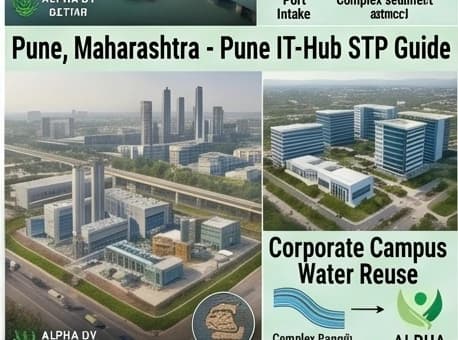
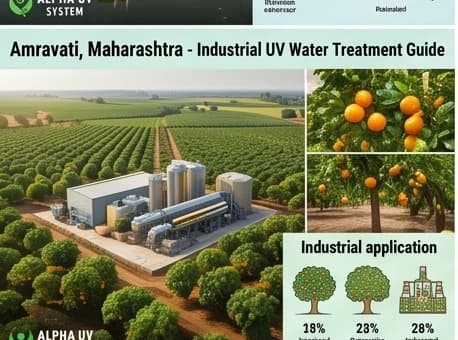
Pune's Khadakwasla and Panshet reservoir system supplies Pune Municipal Corporation (PMC); treated water UVT 80–88%. Nashik draws from Gangapur dam; Aurangabad from Jayakwadi dam (Godavari). In the Marathwada region (Latur, Osmanabad, Nanded), borehole TDS of 800–2,500 mg/L and occasional fluoride exceeding 1.5 mg/L require RO pre-treatment before UV for full compliance with IS 10500. For Vidarbha's Nagpur-Amravati zone, Wardha River and Gosikhurd canal water show seasonal turbidity of 50–300 NTU — standard coagulation-filtration before UV is specified.
Regulatory Framework: BIS IS 10500 and CPCB
Maharashtra water quality is governed by Bureau of Indian Standards IS 10500:2012 (Drinking Water Specification), which sets E. coli at zero per 100 mL and turbidity at <1 NTU. Maharashtra Pollution Control Board (MPCB) enforces Water (Prevention and Control of Pollution) Act 1974 for industrial effluent and water abstraction. The Maharashtra Industrial Development Corporation (MIDC) operates dedicated water supply networks for industrial estates, drawing from dam reservoirs and distributing at industrial quality (E. coli often 10–100 CFU/100 mL in MIDC mains due to distribution deterioration).
For pharmaceutical manufacturing, WHO GMP (Technical Report Series 970, 2012) and Schedule M (Indian Drugs and Cosmetics Act 1940) require Purified Water production with UV at 254 nm per USP <1231> and IP (Indian Pharmacopoeia) Purified Water monograph — delivered as AU-H (80 mJ/cm², 316L sanitary, Tri-Clamp) in WFI loops. For food-processing, FSSAI (Food Safety and Standards Authority of India) regulations under FSS Act 2006 require process water to meet IS 10500 standards — UV at 40 mJ/cm² satisfies this requirement. BIS certification (BIS IS 14543 for UV systems) is referenced in MIDC and municipal tender specifications.
Industry Applications for UV Water Treatment System Maharashtra
Pharmaceutical-API Corridor — Pune, Nashik, Aurangabad
The Pune-Nashik-Aurangabad pharmaceutical belt is India's most significant API (Active Pharmaceutical Ingredient) and formulation manufacturing cluster — home to companies including Sun Pharma (Halol facility, multiple Maharashtra plants), Cipla (Patalganga, Kurkumbh), Wockhardt (Aurangabad), Glenmark (Nashik), Lupin (Mandideep near Pune), Strides Pharma (Puducherry and Bombay), Unichem (Goa, Roha), and hundreds of CDMO/API manufacturers in MIDC estates at Tarapur, Mahad, Kurkumbh, Satara, Waluj, and Patalganga.
Pharmaceutical water at every one of these facilities requires: Purified Water (AU-H, 80 mJ/cm², USP <1231> / IP) for compounding, granulation, and cleaning validation; Water for Injection (WFI) for sterile products (AU-H, 80 mJ/cm², in conjunction with distillation or UF/RO+EDI loop); and utility water (AU-M or AU-S, 40 mJ/cm²) for cooling tower make-up and plant services. Maharashtra's MPCB requires pharmaceutical units to maintain water-treatment validation records — Alpha UV provides 21 CFR Part 11-compliant data logger output and schedule M/ WHO GMP qualification documentation (IQ/OQ/PQ protocols in English) for CDSCO inspection support.
Textile Dyeing and Finishing — Bhiwandi, Ichalkaranji, Solapur
Maharashtra's textile sector — Bhiwandi powerloom cluster (1.5 million+ looms, Asia's largest powerloom concentration), Ichalkaranji cotton weaving (Kolhapur district), and Solapur terry towel manufacture — requires large volumes of process water for dyeing, bleaching, printing, and finishing. Textile process water must be E. coli-free for Bluesign, OEKO-TEX STANDARD 100, and GOTS (Global Organic Textile Standard) certification — certification bodies require zero E. coli in process water as a baseline audit criterion.
Bhiwandi draws from MIDC industrial supply (Bhatsa reservoir, UVT 80–88%) and private borewells (UVT 72–82%, iron 0.5–1.5 mg/L in some zones). AU-M 30 or AU-M 50 (30–100 m³/h, 40 mJ/cm²) for dyehouse process-water supply; MODBUS RS485 integration with dyehouse DCS for real-time UV monitoring aligned with Bluesign audit requirements. Iron pre-oxidation and greensand filtration are specified for borewell-sourced dyehouse supply before the UV reactor.
Sugar Mills — Kolhapur, Sangli, Solapur Districts
Maharashtra is India's second-largest sugar producer (after Uttar Pradesh) — approximately 11–13 million tonnes/year from approximately 200 cooperative and private sugar factories in Kolhapur, Sangli, Satara, Solapur, Ahmednagar, and Nashik districts. Crush season (October–April) brings 15,000–50,000 tonnes/day of cane crushing per factory, requiring large volumes of process water for cane washing, juice clarification, and crystallisation circuit cooling. FSSAI food-safety certification for sugar export requires IS 10500-compliant process water.
Kolhapur and Sangli district factories draw from Krishna and Panchganga river abstraction (turbidity 20–150 NTU dry season, 500–2,000 NTU at flood; E. coli 200–2,000 CFU/100 mL). AU-M 50 or AU-L open-channel reactors (50–500 m³/h) serve the main process-water circuit after conventional clarification and filtration (post-filter UVT typically 74–82%). MODBUS TCP integration with factory DCS. 24-month spare-parts kit for off-season maintenance.
Wine Industry — Nashik Valley
Nashik is India's wine capital — home to Sula Vineyards, Grover Zampa, York Winery, Four Seasons Winery, and approximately 20 other licensed wineries producing 25+ million bottles annually. Wine process water (equipment sanitisation, bottle washing, barrel cleaning, irrigation) must be chlorine-free (chlorine creates TCA — 2,4,6-trichloroanisole — a wine corking taint) and E. coli-free per FSSAI and EU export standards. UV provides chemical-free, taste-neutral disinfection — the only disinfection technology compatible with premium winery process-water requirements.
Nashik wineries draw from Godavari canal supply (UVT 76–84%, E. coli 50–500 CFU/100 mL) and Gangapur dam treated supply. AU-S 10 or AU-M 30 (8–30 m³/h, 40 mJ/cm²) provides winery process-water disinfection after carbon pre-filtration (removing residual chlorine from municipal supply). Alpha UV's Wine Industry Standard pack (English documentation aligned with BRC/FSSAI audit requirements) is provided with each Nashik winery installation.
Water Source Summary Table
| Zone / Source | UVT (normal) | Key Challenge | Pre-treatment | Alpha UV Model |
|---|---|---|---|---|
| MCGM/PMC treated mains (Mumbai/Pune) | 78–88% | Distribution network E. coli recontamination | 5-micron cartridge at point-of-use | AU-S 10 / AU-M 30 |
| MIDC industrial supply (Bhiwandi/Tarapur/Waluj) | 74–84% | E. coli 10–100 CFU/100 mL (distribution aging) | Cartridge + UV | AU-M 30 / AU-M 50 |
| Deccan Plateau borewells (Pune district) | 74–84% | Iron 0.5–2 mg/L, hardness 300–600 mg/L CaCO₃ | Iron removal + softener + cartridge + UV | AU-S 10 / AU-M 30 |
| Marathwada borewells (Latur, Osmanabad) | 70–80% | TDS 800–2,500 mg/L, fluoride, hardness | RO + UV (post-RO UVT 88–94%) | AU-S 10 (post-RO) |
Alpha UV System Range for Maharashtra
| Alpha UV Model | Flow Range | Validated Dose | Primary Maharashtra Application | Key Feature |
|---|---|---|---|---|
| AU-S 10 | 4–10 m³/h | 40 mJ/cm² | Small pharma unit, winery, MIDC SME, hospital | BIS IS 14543, FSSAI compliant, 48-hr delivery |
| AU-M 30 | 10–30 m³/h | 40 mJ/cm² | Textile dyehouse, mid-size pharma API plant, MIDC estate | MODBUS RS485, Bluesign/GOTS audit pack |
| AU-M 50 | 30–50 m³/h | 40 mJ/cm² | Sugar mill crush season, large pharma campus | MODBUS TCP, duty/standby, CPCB compliance |
| AU-H | 2–30 m³/h | 80 mJ/cm² | Pharma Purified Water / WFI loop (Sun, Cipla, Wockhardt) | 316L Tri-Clamp, USP <1231>, Schedule M, WHO GMP |
| AU-L | 500+ m³/h | 40 mJ/cm² | MCGM WTW, MIDC large estate supply, sugar mill intake | Open-channel array, Maharashtra PWD project spec |
CFD Reactor Validation and Maharashtra Industrial Applications
Alpha UV reactors for Maharashtra's industrial applications are validated using ANSYS Fluent CFD simulation by IIT-trained engineers — a qualification directly relevant to Maharashtra's engineering community, home to IIT Bombay (India's top-ranked engineering institution) and the Pune-Nashik engineering education belt. CFD validation confirms RED efficiency ≥0.95 across the full operating flow range at UVT values applicable to Maharashtra's diverse water sources (70–92% range). The validation certificates and hydraulic performance curves are formatted for CDSCO pharmaceutical inspection, FSSAI food-safety audit, MPCB environmental compliance verification, and World Bank/ADB-funded Maharashtra water infrastructure project procurement.
For pharmaceutical applications (WHO GMP / Schedule M), the AU-H reactor's CFD validation at 80 mJ/cm² includes UV-C irradiance uniformity analysis — confirming that no dead zones exist in the sanitary reactor where pathogen inactivation might be incomplete. This uniformity data is included in the IQ/OQ/PQ validation protocol for CDSCO inspection file submission. Maharashtra-based pharmaceutical companies (Sun Pharma, Cipla, Lupin, Glenmark) receive full Schedule M qualification documentation packages aligned with the current CDSCO inspection framework.
MIDC Industrial Estate Coverage
Alpha UV maintains ex-stock inventory of AU-S 10 through AU-M 50 reactors at its manufacturing facility, enabling 48-hour delivery to any MIDC estate in Maharashtra. Key MIDC estates served: Tarapur (nuclear zone, pharma, chemical), Mahad (pharma, API), Kurkumbh (pharma), Patalganga (pharma, chemical), Waluj Aurangabad (auto, pharma), Satara (food, sugar), Solapur (textile), Sangli (sugar, textile), Pune MIDC (Pimpri-Chinchwad, Ranjangaon, Chakan — auto, pharma, food), Nashik (pharma, glass, wine), Bhiwandi (textile, logistics), Nagpur Butibori (auto, food, pharma), Latur (agro-processing).
For Maharashtra state government and MIDC tender procurement, Alpha UV's BIS IS 14543-certified UV systems and NSF/ANSI 55 Class A validation certificates satisfy both Indian standard and international benchmark requirements in a single product specification — eliminating the need for separate domestic and export-market product lines.
FAQ — UV Water Treatment System Maharashtra
What UV system does pharmaceutical manufacturing in Pune require for WHO GMP compliance?
WHO GMP-compliant pharmaceutical Purified Water production in Pune requires AU-H (80 mJ/cm², 316L sanitary wetted surfaces, electropolished Ra ≤0.8 µm, Tri-Clamp connections, zero dead legs) positioned post-RO in the WFI generation loop. Validated to USP <1231>, IP Purified Water monograph, and Indian Pharmacopoeia standards. Alpha UV provides Schedule M/WHO GMP qualification documentation — DQ, IQ, OQ, PQ protocols in English — formatted for CDSCO inspection file submission. 21 CFR Part 11-compliant data logger output for audit trail. Available in any flow range from 2–30 m³/h; customised Tri-Clamp size to match existing loop piping.
Is UV treatment required for GOTS/Bluesign textile certification in Bhiwandi?
Yes. GOTS (Global Organic Textile Standard) Version 6.0 and Bluesign System Standard require that process water (dyebath water, washing water, finishing water) be free from harmful microbiological contamination — defined as zero E. coli per 100 mL in process-water quality audits. UV at 40 mJ/cm² (NSF/ANSI 55 Class A) satisfies this requirement. Bluesign auditors in Bhiwandi specifically ask for documented UV disinfection validation — the Alpha UV NSF/ANSI 55 Class A certificate and commissioning report serve as the audit evidence. MODBUS RS485 real-time UV monitoring data provides the continuous quality record required for Bluesign system data reporting.
Does Nashik winery UV treatment affect wine quality or fermentation?
No. UV-treated water is chemically identical to the input — no residual chemical is added or formed. Chlorine residual (from municipal supply) is not removed by UV alone, but a carbon pre-filter upstream of UV removes it. The UV + carbon pre-filter combination delivers water that is: chlorine-free (eliminating TCA taint risk), E. coli-free (EC 852/2004 / FSSAI compliant), and chemically neutral — the ideal process water for premium winery operations. Sula Vineyards, York Winery, and Four Seasons Winery all use this UV + carbon pre-filter specification for their process-water circuits. Fermentation is unaffected since UV-treated water is used for pre-fermentation equipment sanitisation, not added to the fermentation batch itself.
Can Alpha UV supply UV systems for MCGM's Brihanmumbai water treatment works?
Yes. Alpha UV's AU-L open-channel reactor range (500+ m³/h, low-pressure amalgam lamp arrays) is designed for municipal WTW scale applications. MCGM's Bhandup WTW (1,900 MLD) and Pise WTW (455 MLD) treatment train upgrades include UV disinfection in post-filtration open channels. Alpha UV participates in Maharashtra PWD and MCGM tender processes for WTW UV equipment through the Maharashtra government e-procurement portal. BIS IS 14543 certification and NSF/ANSI 55 Class A validation satisfy MCGM's technical specification requirements for UV disinfection equipment.
What is the delivery lead time for UV systems to MIDC estates in Maharashtra?
Alpha UV manufactures UV systems in India and maintains ex-stock inventory of standard AU-S 10, AU-M 30, and AU-M 50 configurations. Standard lead time for MIDC estate delivery in Maharashtra is 24–48 hours from order confirmation for in-stock models. Custom configurations (flow rates, lamp types, special fittings, pharmaceutical AU-H) require 5–15 working days depending on specification complexity. Maharashtra MIDC estates are within road freight reach of Alpha UV's manufacturing facility — no sea freight required, no port clearance, no import duties. This is the primary procurement advantage of Indian-manufactured UV systems over imported alternatives for Maharashtra buyers.
Conclusion
Maharashtra's UV water treatment system Maharashtra market is India's most diverse and highest-volume — spanning pharmaceutical WHO GMP compliance at Pune-Nashik API plants, textile GOTS/Bluesign certification in Bhiwandi, FSSAI food-safety for Kolhapur sugar and Nashik wine, and MIDC industrial estate supply across 100,000+ registered manufacturing units. Alpha UV systems — manufactured in India, BIS IS 14543 certified, NSF/ANSI 55 Class A validated by IIT-trained engineers using ANSYS Fluent CFD simulation, and available for 24–48 hour delivery to any Maharashtra MIDC estate — are the technically authoritative and commercially preferred UV solution for Maharashtra's industrial water treatment requirements.
Contact Alpha UV's Maharashtra regional team for industry-specific sizing, a MIDC estate delivered-cost quotation, and the appropriate pharmaceutical (Schedule M/WHO GMP), food-safety (FSSAI/GOTS/Bluesign), or municipal (BIS IS 14543/NSF ANSI 55 Class A) validation documentation package for your application.
Standards, authorities & further reading
External references used to inform this guide. Regulations evolve — check the latest revision on each authority's site before compliance decisions.
Recommended UV Systems
Alpha UV System products for this application — powered by genuine Philips UV-C lamps.
Commercial UV Water Purification System
500 – 5,000 LPH
HACCP-compliant UV water purification for hotels, restaurants, and offices
Industrial UV Water Treatment System
5,000 – 50,000 LPH
Schedule M 2025 and HACCP compliant UV for pharma, food & beverage, and process water
Not sure which system suits your application? WhatsApp our engineers for a free recommendation →
Related solutions
See how Alpha UV System applies this to your industry or city.
Need a UV system?
Talk to our UV engineers — WhatsApp for a quote in 2 hours, or browse the full catalog on IndiaMART.