Manufactured in Greater NoidaGenuine Philips UV-C LampsIIT Patna Alumni on Our TeamExporting to 20+ Countries
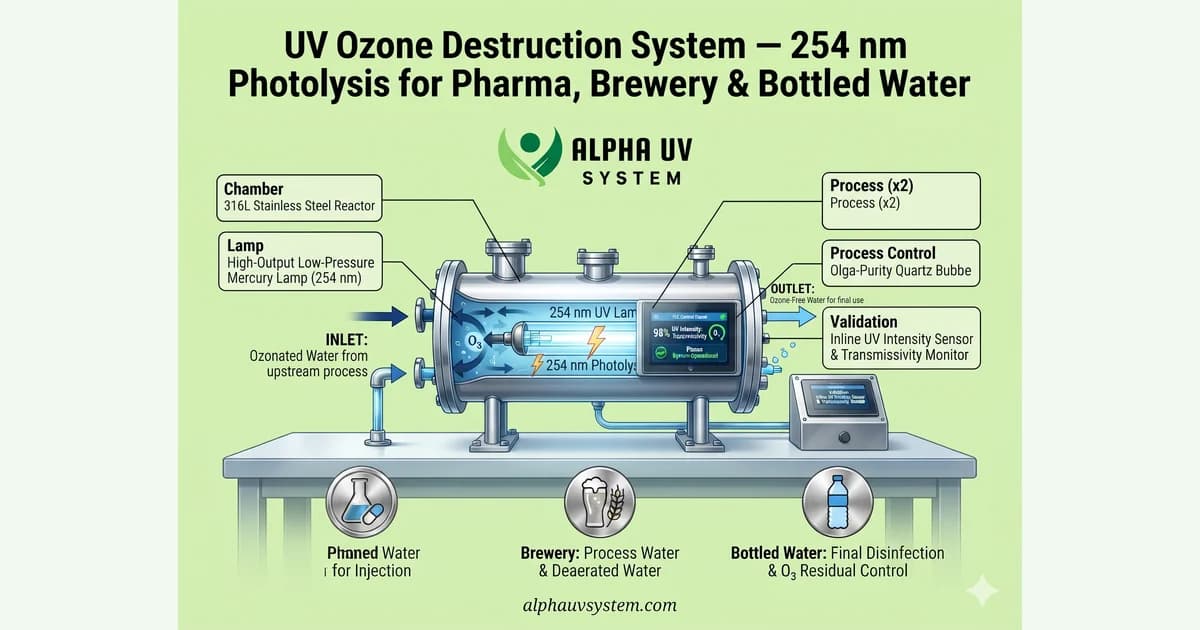
Ozone is widely used to disinfect pharmaceutical purified water distribution loops, brewery sanitisation circuits, and bottled water systems — but residual ozone in water must be destroyed before product contact or distribution. Ozone is toxic to consumers at >0.05 mg/L (WHO limit), causes product oxidation in pharmaceuticals and beverages, and must be removed to undetectable levels before packaging or use. 254 nm UV photolysis is the most efficient, reliable, and chemical-free method for ozone destruction — requiring no activated carbon beds, no regeneration downtime, and introducing no extractables into the product water stream. Alpha UV System UV ozone destruction units are engineered by IIT Patna-trained specialists for pharmaceutical, food & beverage, and industrial ozone quenching applications across India.
UV Dose
50–200 mJ/cm² (ozone destruction dose at 254 nm)
Capacity
500 – 1,00,000 LPH
Ozone (O₃) is one of the most powerful oxidising disinfectants known in water treatment — more effective than chlorine against bacteria, viruses, and protozoa at equivalent concentrations, and leaving no halogenated disinfection byproducts. It is widely used in pharmaceutical water system sanitisation, brewery and beverage equipment sanitisation, bottled water disinfection, and municipal water treatment as a primary disinfectant.
However, residual ozone in product water is toxic, corrosive, and legally restricted. The World Health Organization's Guidelines for Drinking Water Quality sets a provisional guideline value of 0.05 mg/L for ozone in finished drinking water based on consumer palatability — ozone at >0.05 mg/L produces a characteristic metallic or bleach-like taste detectable by most consumers. FSSAI's IS 14543 (Packaged Drinking Water) limits residual ozone at the point of filling. In pharmaceutical water systems (USP, EP, Schedule M), residual ozone in the distribution loop during production mode is not acceptable — ozone is an oxidant that degrades API molecules, affects pH-sensitive formulations, and attacks rubber and elastomeric seals in filling equipment.
The practical implication: ozone is introduced for sanitisation or disinfection, does its work, and then must be completely removed before the water contacts product, consumers, or sensitive equipment. This "ozone quenching" or "ozone destruction" step is mandatory in every ozone-using water treatment system.
The mechanism of UV ozone destruction is both elegant and efficient. Ozone absorbs UV-C radiation very strongly at 253.7 nm — almost exactly the peak emission wavelength of standard low-pressure mercury UV-C lamps. The molar absorption coefficient of ozone at 254 nm (3,300 M⁻¹cm⁻¹) is orders of magnitude higher than for organic molecules, which is why UV is so effective for ozone removal at relatively moderate doses.
When a 254 nm photon is absorbed by an ozone molecule, the molecule photodissociates:
O₃ + hν (254 nm) → O₂ + O· (singlet oxygen)
The singlet oxygen atom reacts immediately with water: O· + H₂O → 2 OH·
The hydroxyl radicals formed (OH·) are powerful secondary oxidants that can react with any residual organics, contributing to TOC removal as a secondary benefit of ozone destruction. The final products are water and oxygen — no residual chemical species, no disinfection byproducts, and nothing that would trigger a pharmacopoeial or food safety concern in the treated water.
At typical inlet ozone concentrations of 0.1–1.0 mg/L (the range used in pharmaceutical loop sanitisation, brewery tank cleaning, and bottled water production), UV doses of 150–200 mJ/cm² at 254 nm achieve ozone destruction to below 0.001 mg/L — well below any regulatory limit and undetectable by standard dissolved ozone measurement.
The ISPE Baseline Guide Volume 4 (Water and Steam Systems, 2019) — the definitive engineering reference for pharmaceutical water system design — recommends ozonation as the preferred method for periodic sanitisation of ambient-temperature purified water distribution systems. Hot water sanitisation at 80°C remains the standard for WFI systems (which operate hot), but for ambient PW loops, ozone + UV quench offers:
Alpha UV System ozone destruction UV units for pharmaceutical PW loops are built to SS316L electropolished standard (Ra ≤ 0.8 µm), tri-clamp connections, EPDM seals rated for pharmaceutical CIP cleaning, and include dissolved ozone monitoring with 4–20 mA output for continuous GMP data logging. IQ/OQ documentation is provided in Schedule M / WHO GMP format.
Ozone is widely used in Indian craft and commercial breweries for equipment sanitisation. Ozone solution (0.3–0.5 mg/L) is used to sanitise fermentation tanks, brite beer tanks, transfer pipelines, and packaging equipment as an alternative to chemical sanitisers such as peracetic acid. Ozone is effective, leaves no chemical residue when properly quenched, and requires no rinsing — reducing water consumption.
The critical requirement in brewery applications is that ozone be fully destroyed before the sanitised equipment contacts beer or brewing water. Any residual ozone in beer causes immediate oxidation — accelerating staling reactions, destroying hop flavour compounds, and dramatically shortening shelf life. At the parts-per-billion level, ozone in finished beer is detectable as an oxidised, cardboard-like off-flavour.
A UV ozone destruction unit installed on the sanitisation water supply line, downstream of the ozone generator and upstream of the equipment being sanitised, ensures the sanitisation solution contacts equipment at the required ozone concentration while destroying any residual before the rinsing water enters the beer-contact circuit.
India's packaged drinking water standard IS 14543:2016 (and IS 13428 for natural mineral water) permits ozone as the terminal disinfection step for packaged water. Ozone is introduced at the filling line feed at 0.3–0.5 mg/L to achieve microbial kill, with residual ozone in the filled bottle providing an additional disinfection buffer.
IS 14543 requires the residual ozone at the point of filling to be in the range 0.05–0.4 mg/L. For products where lower residual ozone is desired (flavoured water, beverages, or products where ozone taste affects palatability), a UV quench unit reduces residual to 0.05–0.1 mg/L precisely — controllable by UV dose adjustment.
Alpha UV System's bottled water ozone quench systems are built in food-grade SS316L with FSSAI-complaint wetted materials, sized for peak filling line flow rates from 2,000 LPH (small plant) to 50,000 LPH (high-speed filling line), and include dissolved ozone monitoring for FSSAI food safety documentation.
Contact Alpha UV System on WhatsApp at 9318305878 or call 9599500580 for ozone destruction system sizing, pharmaceutical documentation, and quotation within 24 hours.
Recommended Products
IIT Patna engineers recommend these systems for ozone destruction uv applications based on flow rate, required UV dose, and compliance standard. Both systems use genuine Philips UV-C lamps and ship with complete compliance documentation.
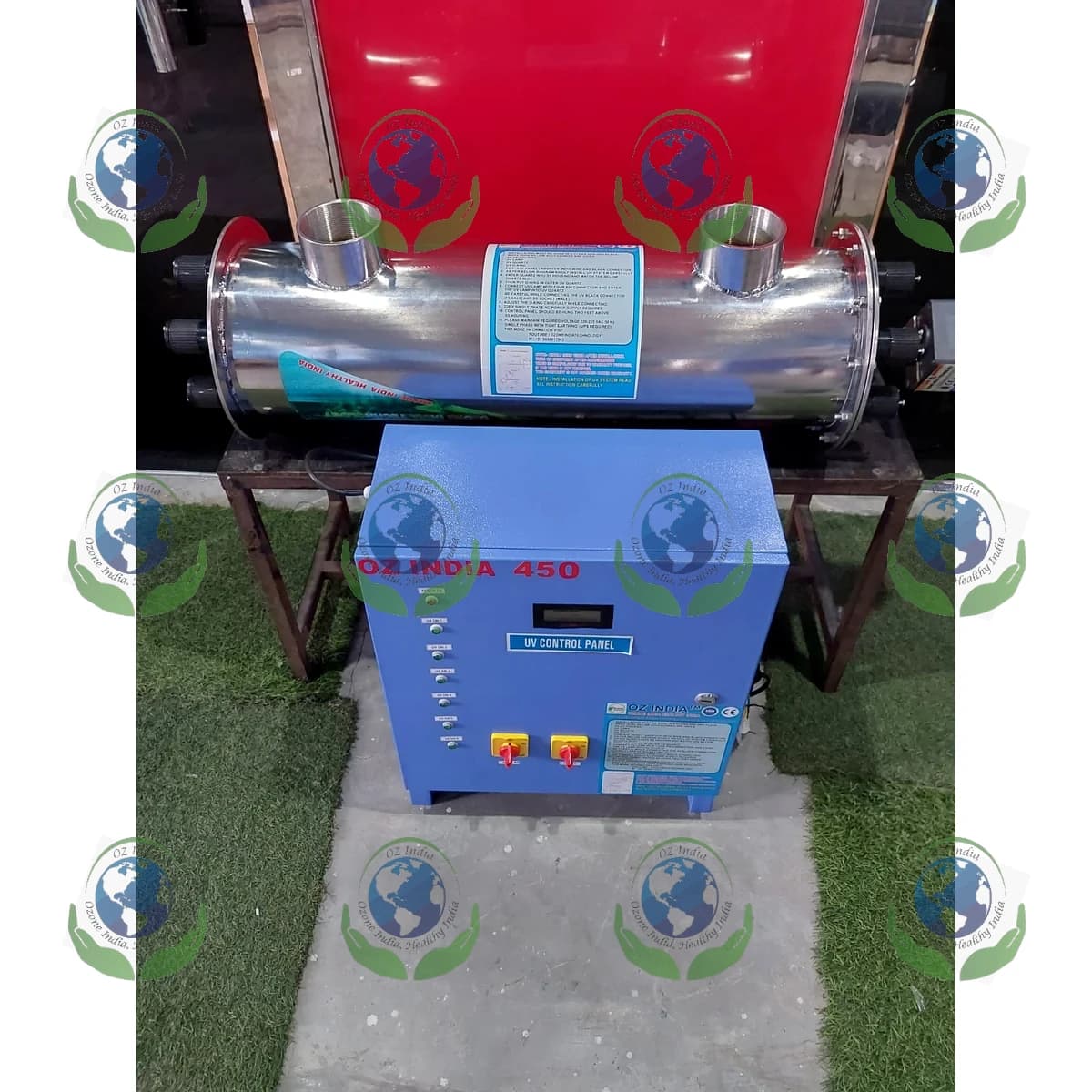
High-flow UV water treatment for pharmaceutical WFI, food & beverage process water, and industrial applications. Revised Schedule M 2025, HACCP, and FSSAI compliant. IQ/OQ/PQ documentation.
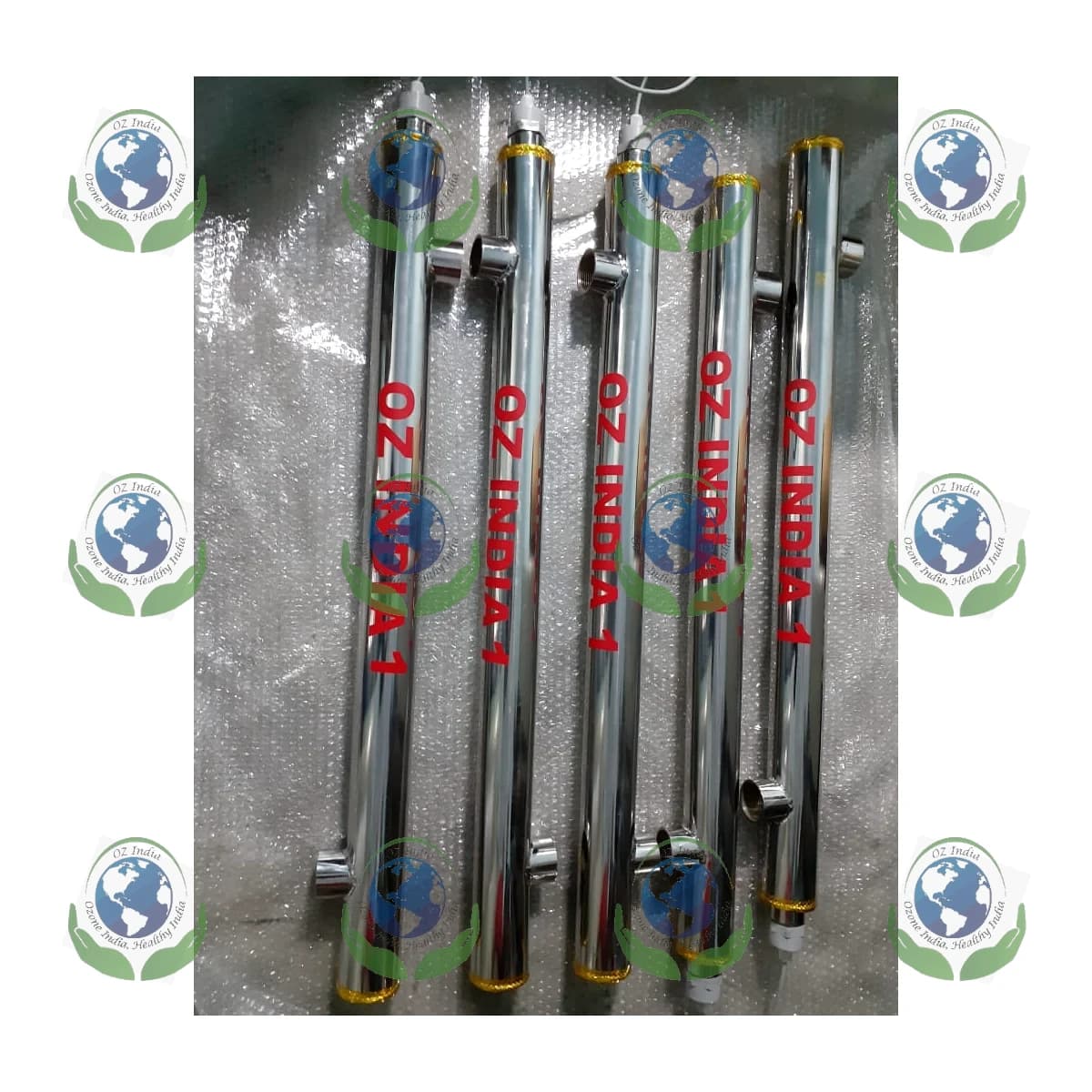
UV water disinfection for hotels, restaurants, offices, and educational institutions. HACCP and FSSAI compliant documentation. Trusted by Taj Hotels, McDonald's India, and IIT Kanpur.
IIT Patna Engineering
Alpha UV System IIT Patna engineers calculate UV dose from your actual water quality parameters — measured UVT, flow rate, target log reduction, and the specific compliance standard that governs your facility. Not from catalogue sizing tables or generic assumptions. Every system ships with a signed UV dose calculation report, a Philips certificate of authenticity, and compliance documentation prepared for the regulatory framework applicable to ozone destruction uv operations.
From measured UVT, flow rate, and target log-reduction. Signed by IIT Patna engineer.
USP Chapter 1231 (Water for Pharmaceutical Purposes) · WHO GMP Schedule M 2025 · FSSAI Bottled Water Standards · IS 14543 (Packaged Drinking Water) · ISPE Baseline Guide Vol. 4 — documentation prepared to the audit checklist, not generic templates.
WhatsApp your flow rate, water quality, and compliance requirement — engineering-backed quote in 2 hours.
Mon–Sat · 9 AM–6 PM IST · IIT Patna alumni on call
Send us your flow rate and compliance requirement — quote with engineering rationale in 2 hours.
+91 93183 05878
Get Quote →
Call Direct
+91 95995 00580
Tap to Call →
Send Enquiry
Detailed specifications form
Open Form →
