Manufactured in Greater NoidaGenuine Philips UV-C LampsIIT Patna Alumni on Our TeamExporting to 20+ Countries
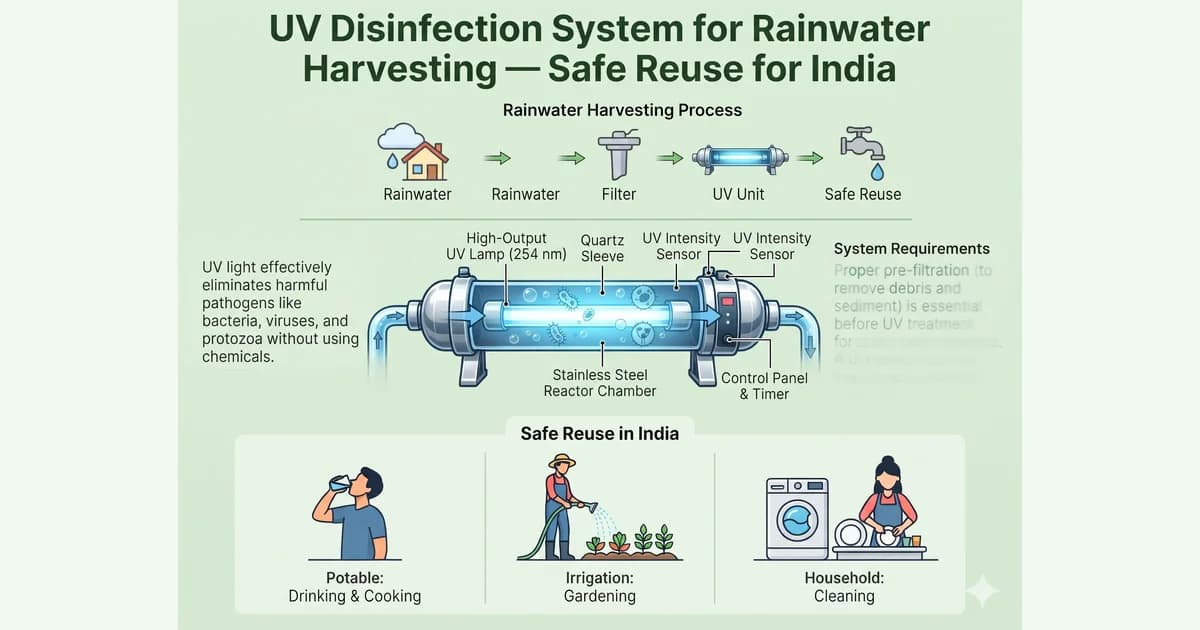
Rainwater harvesting is mandated by CGWB and state groundwater authorities for all buildings above 100 m² plot area in most Indian cities — but harvested rainwater from roof catchments, roads, and open ground carries microbial contamination from bird droppings, atmospheric particulates, and surface runoff that makes it unsafe for direct use without disinfection. UV disinfection at 40–80 mJ/cm² provides chemical-free, cost-effective pathogen control for harvested rainwater across the full range of reuse applications: toilet flushing, landscape irrigation, industrial process water, cooling tower make-up, and car washing. Alpha UV System rainwater UV systems are sized from 500 LPH (residential society) to 50,000 LPH (industrial park or institutional campus), with pre-filtration packages and IIT Patna-engineered system design.
UV Dose
40–80 mJ/cm²
Capacity
500 – 50,000 LPH
India receives 1,170 mm of rainfall annually on average, but 80% falls in four monsoon months. The National Water Policy (2012) and NITI Aayog's Composite Water Management Index both identify rainwater harvesting as a critical strategy for reducing India's freshwater stress — particularly for the non-potable uses that consume 40–60% of building water demand: toilet flushing, landscape irrigation, cooling tower make-up, and car washing.
However, roof catchment rainwater is not clean. Even fresh rainfall picks up atmospheric pollutants, particulate matter, and microbial contamination as it falls through urban air. When rain hits a roof surface that has accumulated bird droppings, dust, and biological deposits over days or weeks since the last rainfall, the first runoff carries a heavy microbial load. Studies of urban roof runoff across India document total coliform counts of 500–5,000 MPN/100 mL — levels that exceed safe reuse standards for toilet flushing, irrigation, and virtually every intended application.
Bird droppings are the primary microbial source on roof catchments in Indian cities. Pigeons, mynahs, crows, and sparrows that roost on rooftops deposit Salmonella, Campylobacter, Cryptosporidium, and E. coli directly on the catchment surface. UV disinfection at 40 mJ/cm² achieves 4-log kill for all these pathogens in a single pass — without chlorine, without taste or odour issues in the treated water, and without any chemical handling.
UV disinfection requires water with turbidity below 5 NTU for reliable dose delivery — microorganisms embedded in suspended particles are physically shielded from UV-C light. Roof rainwater contains leaves, roof grit, atmospheric particles, and biological deposits that must be removed before UV treatment. A properly designed pre-filtration train transforms variable-quality roof runoff into reliably UV-treatable feed water.
The recommended pre-treatment sequence for a residential or commercial rainwater harvesting system:
First-flush diverter (2–5 mm per 100 m² catchment): automatically diverts the most contaminated initial runoff to drainage, discarding 60–80% of microbial load before storage.
Coarse screen filter (50 mesh / 300 µm): removes leaves, insects, and coarse debris that enter the downpipe. Essential to protect finer filters from premature clogging.
Sediment filter (50 µm wound cartridge): removes fine suspended solids, reducing turbidity from 5–15 NTU (typical roof runoff after coarse screening) to 1–3 NTU. Replace every 3–6 months or when pressure drop increases.
Polishing filter (5 µm): reduces turbidity to below 1 NTU — the threshold for reliable UV disinfection. Protects the UV quartz sleeve from particulate fouling. Replace every 1–3 months depending on water quality.
UV disinfection (40–80 mJ/cm²): terminal pathogen kill — 4-log reduction of E. coli, Salmonella, Giardia, and Cryptosporidium in a single pass with no chemical addition.
The Central Ground Water Authority (CGWB) mandates rainwater harvesting for buildings on plots above 100–500 m² (threshold varies by state) across notified areas of groundwater depletion. The focus of CGWB regulation is groundwater recharge — but its technical guidelines also cover surface reuse of harvested rainwater for non-potable applications.
The National Building Code 2016 (NBC 2016), Part 9 Section 5 on Water Supply, Drainage and Sanitation, includes specific guidance on rainwater harvesting system design and recommends treatment before indoor non-potable reuse. The Bureau of Indian Standards' IS 10500:2012 sets water quality standards for potable use; for non-potable reuse, the CPCB's recycled water quality standards (2017 Notifications) specify maximum coliform levels by end use.
Several state and municipal authorities have strengthened these requirements:
Alpha UV System provides state-specific regulatory documentation for all installations, including CGWB-compliant design reports and water quality testing coordination with NABL-accredited laboratories.
Rainwater UV systems are sized for peak demand flow, not average daily flow, since demand is concentrated in certain hours of the day (morning and evening in residential buildings; daytime peak in offices and hotels).
For residential housing societies, peak toilet flush demand occurs in two 2-hour windows (morning: 7–9 AM, evening: 7–9 PM) during which 50–60% of daily toilet water consumption occurs. For a 100-flat society with 400 residents at 45 LPCD toilet water demand (from CPHEEO norms), daily toilet water demand is approximately 18,000 L. During the morning peak 2-hour window, demand is approximately 5,000–6,000 L — requiring a UV system rated for 3,000–4,000 LPH to maintain supply pressure in the treated water circuit.
For industrial and commercial applications — cooling tower make-up, car washing, construction water, general process water — peak flows depend on specific process requirements. Alpha UV System engineers provide free sizing calculations for all application types. WhatsApp your building type, number of floors/units, and intended reuse application to 9318305878 for a sizing calculation within 24 hours.
The economic justification for rainwater harvesting with UV treatment is compelling across all building types. Municipal water tariffs in India range from ₹10–15/kL (domestic) to ₹30–60/kL (commercial), and water tanker costs are ₹150–300/kL. Buildings that replace 40–60% of their non-potable water demand with UV-treated rainwater save ₹30,000 to ₹18 lakh per year depending on scale.
A 100-flat residential society replacing toilet flush water with harvested rainwater saves approximately 14,600 kL/year. At a commercial water tariff of ₹30/kL, this is ₹4.4 lakh/year in water savings. A UV rainwater treatment system for this application costs ₹60,000–1,20,000 installed — payback within 3–4 months of monsoon season, and within 2 years from full-year operation at typical Indian seasonal rainfall patterns.
For industrial parks and campuses with cooling towers, the savings are proportionally higher — cooling towers are the largest non-potable water consumers in most industrial facilities, and replacing municipal supply with UV-treated rainwater for cooling tower make-up provides the fastest payback of any rainwater reuse application.
Contact Alpha UV System on WhatsApp at 9318305878 or call 9599500580 for a free rainwater UV system sizing calculation, pre-filtration specification, and quotation. MSME Udyam registered — GST invoice provided. Greater Noida manufacturer, pan-India installation.
Recommended Products
IIT Patna engineers recommend these systems for rainwater uv applications based on flow rate, required UV dose, and compliance standard. Both systems use genuine Philips UV-C lamps and ship with complete compliance documentation.
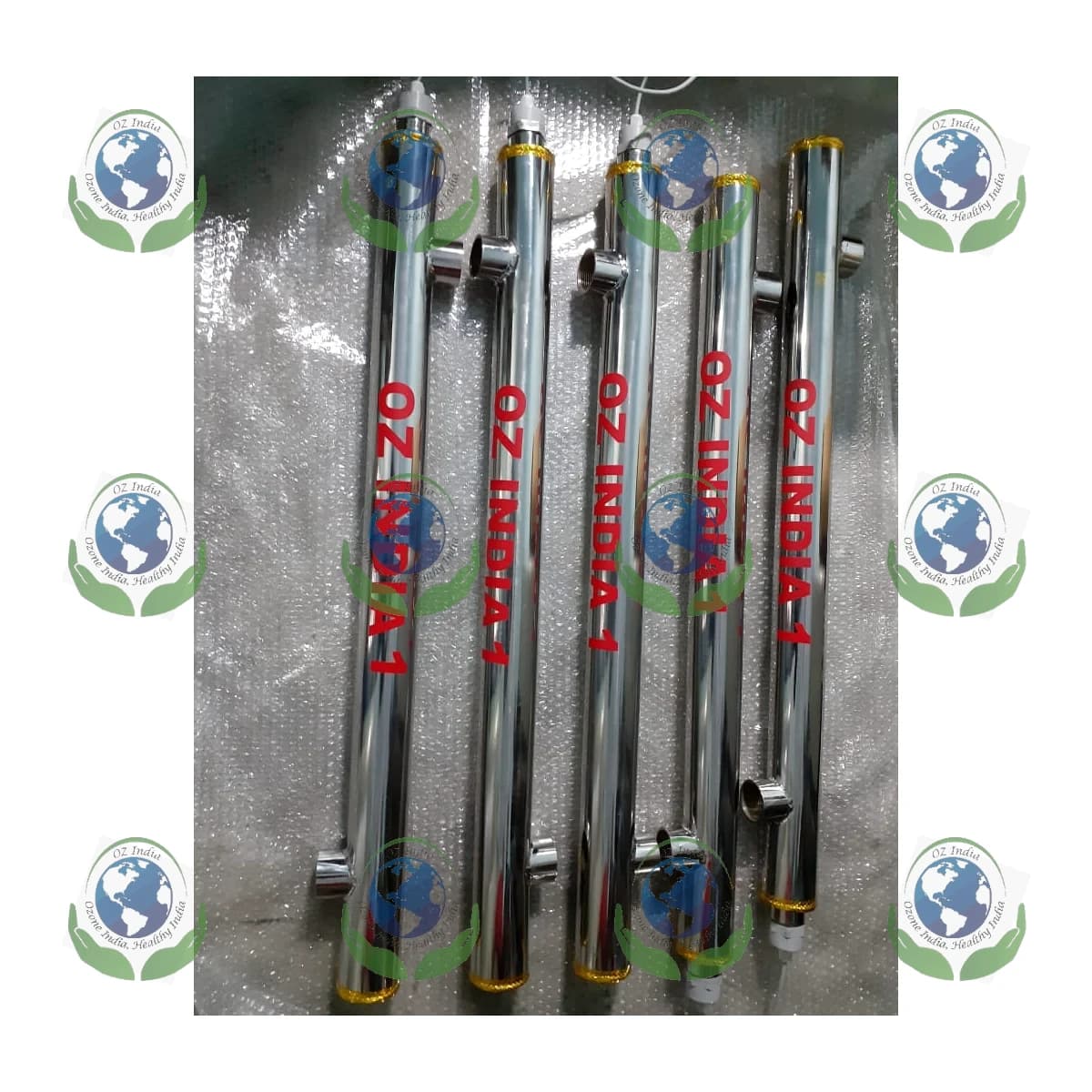
UV water disinfection for hotels, restaurants, offices, and educational institutions. HACCP and FSSAI compliant documentation. Trusted by Taj Hotels, McDonald's India, and IIT Kanpur.
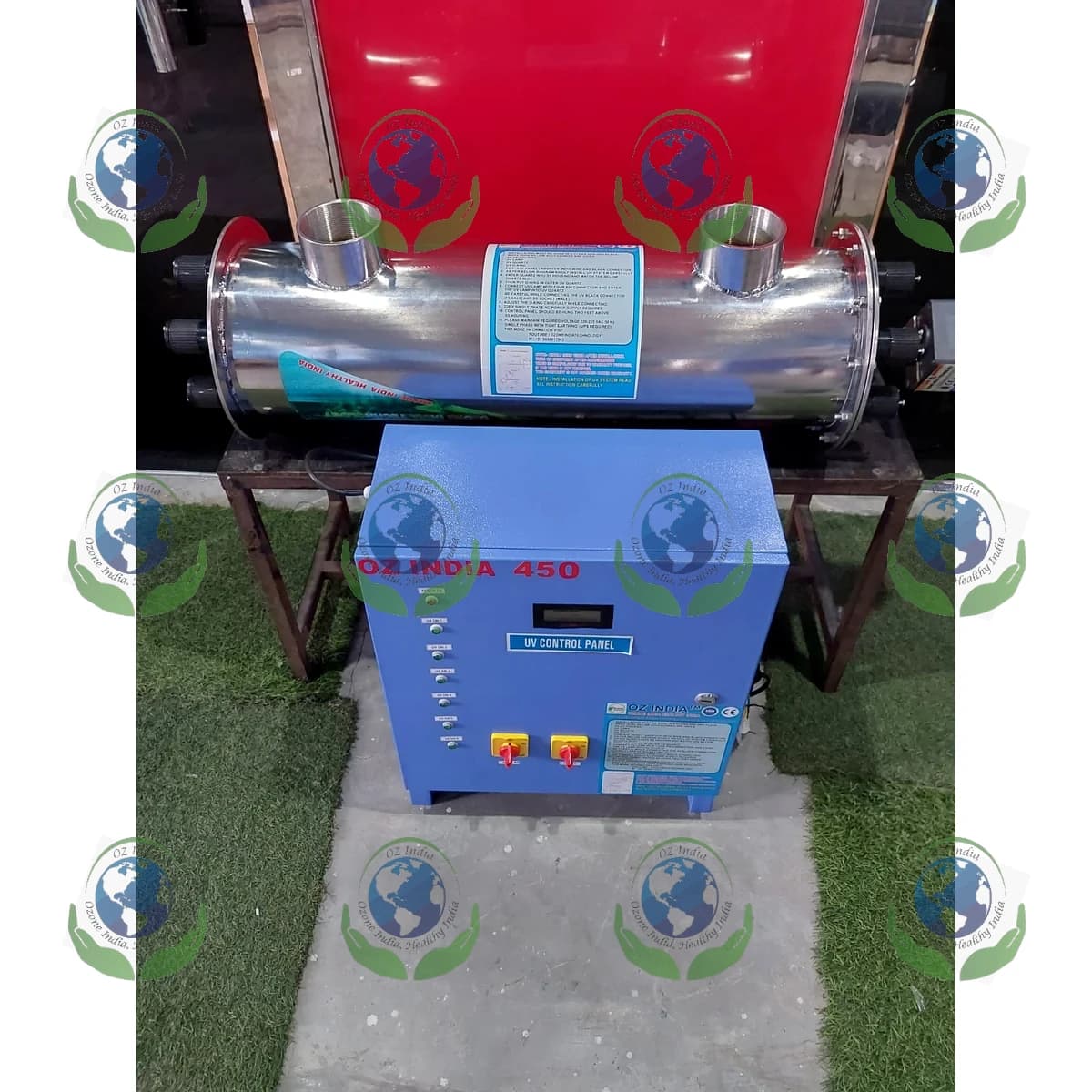
High-flow UV water treatment for pharmaceutical WFI, food & beverage process water, and industrial applications. Revised Schedule M 2025, HACCP, and FSSAI compliant. IQ/OQ/PQ documentation.
IIT Patna Engineering
Alpha UV System IIT Patna engineers calculate UV dose from your actual water quality parameters — measured UVT, flow rate, target log reduction, and the specific compliance standard that governs your facility. Not from catalogue sizing tables or generic assumptions. Every system ships with a signed UV dose calculation report, a Philips certificate of authenticity, and compliance documentation prepared for the regulatory framework applicable to rainwater uv operations.
From measured UVT, flow rate, and target log-reduction. Signed by IIT Patna engineer.
CGWB Rainwater Harvesting Guidelines · BIS IS 10500:2012 (if for potable use) · National Water Policy 2012 · NBC 2016 Part 9 (Rainwater Harvesting) · CPCB Treated Water Reuse Standards — documentation prepared to the audit checklist, not generic templates.
WhatsApp your flow rate, water quality, and compliance requirement — engineering-backed quote in 2 hours.
Mon–Sat · 9 AM–6 PM IST · IIT Patna alumni on call
Send us your flow rate and compliance requirement — quote with engineering rationale in 2 hours.
+91 93183 05878
Get Quote →
Call Direct
+91 95995 00580
Tap to Call →
Send Enquiry
Detailed specifications form
Open Form →
