Quick Answer: The most recognisable signs you are not drinking enough water are dark yellow urine, persistent headaches, afternoon fatigue, dry mouth, and difficulty concentrating. These symptoms can appear with as little as 1–2% body-water loss. The fix is straightforward: aim for 35 ml per kilogram of body weight per day in normal conditions, more in Indian summer heat. Crucially, the water you drink must also be microbiologically safe — quantity without quality still puts your health at risk.
How Much Water Should You Drink Each Day?
The long-standing "8 glasses a day" recommendation is a useful heuristic but not a clinical guideline. Actual daily water intake needs depend on body weight, activity level, ambient temperature, humidity, and the water content of your diet. The most practical formula used by sports medicine practitioners and renal health specialists is 35 ml per kilogram of body weight at sedentary activity levels. A 60 kg person needs roughly 2.1 litres; a 80 kg person needs 2.8 litres. In Indian summer conditions — where temperatures exceed 40°C across large parts of the country between April and June — that baseline can increase by 50–100%.
FSSAI's dietary guidelines for Indians note that water intake from all sources (beverages, food) should reach at least 2.5–3 litres per day for adult men and 2–2.5 litres for adult women under moderate conditions. These figures assume reasonably safe drinking water; contaminated water consumed in quantity trades one problem for another.
| Body Weight | Baseline Daily Intake (Sedentary) | Moderate Activity (+20%) | Indian Summer / Heavy Labour (+50–100%) |
|---|---|---|---|
| 40 kg | 1.4 litres | 1.7 litres | 2.1–2.8 litres |
| 50 kg | 1.75 litres | 2.1 litres | 2.6–3.5 litres |
| 60 kg | 2.1 litres | 2.5 litres | 3.2–4.2 litres |
| 70 kg | 2.45 litres | 2.9 litres | 3.7–4.9 litres |
| 80 kg | 2.8 litres | 3.4 litres | 4.2–5.6 litres |
| 90 kg | 3.15 litres | 3.8 litres | 4.7–6.3 litres |
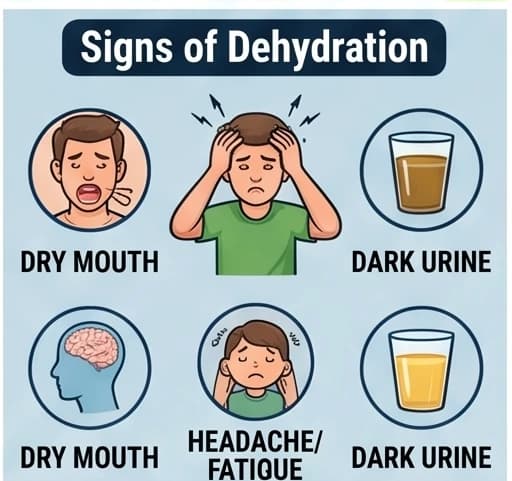
The simplest real-time indicator of adequate hydration is urine colour. Pale straw yellow to nearly clear indicates you are meeting your water intake needs. Dark yellow indicates mild dehydration. Amber or brown urine with a strong odour signals significant dehydration requiring immediate attention. Urine colour is more reliable than thirst, because the thirst mechanism lags behind actual fluid deficit — by the time you feel thirsty, you are already 1–2% dehydrated.
12 Signs You Are Not Drinking Enough Water
Dehydration symptoms exist on a spectrum. Early signs are subtle — you may attribute them to a poor night's sleep or work stress. As the fluid deficit grows, the symptoms become unmistakable. Here are the 12 most clinically significant signs not drinking enough water is causing in your body, each with the physiological mechanism behind it.
1. Persistent Headaches
Headache is one of the earliest and most consistent signs you are not drinking enough water. Brain tissue is approximately 75% water. When total body water drops, the brain temporarily contracts away from the skull, putting tension on pain-sensitive structures including the meninges and cerebral blood vessels. This triggers the classic dehydration headache — usually a dull, pressure-like pain across the forehead or temples that worsens when you stand or move. Research published in Nutrients (2015) found that even 1.4% dehydration in women produced significantly greater headache frequency and impaired concentration. The distinguishing feature of a dehydration headache versus a tension or migraine headache is that it resolves within 30 minutes of drinking 500 ml of water.
2. Afternoon Energy Slumps and Fatigue
If you consistently feel exhausted between 2–4 pm despite adequate sleep, inadequate water intake is a primary suspect. Dehydration reduces blood volume, which forces the heart to work harder to circulate the same oxygen and nutrients to muscles and organs. The result is cardiovascular strain, reduced cellular energy production, and the characteristic afternoon slump that many people incorrectly attribute to post-lunch blood sugar changes. Studies have shown that a 2% fluid deficit reduces work capacity by up to 20% in sedentary tasks and aerobic performance by 10–20% in physical tasks. In Indian workplaces without reliable air conditioning, workers who are not drinking enough water experience measurable productivity losses by mid-afternoon even in winter months.
3. Difficulty Concentrating and Brain Fog
The brain is acutely sensitive to hydration status. Cognitive performance — including short-term memory, reaction time, and sustained attention — begins to decline measurably at 1–2% dehydration, a level that produces no obvious thirst. A landmark study by Benton and Burgess (2009) demonstrated that even mild dehydration impaired visual attention and psychomotor speed in healthy adults. If you notice that your thinking feels sluggish in the afternoon, that you are re-reading sentences, or that decision-making feels more effortful than usual, these are signs you are not drinking enough water rather than signs of an overloaded schedule. Drinking 300–500 ml of water has been shown to improve cognitive performance within 20 minutes in mildly dehydrated adults.
4. Dry Mouth and Persistent Bad Breath
Saliva does considerably more than aid digestion. It contains lysozyme, immunoglobulins, and lactoferrin — antimicrobial compounds that continuously suppress oral bacterial populations. When water intake drops, saliva production decreases, allowing anaerobic bacteria in the mouth to proliferate on food particles and produce volatile sulphur compounds (VSCs) — the primary cause of bad breath. Chronic dry mouth caused by insufficient hydration also raises the risk of dental caries and gum disease. If you notice a sticky feeling in your mouth in the morning that persists well into the day despite brushing, or if others notice your breath even after dental hygiene, low water intake is a leading cause to address before looking at dietary or dental explanations.
5. Dark or Infrequent Urination
Urinating fewer than four times per day, or producing urine that is consistently dark yellow or amber, are among the most reliable objective signs not drinking enough water. The kidneys concentrate urine when fluid intake is low, conserving water at the cost of excreting more solutes per unit of urine volume. Consistently concentrated urine raises the risk of kidney stone formation — a condition that has been increasing in prevalence across India, partly attributed to chronic mild dehydration in hot climate regions. BIS IS 10500:2012 recommends safe drinking water as part of overall renal health guidelines. Any urine that is consistently amber, brown, or blood-tinged warrants medical evaluation immediately rather than just increased fluid intake.
6. Dry, Tight, or Dull Skin
Skin is the body's largest organ and one of the first to show the effects of inadequate hydration. The "skin turgor test" — pinching the skin on the back of your hand and observing how quickly it snaps back — is used clinically to assess dehydration: slow return (over one second) in a younger adult indicates significant dehydration. At the cosmetic level, dehydrated skin appears dull, feels tight, and shows fine lines more prominently. Unlike dry skin caused by environmental factors or skin conditions, dehydration-related skin dryness improves relatively quickly with increased water intake. However, this is one of the signs not drinking enough water where the improvement may take several days of consistent hydration to become visually apparent, because skin turnover and interstitial fluid restoration are slower processes than blood volume correction.
7. Muscle Cramps and Spasms
Muscle cramps — particularly calf cramps at night or cramps during exercise — are frequently caused by electrolyte imbalances that accompany dehydration. When fluid and electrolytes (primarily sodium, potassium, and magnesium) are lost through sweat without adequate replacement, the electrochemical environment of muscle cells is disrupted, leading to involuntary contractions. Indian outdoor workers, agricultural labourers, and construction workers who sweat heavily in summer heat without adequate hydration routinely experience this. It is important to note that replacing water without replacing electrolytes can worsen cramps — plain water dilutes remaining electrolytes further. In situations of high sweat loss (more than 1 litre per hour), water intake should include electrolyte replenishment through oral rehydration salts or electrolyte-rich foods like bananas, coconut water, or lemon with salt.
8. Dizziness or Lightheadedness on Standing
Orthostatic hypotension — a drop in blood pressure when you stand up from sitting or lying down — is worsened significantly by dehydration. When blood volume is reduced, the cardiovascular system cannot compensate quickly enough for the postural change, causing a transient drop in cerebral perfusion. The result is dizziness, lightheadedness, or brief visual darkening ("seeing stars") when standing. This is among the signs not drinking enough water that is particularly concerning in elderly individuals and in pregnant women, where falls triggered by orthostatic dizziness carry serious consequences. If you experience this symptom regularly, and it is not explained by medication side effects, increasing water intake is the first intervention recommended by physicians before proceeding to cardiovascular investigation.
9. Constipation and Difficult Bowel Movements
The large intestine reabsorbs water from digested food before forming stool. When your overall water intake is insufficient, the colon extracts more water from stool to maintain body fluid balance, resulting in harder, drier, more difficult-to-pass stools. This is one of the most commonly overlooked signs not drinking enough water — many people increase fibre intake to address constipation without addressing the underlying fluid deficit, which can actually worsen the problem (fibre requires water to form the soft bulk that eases transit). The recommended approach is to increase water intake first, to at least 2 litres per day, before adding fibre supplements. In India, where high-fibre diets are common but water consumption is often insufficient, this imbalance is a frequent contributor to chronic constipation.
10. Joint Pain and Stiffness
Cartilage — the connective tissue that cushions joints — is approximately 80% water. Synovial fluid, which lubricates joint surfaces and delivers nutrients to cartilage (which has no blood supply), requires adequate hydration to maintain its viscosity and volume. Chronic mild dehydration reduces both cartilage water content and synovial fluid volume, increasing joint friction and the rate of cartilage wear. This is particularly relevant for load-bearing joints — knees, hips, and lumbar spine — in individuals with sedentary lifestyles who spend long hours seated. Joint stiffness and mild pain after periods of inactivity that improve with movement and water intake are signs not drinking enough water that are easy to miss because they are often attributed to age or overuse. Studies in osteoarthritis patients have found that increased water intake correlates with reduced joint pain severity independent of other treatments.
11. Frequent Infections and Poor Immune Response
The mucous membranes lining the respiratory tract, digestive system, and urinary tract are the body's first physical barrier against pathogens. These membranes require adequate hydration to produce the mucus that traps and neutralises bacteria and viruses before they can establish infection. When dehydration reduces mucus production, pathogen entry becomes easier. In addition, lymph — the fluid that transports immune cells throughout the body — is largely water-based; dehydration impairs lymphatic circulation and therefore immune cell deployment. If you find yourself catching every seasonal cold, experiencing recurrent urinary tract infections, or having slow wound healing, these can be signs not drinking enough water is compromising your immune system's first-line defences. This connection is particularly relevant in India where high microbial loads in the environment make robust mucosal immunity especially important.
12. Reduced Exercise Performance and Slow Recovery
Among athletes and people who exercise regularly, inadequate hydration is one of the most common and most preventable causes of underperformance. A 2% fluid deficit — achievable within 60–90 minutes of moderate exercise without drinking — reduces aerobic capacity by 10–20%, impairs thermoregulation, and significantly increases the risk of heat exhaustion. Recovery after exercise is also impaired: protein synthesis, glycogen replenishment, and muscle repair all require adequate intracellular hydration. Post-exercise urine colour is a simple monitoring tool: urine should return to pale yellow within two hours of finishing exercise; if it remains dark for longer, post-exercise water intake is insufficient. This is one of the signs not drinking enough water that athletes frequently underestimate because exercise-related fatigue and dehydration fatigue feel identical.
Dehydration Symptoms by Life Stage
The risk profile and presentation of dehydration varies significantly across age groups. Understanding these differences helps identify signs not drinking enough water in people who may not be able to communicate thirst effectively.
Children (Under 12 Years)
Children have a higher body surface area to volume ratio than adults, which means they lose water through skin evaporation proportionally faster. They also have a less developed thirst sensation and may not recognise or act on signs of dehydration. Key signs not drinking enough water in children include: sunken eyes, absence of tears when crying, dry tongue, reduced urine output (fewer than 3 wet diapers per day in infants), unusual irritability, and lethargy. In India, children in non-air-conditioned schools during April–June are at particular risk; studies from paediatric hospitals in Delhi and Mumbai show a consistent peak in childhood dehydration admissions during the pre-monsoon months. School-age children should be encouraged to drink 1.5–2 litres during the school day, ideally from sealed bottles to avoid contamination.
Adults (18–60 Years)
Adults generally have the most reliable thirst mechanism but are most likely to ignore it due to work demands, inconvenient access to safe drinking water, or the mistaken belief that other beverages (tea, coffee, soft drinks) provide equivalent hydration. Caffeine-containing beverages have a mild diuretic effect and do not substitute for plain water on a 1:1 basis. Office workers in India who rely on plastic cups of tea as their primary fluid intake throughout the day frequently meet less than 50% of their actual hydration needs. The signs not drinking enough water in working adults — headaches, afternoon fatigue, poor concentration — are the same symptoms that drive unnecessary coffee consumption, creating a cycle of caffeine intake that worsens the underlying dehydration.
Elderly (60+ Years)
The elderly population is at highest risk from dehydration, for two compounding reasons: the thirst sensation diminishes significantly with age (research shows that elderly adults do not perceive thirst until dehydration is more advanced than in young adults), and kidney function declines, reducing the ability to conserve water. Medications commonly taken by elderly patients — diuretics for hypertension, laxatives, certain antidepressants — further increase fluid loss. Signs not drinking enough water in elderly individuals include confusion or sudden cognitive decline (often mistaken for dementia), increased fall risk (from orthostatic hypotension), rapid heart rate, and dry mucous membranes. Dehydration is a leading cause of hospital admission in Indians over 65. Elderly individuals should be provided water at regular intervals rather than relying on self-reported thirst.
Pregnant and Breastfeeding Women
Water intake requirements increase substantially during pregnancy — by approximately 300 ml per day in the first and second trimester, and more in the third trimester as amniotic fluid volume, blood volume, and foetal development all increase demands. The WHO and FSSAI both recommend that pregnant women in India consume at least 3 litres of total fluid per day from safe sources. Dehydration during pregnancy is associated with reduced amniotic fluid (oligohydramnios), increased risk of urinary tract infections, preterm contractions, and in severe cases, neural tube defects linked to inadequate water intake in the first trimester. During breastfeeding, an additional 700 ml per day is required to support milk production. Dark urine, reduced urination, and persistent fatigue in pregnant or breastfeeding women are signs not drinking enough water that should prompt immediate medical attention rather than self-management.
Hydration in the Indian Context: Summer Heat, Humidity, and Water Safety
India presents a uniquely demanding hydration environment. The combination of high ambient temperatures, high humidity in coastal regions, dust and air pollution that increase respiratory water loss, and physically demanding outdoor occupations creates a population-level dehydration risk that is significantly higher than in temperate climates. Understanding these factors is essential to appreciating why the standard hydration guidelines developed in European or North American settings underestimate the water intake needs of people living and working across much of India.
Indian Summers: April to June
The pre-monsoon months (April to June) in North India, Maharashtra, Telangana, and Rajasthan regularly see temperatures exceeding 42–47°C, with heat index values (combining temperature and humidity) that can feel equivalent to 50°C or higher. At these conditions, an adult at rest can lose 1–1.5 litres of sweat per hour without strenuous activity. Outdoor labourers, agricultural workers, rickshaw pullers, and construction workers routinely lose 5–8 litres of sweat during a working day. The signs not drinking enough water become signs of heat exhaustion within hours: extreme fatigue, cessation of sweating (paradoxically — a very dangerous sign), confusion, and rapid pulse. The Occupational Safety and Health Administration (OSHA) and India's Ministry of Labour both recommend that outdoor workers in summer conditions drink at least 250 ml of water every 20 minutes — far more than most workers actually consume. The 2024 and 2025 heat waves across Uttar Pradesh, Bihar, and Rajasthan resulted in hundreds of heat-related deaths, the majority of which involved dehydration as a contributing or primary cause.
Municipal Water Risks and the Quality Dimension
A critical and frequently overlooked dimension of hydration in India is that increasing water intake also increases exposure to whatever contaminants are present in the water supply. Municipal water in Indian cities is treated at the source with chlorination, but it frequently undergoes recontamination during distribution through ageing pipes, overhead tank storage (where bacterial regrowth occurs), and last-mile plumbing in residential buildings. A 2019 National Green Tribunal report found that less than 50% of piped water samples tested across 21 Indian cities met BIS IS 10500:2012 microbiological standards at the point of use. This means that for tens of millions of households, the advice to "drink more water" is simultaneously correct for hydration health and potentially risky for microbiological safety. The answer is not to drink less, but to ensure the water being consumed is microbiologically safe before increasing intake volume.
Why Water Quality Matters as Much as Water Quantity
Many health communication campaigns around hydration focus exclusively on the quantity of water consumed and ignore the quality dimension entirely. This creates a false dichotomy: in regions with reliable, safe water supplies, quantity alone is the relevant variable. In India — and across much of South Asia, Southeast Asia, and sub-Saharan Africa — water quality is an equally important and frequently more urgent concern.
Waterborne pathogens — particularly E. coli, Salmonella typhi (typhoid), Vibrio cholerae (cholera), Cryptosporidium, Giardia, and rotavirus — cause diarrhoeal disease, which is itself a major cause of dehydration. The World Health Organisation estimates that diarrhoeal diseases cause approximately 525,000 deaths per year globally, the majority of which are attributable to contaminated drinking water. In India specifically, the NITI Aayog Water Index and multiple epidemiological studies have identified waterborne disease as a persistent cause of childhood stunting, school absenteeism, and adult productivity loss — all linked to cycles of dehydration caused by inadequate water safety, not just inadequate water quantity.
The signs not drinking enough water and the signs of waterborne illness overlap: fatigue, headache, and reduced cognitive function appear in both dehydration from insufficient intake and dehydration from diarrhoeal fluid loss. Addressing hydration health in India therefore requires addressing both the volume and the safety of water consumed.
Tap Water vs Boiled vs RO vs UV: What Actually Makes Water Safe?
Indian households use several methods to make water safe for drinking. Each has a different profile of efficacy, cost, convenience, and impact on water quality parameters. The table below compares the four most common approaches on five parameters relevant to household drinking water safety in India.
| Parameter | Untreated Tap Water | Boiled Water | RO Filtered Water | UV Disinfected Water |
|---|---|---|---|---|
| Bacteria and Virus Kill | None (recontamination risk in pipes) | Effective at rolling boil for 1 min | Partial (RO membrane rejects most bacteria; some viruses pass through) | 4-log (99.99%) kill at 40 mJ/cm² — WHO standard |
| Cryptosporidium / Giardia | Not removed | Effective at rolling boil | Removed by membrane (if intact) | Effective at low UV dose (3–10 mJ/cm²) |
| Chemical Byproducts | THMs from municipal chlorination | THMs may concentrate; no new byproducts | Reduces most dissolved chemicals | Zero chemical addition or reaction; no byproducts |
| Mineral Content | Preserved | Preserved | Significantly reduced (TDS typically 20–50 ppm from 200–500 ppm input) | Fully preserved — UV changes nothing about water chemistry |
| Water Waste and Running Cost | None | Fuel/electricity cost; time cost; storage hygiene risk | 40–60% water wasted as reject; membrane replacement ₹3,000–8,000 every 6–12 months | Zero water waste; lamp replacement ₹3,000–6,000 per year (9,000-hour Philips lamp) |
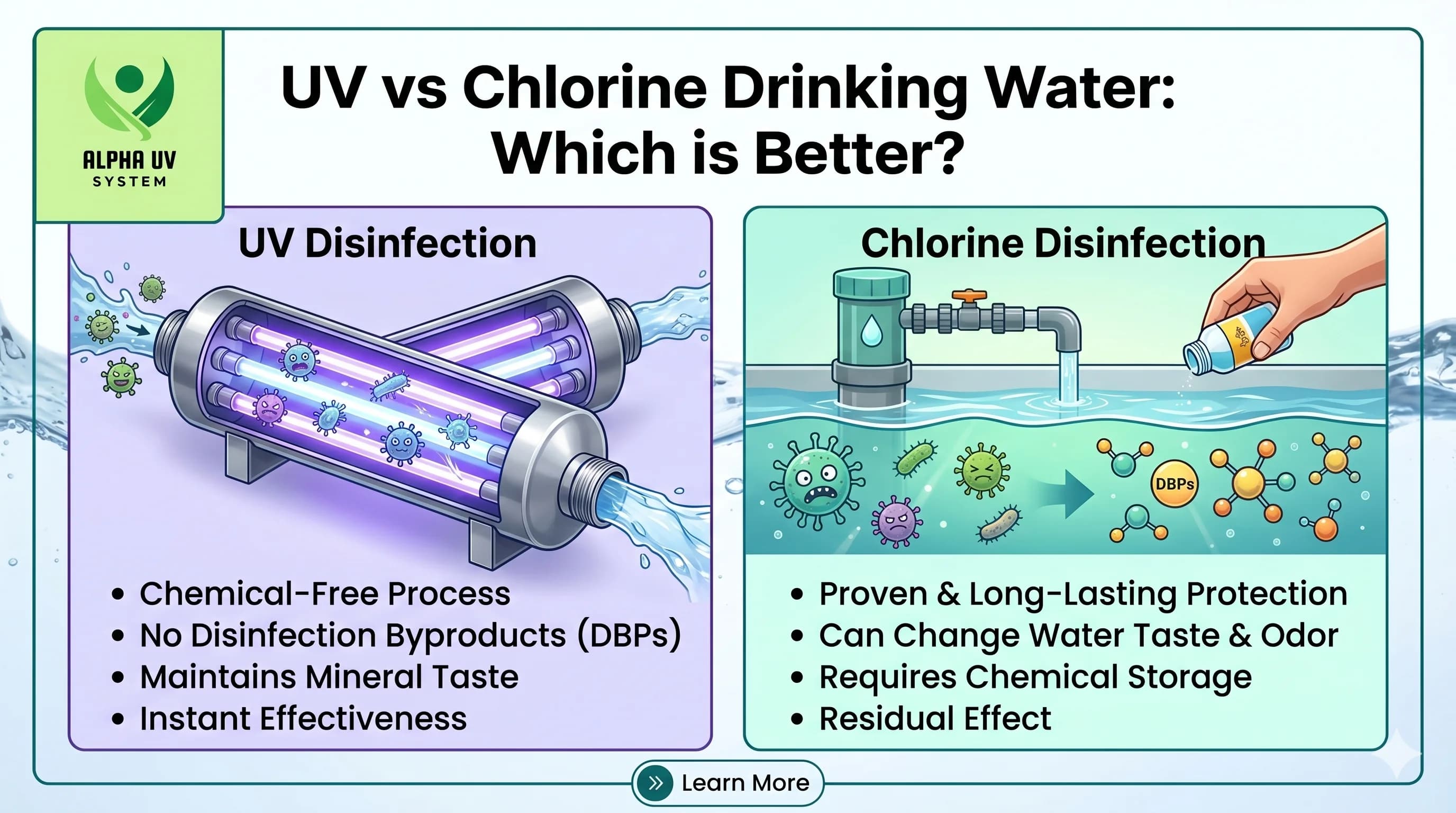
The data show that UV disinfection offers the strongest combination of complete pathogen kill, zero chemical byproducts, full mineral preservation, and low running cost. RO removes minerals that contribute to long-term health (calcium, magnesium) and wastes a substantial fraction of the water input — a particularly significant concern in water-scarce regions of India. Boiling is effective but creates practical challenges at scale: it requires energy, time, and clean storage, and water re-contamination during cooling and storage is a documented problem in Indian households.
How UV Disinfection Ensures Safe Drinking Water
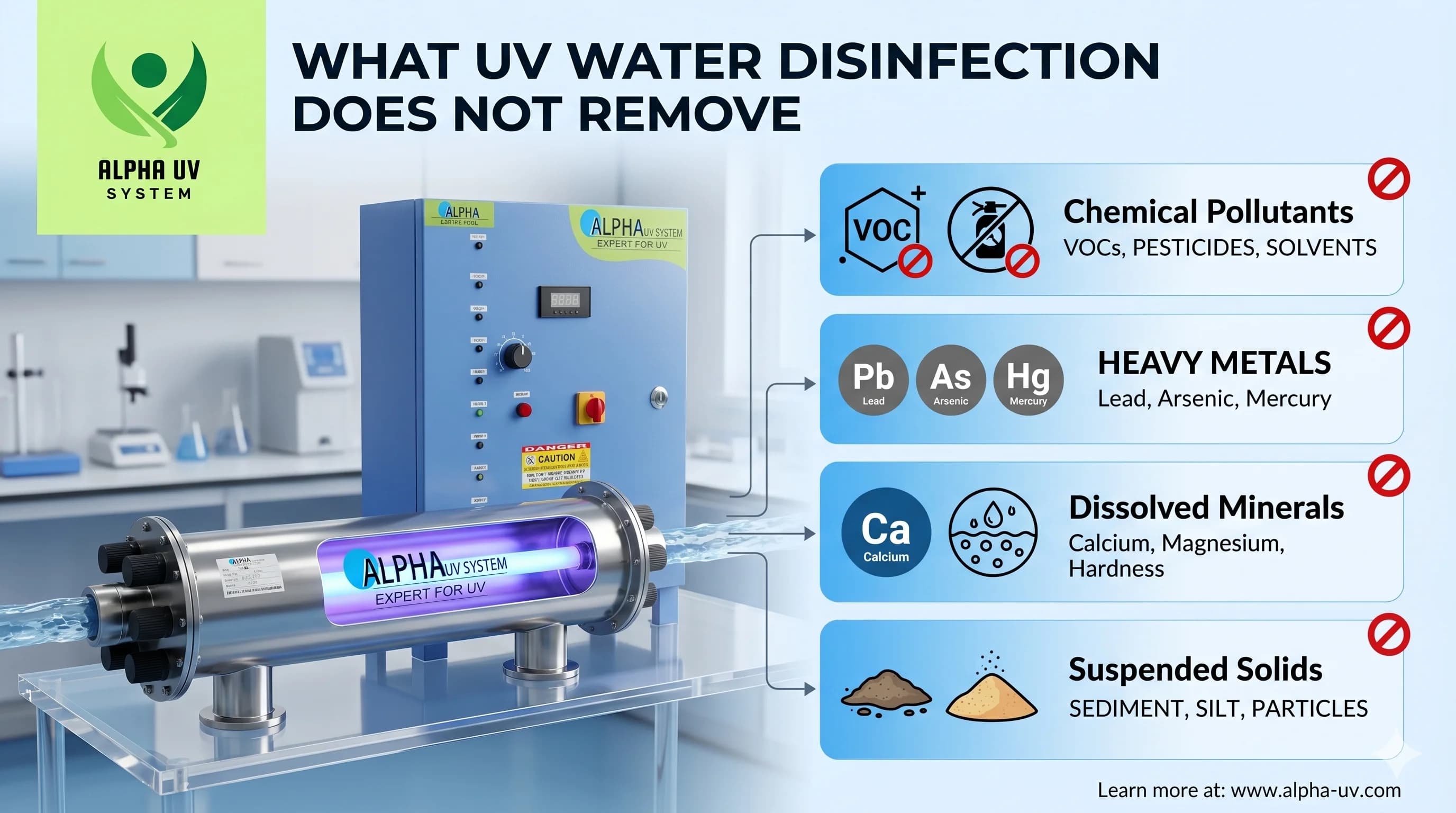
UV-C light at a wavelength of 254 nanometres penetrates the cell walls of bacteria, viruses, and protozoa and damages their DNA or RNA at the molecular level. This photochemical damage prevents the microorganism from reproducing. A pathogen that cannot reproduce cannot cause infection — it is functionally eliminated, regardless of whether the cell membrane remains physically intact. UV achieves this disinfection effect in the fraction of a second that water takes to flow through the UV chamber. No chemicals are added, no reaction occurs with the water, and no residual of any kind is introduced. The water that exits a properly designed UV system is chemically identical to the water that entered it, with pathogens inactivated to a degree that meets or exceeds WHO and BIS standards for safe drinking water.
The effectiveness of UV disinfection depends on two key engineering parameters: UV dose (measured in mJ/cm², the product of UV intensity and contact time) and water clarity (measured as UV transmittance, or UVT). Alpha UV System chambers are designed using computational fluid dynamics (CFD) modelling to ensure that every unit volume of water receives the target dose throughout the chamber, with no low-dose dead zones. The Philips UV-C low-pressure lamp used in Alpha UV systems has a 9,000-hour rated life and maintains greater than 80% output at end of rated life, ensuring consistent disinfection performance across the full lamp service interval.
For Indian households on municipal supply, a UV system installed at the kitchen tap point eliminates any bacteria or viruses that survived municipal chlorination or were introduced through the building's distribution system and overhead tank — the two most common contamination points. For households on borewell or well water, a UV system with appropriate sediment and iron pre-filtration provides complete microbiological safety without the mineral depletion of RO.
Alpha UV System Product Recommendations
If identifying the signs you are not drinking enough water has led you to also examine the safety of the water you are drinking, here are the Alpha UV System products recommended for Indian household and commercial applications.
Residential UV Disinfection System (100–500 LPH)
Designed for homes, apartments, and villas. Compact SS304 chamber with Philips UV-C lamp. Under-sink or inline installation in 30 minutes. Consumes 6–11 W — less than a standard LED bulb. Delivers 40 mJ/cm² (WHO standard for 4-log kill). No chemicals, no taste change, zero water waste. Annual lamp replacement is the only maintenance required. Suitable for municipal supply, borewell, or tanker water after appropriate pre-filtration.
View Residential UV System specifications and pricing or WhatsApp our engineers at +91 93183 05878 for a recommendation based on your household size and water source.
Commercial UV Water Purification System (500–5,000 LPH)
For offices, restaurants, hotels, clinics, and schools. Higher flow rates with the same Philips UV-C lamp technology. HACCP-compliant design for food service applications. SS316L chamber options available for pharmaceutical and food-grade requirements. Multiple tap-point coverage from a single unit installed at the overhead tank outlet or main incoming supply.
View Commercial UV System range or WhatsApp for a commercial quotation.
Whole-House and High-Capacity UV Systems (5,000+ LPH)
For residential societies, apartment complexes, industrial facilities, and municipal water supply augmentation. Available in configurations from 5,000 LPH to over 100,000 LPH. Custom CFD-validated chamber design for each flow rate. MSME Udyam registered manufacturer; systems supplied to municipal bodies, industrial facilities, and institutions across India.
View Industrial UV System range or contact our engineering team for a project-specific consultation.
Frequently Asked Questions
What are the first signs you are not drinking enough water?
The earliest signs you are not drinking enough water are typically dark yellow urine (the most objective indicator), a dry or sticky feeling in the mouth, and mild headache. These symptoms can appear with just 1–2% body-water deficit — before any noticeable thirst sensation. If your urine is consistently darker than pale straw yellow, increasing your water intake is the first step. In most healthy adults, these early dehydration symptoms resolve within 30–60 minutes of drinking 500 ml of water.
How much water should I drink per day in the Indian summer?
In Indian summer conditions — temperatures above 38°C, especially with humidity or physical activity — the baseline recommendation of 35 ml per kilogram of body weight should be increased by 50–100%. A 70 kg adult who needs 2.45 litres under normal conditions should target 3.7–4.9 litres during a hot summer day with moderate activity. Outdoor workers in peak summer conditions may need up to 6–8 litres. Electrolyte replacement (through coconut water, lemon with salt, or oral rehydration salts) is also important alongside water intake when sweating is heavy, as plain water alone can dilute electrolytes if consumed in very large volumes.
Can dehydration cause joint pain?
Yes. Cartilage is approximately 80% water, and synovial fluid — the lubricating fluid in joints — requires adequate hydration to maintain its volume and viscosity. Chronic mild dehydration reduces both cartilage hydration and synovial fluid production, increasing joint friction and the rate of cartilage wear over time. Joint stiffness in the morning or after prolonged sitting that improves with movement can be one of the signs not drinking enough water. Increasing daily water intake is a first-line intervention for mild joint discomfort before considering anti-inflammatory medications, particularly in older adults.
Is tap water in India safe to drink if I just drink more of it?
Drinking more tap water increases hydration but also increases exposure to any pathogens or contaminants in that water. Municipal tap water in India is treated at the source but frequently undergoes recontamination in building distribution systems, overhead storage tanks, and ageing pipes. A 2019 National Green Tribunal study found fewer than 50% of piped water samples across 21 Indian cities met BIS IS 10500:2012 microbiological standards at the point of use. Addressing the signs not drinking enough water therefore requires ensuring the water you drink is microbiologically safe — ideally through UV disinfection at the point of use — alongside increasing the volume consumed.
Does UV-treated water taste different?
No. UV disinfection produces zero taste or odour change in water. UV-C light at 254 nm damages pathogen DNA without reacting chemically with water molecules, dissolved minerals, or any other water constituents. The water that exits a UV system is chemically identical to the input water, with pathogens inactivated. This is one of the most significant advantages of UV over chlorination (which adds a detectable chemical taste) and over RO (which removes minerals that contribute to water's natural taste and may make water taste flat). UV-treated water from a well-designed system is indistinguishable from untreated water by taste or smell, while being microbiologically safe to FSSAI and BIS standards.
What is the difference between dehydration symptoms and heat stroke?
Dehydration symptoms exist on a spectrum. Mild dehydration (1–3% body weight loss) produces headache, dark urine, dry mouth, and fatigue — symptoms that resolve with water intake. Moderate dehydration (3–6%) produces dizziness, muscle cramps, rapid heartbeat, and reduced urine output. Severe dehydration (above 6%) and heat stroke are medical emergencies: symptoms include cessation of sweating (despite extreme heat), confusion, loss of consciousness, and core body temperature above 40°C. Heat stroke requires immediate emergency medical care — cooling the body and intravenous fluids, not oral rehydration. In Indian summer conditions, this transition from manageable dehydration to medical emergency can occur within 2–3 hours of heavy outdoor work without water intake. Early recognition of the signs not drinking enough water is the most effective prevention strategy.
Conclusion: Hydration and Water Safety Are Two Sides of the Same Problem
The signs you are not drinking enough water — headaches, dark urine, fatigue, poor concentration, dry skin, muscle cramps, joint pain, dizziness, constipation, frequent illness, reduced exercise performance, and dry mouth — are your body's early warning system for a deficit that impairs almost every physiological function. Most of these symptoms are reversible quickly with increased water intake. The formula is straightforward: 35 ml per kilogram of body weight per day as a baseline, adjusted upward for Indian summer conditions, physical activity, and individual health factors.
But in the Indian context, addressing the signs not drinking enough water must also mean addressing the safety of the water you are drinking. Contaminated water consumed in larger quantities is not a solution — it exchanges dehydration-related illness for waterborne illness, often with more severe consequences. UV disinfection, particularly using Philips UV-C lamp systems from a quality manufacturer, provides a chemical-free, waste-free, taste-neutral method of ensuring that the water you drink more of is the water that supports — rather than undermines — your health.
If you have identified the signs not drinking enough water in yourself or your household, and you want to ensure your water source meets the microbiological safety standards that make increased consumption unambiguously beneficial, WhatsApp our engineers at +91 93183 05878 or contact Alpha UV System. We will recommend the right system for your water source, household size, and flow requirements — with a written response within 24–48 hours.
Standards, authorities & further reading
External references used to inform this guide. Regulations evolve — check the latest revision on each authority's site before compliance decisions.
Recommended UV Systems
Alpha UV System products for this application — powered by genuine Philips UV-C lamps.
UV System for Drinking Water
100 – 50,000 LPH
Chemical-free UV drinking water disinfection — from homes to municipalities
Residential UV Disinfection System
100 – 500 LPH
Safe drinking water for homes and villas — no chemicals, no taste change
Not sure which system suits your application? WhatsApp our engineers for a free recommendation →
Related solutions
See how Alpha UV System applies this to your industry or city.
Need a UV system?
Talk to our UV engineers — WhatsApp for a quote in 2 hours, or browse the full catalog on IndiaMART.