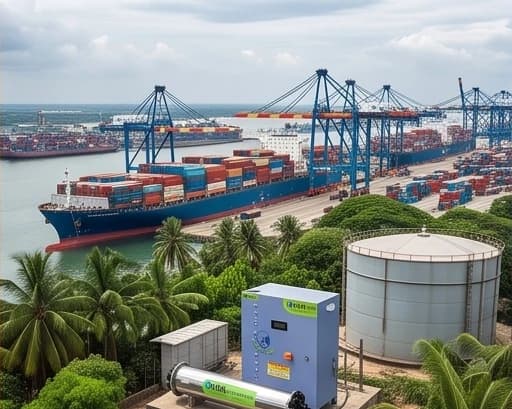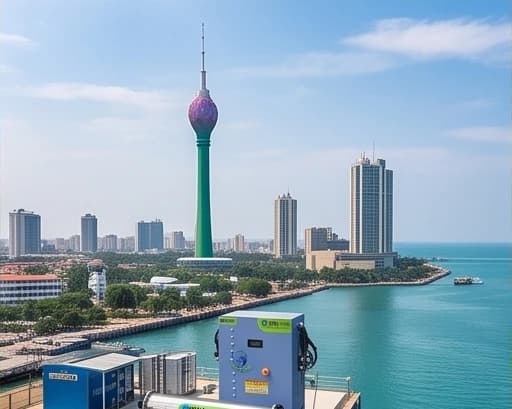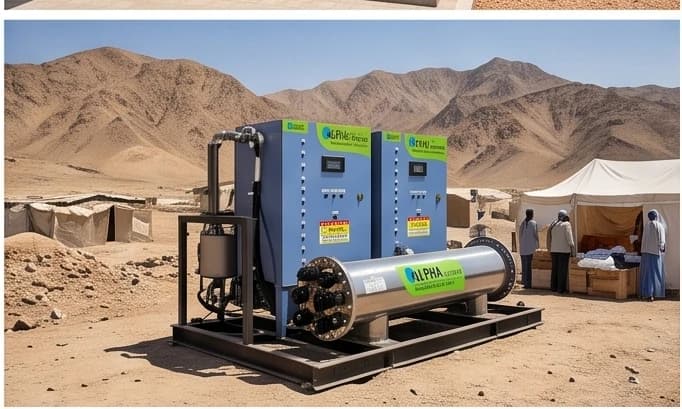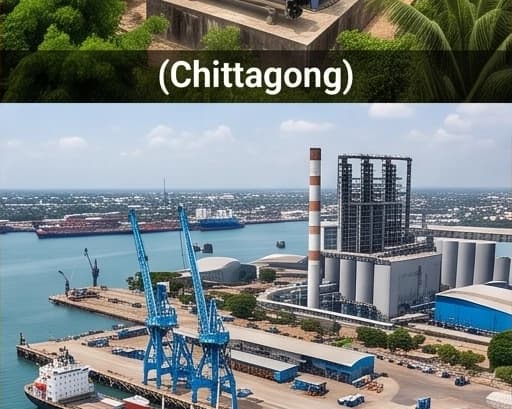
Quick Answer: UV water treatment shrimp Bangladesh demand is driven by one of the world's most export-sensitive aquaculture sectors — Bangladesh is a top-5 global shrimp exporter (USD 550+ million annually), with Bagda (Penaeus monodon — giant tiger prawn) and Vannamei (Litopenaeus vannamei — Pacific white shrimp) exported to EU (40% of volume), USA (25%), Japan (15%), and Middle East (10%) markets under continuous regulatory scrutiny. EU DG SANTE (formerly RASFF) has issued alerts for Bangladesh shrimp for Salmonella spp., oxytetracycline residues, and nitrofuran metabolites — each triggering enhanced border inspection. FDA Import Alert 16-135 covers Bangladesh aquaculture products for antibiotic residues. UV disinfection at 40 mJ/cm² (NSF/ANSI 55 Class A) is the HACCP-designated primary water disinfection method for shrimp processing water in Khulna, Satkhira, and Cox's Bazar processing facilities, eliminating Vibrio cholerae, Salmonella spp., and WSSV (White Spot Syndrome Virus) without antibiotic or chemical treatment that triggers regulatory alerts. Alpha UV ships to Mongla Port (Khulna) and Chittagong Port within 18–22 days sea freight.
Bangladesh Shrimp Industry and UV Water Treatment Context
Bangladesh's shrimp industry — the country's second-largest export sector after ready-made garments — has its centre of gravity in the southwest coastal districts of Khulna, Satkhira, and Bagerhat (collectively the Sundarban coastal zone), where 150,000+ hectares of brackish water ghers (pond systems) produce Bagda (giant tiger prawn, Penaeus monodon) alongside rice in alternating seasonal cycles. The second major zone is Cox's Bazar district (southeast coast, Chittagong Division), where Vannamei (Pacific white shrimp) intensive farms have expanded rapidly since 2018.
The UV water treatment shrimp Bangladesh market is defined by regulatory history. Bangladesh received a European Union import ban on shrimp in 2002 following EU inspection missions that identified HACCP non-compliance, including inadequate water treatment for processing water, presence of Salmonella spp. in processing facilities, and residues of chloramphenicol (a banned antibiotic in food production). Bangladesh regained EU market access in 2011 after implementing a comprehensive HACCP upgrade programme administered by DOF (Department of Fisheries) and BFSA — UV water treatment for all food-contact water in processing facilities was a mandated element of that remediation programme.
FDA's continued import alert status (IA 16-135) for Bangladesh aquaculture products means that every US-bound shipment from Bangladesh undergoes intensified border inspection — including microbiological testing. The presence of Salmonella spp., Vibrio parahaemolyticus, or antibiotic residues in a single shipment triggers automatic detention of all subsequent shipments from the same facility. UV water treatment shrimp Bangladesh facilities use UV as their primary water disinfection insurance against these outcomes.
Shrimp Processing Water Quality Requirements
| Process Stage | Water Contact | Quality Standard | UV Specification |
|---|---|---|---|
| Receiving / landing — wash water | First wash after landing from vessel/gher, removes mud and surface bacteria | BFSA 2013 HACCP: potable water quality (BSTI BDS 1475), zero Salmonella/Vibrio | AU-M 25, 40 mJ/cm², NSF/ANSI 55 Class A, continuous flow |
| De-heading and peeling — process water | Direct contact with shrimp meat; cross-contamination risk between product batches | EU Reg 853/2004 Annex III Sect. VIII (fishery products processing water: potable quality); FDA 21 CFR 123 HACCP | AU-M 25/30, zero Cl residual, 40 mJ/cm², MODBUS logging for FDA audit |
| Chilled water immersion / ice making | Shrimp chilled in slurry ice or flake ice — ice maker feed water contacts shrimp | EU Reg 853/2004: potable water for ice making; EU DG SANTE inspection criteria | AU-M 25 at ice maker feed; prevents Listeria monocytogenes in ice |
| Final rinse before freezing | Last water contact before IQF or block freezing; determines final microbiological load | FDA 21 CFR 123.8 HACCP critical control point (CCP); EU RASFF trigger: Vibrio/Salmonella | AU-M 30, validated 40 mJ/cm², CCP documentation in HACCP plan |
| Equipment and facility sanitisation water | CIP wash water for processing tables, conveyors, knives, buckets | BFSA 2013, EU GHP: sanitisation water zero pathogen load; no chlorine residue on food contact surfaces | AU-M 25, post-wash rinse water UV; eliminates need for chlorine sanitisation |
UV water treatment shrimp Bangladesh processing plants addresses the critical weakness in conventional chlorination-based water treatment: sodium hypochlorite (NaOCl) at typical processing concentrations (2–5 mg/L free chlorine) leaves residual chlorine that reacts with organic compounds in shrimp muscle to form THMs (trihalomethanes) and chlorinated phenols — compounds detectable by EU DG SANTE and Japanese MAFF laboratory testing that trigger RASFF rapid alerts. UV at 40 mJ/cm² achieves equivalent or superior pathogen reduction without any chemical residual, eliminating the chlorinated by-product formation pathway.
Hatchery and Farm Water Treatment — Khulna and Satkhira
| Farm/Hatchery Stage | Water Source | Key Pathogen Risk | UV Role | Alpha UV System |
|---|---|---|---|---|
| Hatchery intake — larval rearing water | Bay of Bengal / Sundarban estuary: brackish 12–22 ppt salinity | Vibrio harveyi (luminescent Vibrio, nauplii killer); WSSV; IHHNV | Nauplii-stage water sterilisation; 254 nm UV at 80–120 mJ/cm² for virus inactivation | AU-M 25/30 with quartz sleeve rated for 15–25 ppt salinity; higher dose ballast option |
| Post-nauplii larval tank supply | UV-treated hatchery supply water; algae (Chaetoceros, Isochrysis) culture water | Vibrio spp., WSSV re-introduction from algae culture | UV at algae culture supply inlet (60 mJ/cm², avoids algae cell lysis in culture) | AU-S 15, 60 mJ/cm² at algae supply; AU-M 25 at larval tank supply |
| Gher (pond) water exchange | Tidal creek water or pumped Sundarban channel water; salinity 5–18 ppt | WSSV, EHP (Enterocytozoon hepatopenaei), AMB (acute mortality bacterium) | Incoming water UV treatment before pond exchange; kills WSSV in suspension (dose >60 mJ/cm²) | AU-M 30/40, high-dose option, 60–120 mJ/cm², flow-matched to pump capacity |
| Vannamei intensive farm (liner ponds, Cox's Bazar) | Freshwater bore + seawater blend; 15–20 ppt | Vibrio spp., EHP microsporidian, ammonia spike bacterial bloom | Biosecurity: incoming water UV sterilisation at 80 mJ/cm² minimum to eliminate EHP spores | AU-M 30, high-dose option (extended chamber), EHP-validated dose certification |
EHP (Enterocytozoon hepatopenaei) — a microsporidian parasite causing slow growth in Penaeus monodon and Litopenaeus vannamei — is the primary biosecurity concern in Bangladesh's Vannamei farms (Cox's Bazar) and Bagda hatcheries. EHP spore resistance to UV is significantly higher than bacteria — complete inactivation of EHP spores requires >80 mJ/cm² (compared to 40 mJ/cm² for bacteria). Alpha UV's high-dose configuration (extended-path chamber, achieving 80–120 mJ/cm² at rated flow) is specified for hatchery and intensive farm applications where EHP exclusion is a biosecurity priority.
White Spot Syndrome Virus (WSSV) — the world's most economically damaging shrimp pathogen, capable of 100% mortality in a pond within 3–7 days of outbreak — is inactivated by UV at 60–80 mJ/cm² (confirmed by Flegel/OIE reference laboratory data). Bangladesh's DoF Shrimp Disease Response Protocol (2019) identifies UV treatment of incoming water at pond exchange as a Tier 1 WSSV prevention measure for both Bagda ghers and Vannamei intensive ponds.
EU DG SANTE Compliance Framework for Bangladesh Shrimp Exporters
Bangladesh maintains EU market access for fishery products under Commission Implementing Regulation (EU) 2021/405 (third country list for fishery products). EU DG SANTE inspection missions to Bangladesh (most recently 2022) evaluate shrimp processing facilities against Regulation (EC) 853/2004 (hygiene rules for food of animal origin) and 852/2004 (general food hygiene). Key water-related findings from EU DG SANTE inspections of Bangladesh facilities:
- HACCP CCP for water: UV water treatment shrimp Bangladesh facilities must document a Critical Control Point (CCP) for water disinfection in their HACCP plan — with critical limit (UV dose ≥40 mJ/cm², or UVI ≥X mW/cm² at maximum flow), monitoring procedure (continuous UVI sensor), corrective action (production halt if UV alarm), and verification (monthly microbiological water testing at UV outlet).
- Continuous monitoring: Intermittent chlorination (batch dosing NaOCl before processing) is not acceptable as a CCP monitoring mechanism under EU HACCP requirements — continuous monitoring (via UVI sensor) is required. UV systems with continuous sensors satisfy this requirement by definition.
- Records retention: EU DG SANTE requires 3-year water quality and treatment records. MODBUS-logged UVI data archived by the facility's factory management system satisfies this requirement for the UV treatment CCP.
BFFEA (Bangladesh Frozen Foods Exporters Association) — the trade body representing Bangladesh's 180+ shrimp processing facilities — has issued member guidance (BFFEA Technical Note TN-2023-04) recommending UV water treatment as the preferred CCP method for processing water disinfection in EU-destined production, explicitly recommending NSF/ANSI 55 Class A certified systems.
Cox's Bazar Vannamei Sector: Fastest-Growing Bangladesh Aquaculture Zone
Cox's Bazar district (southern Chittagong Division) has emerged since 2018 as Bangladesh's fastest-growing shrimp aquaculture zone, primarily driven by Vannamei (Pacific white shrimp) intensive farming in HDPE-lined ponds. Vannamei — shorter grow-out cycle (90–100 days vs. 120–150 days for Bagda), higher stocking density (150–300 PL/m² vs. 2–5 PL/m² for Bagda), and higher yield (10–25 MT/ha vs. 0.3–0.8 MT/ha for traditional Bagda ghers) — is rapidly displacing Bagda in intensive zones.
UV water treatment shrimp Bangladesh Vannamei sector requirements differ from traditional Bagda gher operations:
Higher biosecurity intensity: Intensive Vannamei ponds at high stocking density are exponentially more vulnerable to rapid disease outbreak than extensive Bagda ghers. Biosecurity protocols require 100% UV treatment of all incoming water (freshwater bore + seawater blend) at 80 mJ/cm² for EHP exclusion.
Higher flow rates: Intensive lined ponds in Cox's Bazar (0.1–0.5 ha each) with water exchange rates of 5–10% per day require larger UV systems (AU-M 30 to AU-L 80, 30–80 m³/hour) than traditional gher pond exchange operations.
Hatchery linkage: SPF (Specific Pathogen Free) Vannamei nauplii imported from Thailand and Ecuador undergo quarantine and stocking at Cox's Bazar acclimatisation hatcheries — hatchery inlet water UV at 120 mJ/cm² is standard SPF protocol to prevent re-introduction of pathogens in incoming water during nauplii quarantine.
FAQ
What UV dose is required to inactivate WSSV in shrimp pond water in Bangladesh?
WSSV (White Spot Syndrome Virus) inactivation in aquaculture water requires UV at 60–80 mJ/cm² — significantly higher than the 40 mJ/cm² standard for bacterial inactivation. This is because viral particles, particularly WSSV with its double-stranded DNA genome of 300 kb, require higher photon dose for complete DNA damage. Alpha UV's high-dose chamber option achieves 80–120 mJ/cm² at rated flow for Bangladesh hatchery and intensive Vannamei farm applications, with dose certification by CFD reactor validation.
Can UV water treatment help Bangladesh shrimp processors avoid EU RASFF alerts?
Yes, for microbiology-related alerts. EU RASFF alerts on Bangladesh shrimp have historically included Salmonella spp., Vibrio parahaemolyticus, and Listeria monocytogenes in processing water contamination scenarios. UV at 40 mJ/cm² achieves >4 log reduction of these organisms in processing water. However, RASFF alerts for antibiotic residues (oxytetracycline, nitrofuran metabolites, enrofloxacin) are farm-level issues, not processing water issues — UV does not address residue alerts. For comprehensive EU DG SANTE compliance, UV (water quality) must be combined with certified antibiotic-free farm management (traceability from pond to processing plant).
Does UV replace chlorine in shrimp processing facilities in Bangladesh?
UV is designed to replace or substantially reduce chlorine use in shrimp processing water — not sanitisation of surfaces (which may still use food-grade chlorine compounds at regulated concentrations, fully rinsed before food contact). In processing water (wash water, process water, ice-making water) that directly contacts shrimp, UV at 40 mJ/cm² replaces chlorination and eliminates the risk of chlorinated compound formation (THMs, chlorophenols) that triggers RASFF alerts. Many BFFEA member processors now operate chlorine-free processing water by using UV as the sole disinfection method for water, reserving chlorine-based sanitisers for non-food-contact surface cleaning only.
What Alpha UV systems are recommended for a mid-size Khulna shrimp processing plant?
A mid-size Khulna shrimp processing plant processing 5–15 MT per shift (typical for BFFEA mid-tier members) requires: (1) AU-M 30 at main inlet water (NSF/ANSI 55 Class A, 40 mJ/cm², 30 m³/hour, 316L SS) — covers all processing floor water supply; (2) AU-M 25 at ice maker feed (zero Cl, 40 mJ/cm²) — 10–15 m³/hour; (3) AU-S 15 at worker welfare drinking water outlet (post-tank UV, BSTI BDS 1475 compliance). Total installed UV capacity: approximately USD 12,000–18,000 depending on configuration, providing protection across all three EU HACCP CCPs for water.
How does UV water treatment address Bangladesh's seasonal monsoon impact on shrimp processing water quality?
Bangladesh's monsoon season (June–October) dramatically affects groundwater and surface water quality used in Khulna and Cox's Bazar processing plants: UVT drops from 82–88% (dry season) to 64–74% (monsoon) as surface contamination, agricultural runoff, and flooded latrines affect shallow groundwater. UV systems must maintain 40 mJ/cm² dose even at lower UVT — Alpha UV's auto de-rating feature adjusts output in real time based on UVI sensor reading, ensuring dose compliance across the full UVT range. For Satkhira facilities where monsoon UVT can drop below 65% in shallow well water, upstream 5-micron sediment pre-filtration is mandatory before UV to avoid dose shortfall.
Can Alpha UV systems work with the salinity levels in Bangladesh's coastal shrimp hatcheries?
Yes. Alpha UV stainless steel chambers (316L SS) are specified for brackish and seawater applications — 316L SS has excellent resistance to chloride-induced corrosion at the salinity levels found in Bangladesh's Sundarban estuary and Cox's Bazar coastal zone (12–32 ppt). PTFE internal seals are fully salt-tolerant. Quartz lamp sleeves are unaffected by salinity. The only operational consideration in saline hatchery applications is that scale and biofouling on quartz sleeves can be faster in warm saline water — sleeve inspection every 2–3 months (vs. every 6 months in freshwater) is recommended, with citric acid sleeve cleaning protocol for carbonate scale removal.
Standards, authorities & further reading
External references used to inform this guide. Regulations evolve — check the latest revision on each authority's site before compliance decisions.
Recommended UV Systems
Alpha UV System products for this application — powered by genuine Philips UV-C lamps.
Commercial UV Water Purification System
500 – 5,000 LPH
HACCP-compliant UV water purification for hotels, restaurants, and offices
Industrial UV Water Treatment System
5,000 – 50,000 LPH
Schedule M 2025 and HACCP compliant UV for pharma, food & beverage, and process water
Not sure which system suits your application? WhatsApp our engineers for a free recommendation →
Related solutions
See how Alpha UV System applies this to your industry or city.
Need a UV system?
Talk to our UV engineers — WhatsApp for a quote in 2 hours, or browse the full catalog on IndiaMART.