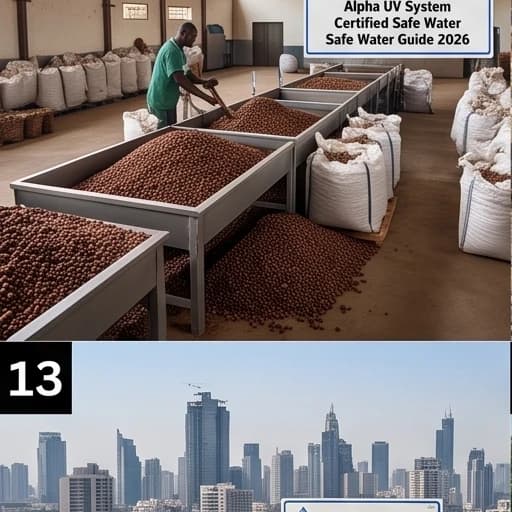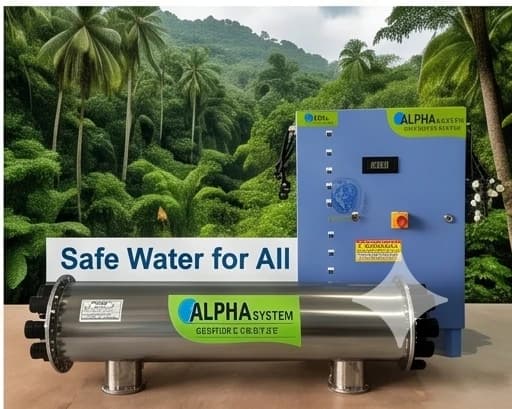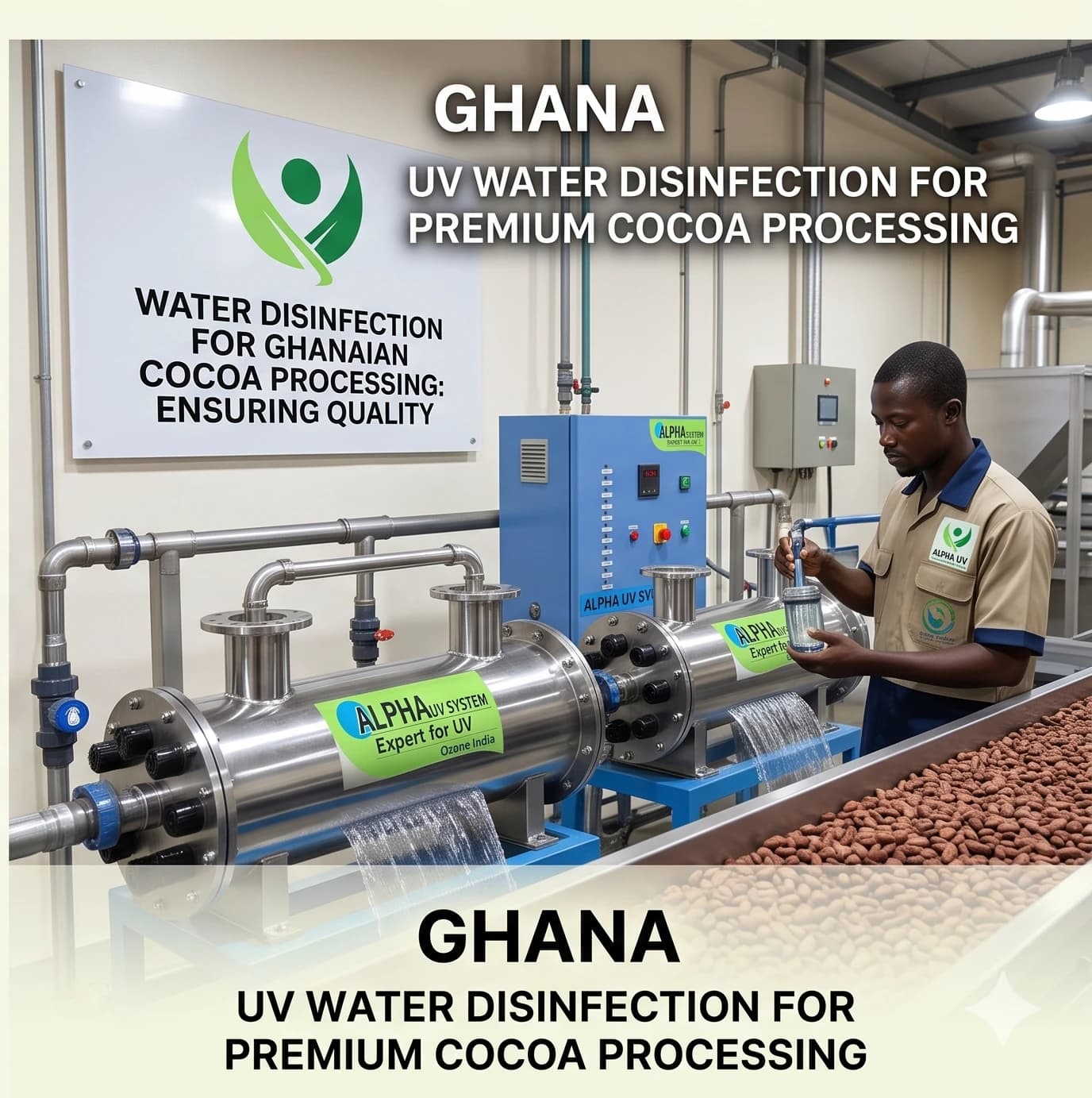
Quick Answer: UV water treatment Ghana cocoa processing is strategically important for the world's second-largest cocoa producer (Ghana produces 850,000–1,000,000 tonnes/year, 17–20% of global supply) — Ghana's COCOBOD (Ghana Cocoa Board) controls cocoa quality through the Licensed Buying Companies (LBC) and COCOBOD's Quality Control Division (QCD), maintaining Ghana's premium position in global cocoa markets (Ghanaian cocoa commands 5–15% premium over Ivorian Côte d'Ivoire cocoa due to superior fermentation quality). Water quality is critical at two processing stages: (1) Cocoa bean washing and fermentation (farm/cooperative level — Ghana's fermenting cocoa uses 6–8 days pile fermentation in banana-leaf covered heaps; washing water microbiological quality affects fermentation microbiome and flavour precursor development); (2) Cocoa processing plants (grinding, pressing, liquor/butter/powder production — Barry Callebaut Tema, Cargill Tema, Touton, Olam) where process water E. coli 0 CFU/100 mL is required for EU food-grade cocoa ingredient export and Rainforest Alliance, UTZ, and Fairtrade sustainability certification. Zero chlorine is mandatory throughout cocoa processing — chlorine at 0.1–0.3 mg/L oxidises cocoa polyphenols and flavour aldehydes, producing off-notes detectable in finished chocolate. NSF/ANSI 55 Class A at 40 mJ/cm². Alpha UV ships to Tema Port (10 km from Barry Callebaut plant) via sea freight or Kotoka International Airport (ACC) air freight.
Ghana Cocoa Processing — Water Treatment Context
Ghana's cocoa processing industry is concentrated in the Greater Accra coastal industrial zone (Tema) and is expanding inland toward Kumasi and Ashanti Region growing areas:
- Tema coastal processing cluster (major international processors): Barry Callebaut Tema (Benso Oil Palm Plantation road — cocoa liquor, butter, powder; primary EU export; capacity 65,000 tonnes/year processed); Cargill Ghana Tema (cocoa butter and powder; Cargill global sustainability certification requirements); Touton Cocoa Ghana (export and processing intermediary); Olam Cocoa Ghana (vertical integration from buying to export processing)
- Kumasi and Ashanti intermediate processors (LBC hubs): Kuapa Kokoo Ltd (fair trade farming cooperative, Kumasi — Divine Chocolate cooperative brand; EU Fairtrade market); COCOBOD's Quality Control Division regional hubs (Kumasi, Cape Coast, Sunyani)
- Farm and cooperative level (washing stations, fermentation boxes): 800,000+ cocoa farming households in Ashanti, Brong-Ahafo, Western, and Eastern Regions; farm-level cocoa processing water quality varies widely — COCOBOD QCD extension services promote improved fermentation water quality
Water Treatment Requirements by Processing Stage
| Processing Stage | Water Role | Key Issue | Alpha UV System |
|---|---|---|---|
| Cocoa bean fermentation (cooperative/farm level — Ashanti/Western Region) | Washing water for bean surface cleaning before fermentation (removes soil, debris); sweating liquid drainage water management; fermenting box washing | Contaminated washing water introduces pathogenic E. coli and Salmonella into fermentation pile — EU export market (Barry Callebaut specification) requires absence of pathogens in fermented dry beans; zero Cl mandatory (chlorine inhibits Saccharomyces and Lactobacillus fermentation microbiome driving flavour precursor development) | AU-S 8 (25W, 3 m³/hour) — solar-compatible for off-grid cooperative; zero Cl; low-cost fermentation water disinfection; COCOBOD QCD documentation |
| Primary cocoa processing — liquor grinding (Tema plants) | Equipment CIP water; nib washing pre-grinding; cooling water for liquor storage tanks; hygienic process water at cocoa liquor transfer | E. coli 0 CFU/100 mL in all product-contact water; zero Cl (chlorine at 0.1 mg/L creates chlorinated phenolic compounds in roasted cocoa nib extract — detectable off-flavour in chocolate liquor); GWCL Tema supply UVT 70–80%; AU-M 25 post-activated carbon for zero-Cl food-grade processing water | AU-M 25, zero Cl, 40 mJ/cm², MODBUS TCP for MNC buyer (Nestlé, Mondelēz) quality audit |
| Cocoa butter pressing and deodorisation (Barry Callebaut, Cargill) | Steam generation feedwater (boiler feed for hydraulic pressing and deodorisation steam); cooling water for butter solidification; CIP chemical dilution water | Boiler feed water: silica <0.5 mg/L, TDS <50 ppm (RO required for boiler feed); post-RO UV for boiler feed biological safety; CIP dilution water: E. coli 0 CFU/100 mL | AU-M 25 post-RO (boiler feed train); AU-M 25 for CIP dilution water; HACCP PRP documentation for EU-export certified Barry Callebaut facility |
| Cocoa powder production (spray drying, packaging) | Reconstitution water for Dutch-process alkalisation; packaging area HVAC humidification; powder handling zone potable water | Alkalisation water (pH adjustment to 6.8–8.2 for Dutch-process cocoa) must be E. coli-free — microbial contamination in alkalised cocoa environment creates post-process Salmonella risk (dry powder Salmonella is the primary EU RASFF alert category for cocoa powder); zero Cl in alkalisation water | AU-M 25, zero Cl, 40 mJ/cm², EU EU-standard HACCP documentation for cocoa powder export |
EU Export Compliance and Cocoa Sustainability Certification
- EU Regulation (EC) 853/2004 (food hygiene — animal origin) + EU Regulation 852/2004 (food hygiene — general): Cocoa products exported to EU must be produced at facilities with validated HACCP — process water E. coli 0 CFU/100 mL documented in HACCP PRP; UV at 40 mJ/cm² NSF/ANSI 55 Class A satisfies EU HACCP water PRP evidence requirement
- Rainforest Alliance Sustainable Agriculture Standard (SAS 2020): Section 4.1.7 (water) — processing water quality test required annually; zero-Cl treatment preferred for biodiversity-sensitive certification; farms and cooperatives in Rainforest Alliance certified supply chain (Barry Callebaut, Mondelēz, Nestlé sourcing) require documented water treatment
- UTZ / Rainforest Alliance merged standard: UTZ Code of Conduct (Section 4.3 — water) requires processing facilities to test water used in product contact; UV installation records accepted as treatment evidence in UTZ/RA audit
- Fairtrade International Standard (FLOCERT audit): Kuapa Kokoo (Fairtrade certified cooperative) — FLOCERT auditors check water safety at fermentation and washing facilities; UV at cooperative level demonstrates food safety investment aligned with Fairtrade premium use requirements
FAQ
Why is zero chlorine critical for cocoa fermentation and processing water?
Chlorine (free chlorine as hypochlorous acid, HOCl) reacts with two critical components in cocoa processing: (1) Fermentation microbiome — the Saccharomyces cerevisiae (yeast), Lactobacillus spp., and Acetobacter spp. that drive cocoa's 6–8-day fermentation cascade are inhibited at 0.05–0.2 mg/L free chlorine; Saccharomyces is most sensitive; even residual Cl in washing water contacting fermenting beans can suppress yeast activity and reduce acetic acid production, lowering flavour precursor (Maillard precursor — free amino acids, reducing sugars) development; (2) Cocoa polyphenol chemistry — chlorine oxidises cocoa's catechins, theobromine, and flavour-active aldehyde precursors; at 0.1–0.3 mg/L Cl, phenolic oxidation products create chlorophenol off-notes detectable in finished dark chocolate at the 1–2 ppb sensory threshold. Barry Callebaut's global cocoa sourcing specification explicitly requires zero-Cl process water at all processing and fermentation wash stages — UV disinfection is the approved chlorine-free alternative in Barry Callebaut's technical specification for Ghana bean suppliers and owned processing facilities.
What COCOBOD standard applies to cocoa washing station water quality in Ghana?
COCOBOD (Ghana Cocoa Board) Quality Control Division (QCD) sets cocoa quality standards under the Ghana Cocoa Marketing Company (CMC) export specification — the Ghana Cocoa Standard (GCS) specifies bean physical quality (moisture <7.5%, mould <3%, slaty beans <3%, pest damage <3%) but does not explicitly specify water treatment standard at farm/cooperative level. However, international cocoa buyer specifications (Barry Callebaut, Nestlé, Mondelēz, Mars) impose additional water quality requirements through their sustainability sourcing programmes. COCOBOD's Farmer Services Company (FSC) extension service promotes UV treatment at cooperative washing stations as part of Good Agricultural Practices (GAP) training — recognising that microbiological contamination in washing water is a pathway for Salmonella and E. coli in fermented dry beans (which are exported without further heat treatment before chocolate manufacturer roasting). Alpha UV AU-S 8 (solar-compatible, 25W, 3 m³/hour) is specifically targeted at COCOBOD cooperative washing stations where grid power is unreliable.
How does Barry Callebaut's Tema plant specify UV water treatment?
Barry Callebaut Tema cocoa processing plant applies Barry Callebaut's global Quality Management System (QMS) aligned to ISO 22000 and FSSC 22000 (Food Safety System Certification — Barry Callebaut's global standard for owned processing facilities). Process water specification: E. coli 0 CFU/100 mL; total coliforms 0 CFU/100 mL; Salmonella absent in 25 mL; zero chlorine residual (Barry Callebaut global QMS prohibits free chlorine in product-contact water at all owned processing facilities globally — applies consistently from Tema to Belgium to Singapore). Water treatment train: GWCL Tema supply (UVT 72–80%) → multimedia filtration (turbidity removal) → activated carbon (Cl removal) → UV at 40 mJ/cm² (biological disinfection post-carbon) → process distribution. Alpha UV AU-M 30 (12 m³/hour, 45W) at Tema plant's main process water entry; MODBUS TCP integration with Barry Callebaut Tema plant SCADA; annual NSF/ANSI 55 Class A dose verification test for FSSC 22000 audit.
Standards, authorities & further reading
External references used to inform this guide. Regulations evolve — check the latest revision on each authority's site before compliance decisions.
Recommended UV Systems
Alpha UV System products for this application — powered by genuine Philips UV-C lamps.
Commercial UV Water Purification System
500 – 5,000 LPH
HACCP-compliant UV water purification for hotels, restaurants, and offices
Industrial UV Water Treatment System
5,000 – 50,000 LPH
Schedule M 2025 and HACCP compliant UV for pharma, food & beverage, and process water
Not sure which system suits your application? WhatsApp our engineers for a free recommendation →
Related solutions
See how Alpha UV System applies this to your industry or city.
Need a UV system?
Talk to our UV engineers — WhatsApp for a quote in 2 hours, or browse the full catalog on IndiaMART.