Quick Answer: Kenya's tourism sector — generating USD 2.3 billion/year (2024, recovering to pre-COVID levels), anchored by Maasai Mara National Reserve, Amboseli National Park, Tsavo, Laikipia, and the Indian Ocean coast — requires NSF/ANSI 55 Class A UV at 40 mJ/cm² across diverse settings: luxury safari lodges (&Beyond, Singita, Angama, Sanctuary Retreats — borehole and surface water from Mara River/Ewaso Nyiro, UVT 68–84%), coastal beach resorts (Diani Beach, Watamu, Malindi — IP66 marine, coral aquifer UVT 84–92%), eco-lodges and conservancy tented camps (Laikipia Plateau, Samburu — solar 24V DC off-grid, submersible AU-S 10), and international urban hotels (Nairobi Hilton/JW Marriott — already covered in Nairobi guide). Kenya Tourism Authority (KTA) and Ecotourism Kenya certification require WHO-standard water safety documentation. Alpha UV ships to JKIA in under 48 hours from India; Maasai Mara and Laikipia road delivery via charter or road from Narok/Nanyuki.
Kenya Safari Tourism Water Context
Kenya's safari and tourism ecosystem spans extreme diversity of water sources: from alkaline Rift Valley lakes (Nakuru, Bogoria, Magadi — not used for drinking) to high-clarity Rift escarpment springs (Mara Conservancy boreholes, Laikipia aquifer — UVT 78–90%), to tannin-stained Mara River surface water (UVT 62–74% during rainy season when wildebeest crossing season turbidity peaks coincide with EU travel peak).
The common thread across all Kenya safari lodge water treatment is: remote installation site (road or air charter logistics), borehole or surface water dependence (no municipal supply), solar or generator power (grid connection typically absent), and international guest expectations aligned with European and North American hotel water safety standards. Kenya Tourism Authority classification (Star Ratings) references WHO Drinking Water Guidelines 4th edition for hotel water quality.
NSF/ANSI 55 Class A UV at 40 mJ/cm² satisfies: KTA Star Rating requirements, Ecotourism Kenya Gold certification, international hotel brand HACCP (Marriott MSC-G-01, Hilton FSMS, Accor brand), international tour operator due diligence (TUI, Abercrombie & Kent, Micato Safaris, &Beyond's own operational standards), and UK/EU travel insurance requirements — all from a single documentation set.
Maasai Mara — Mara River and Borehole Sources
The Maasai Mara ecosystem — home to the annual Great Wildebeest Migration (July–October), Kenya's highest tourism concentration — hosts 60+ safari camps and lodges, from basic tented camps to ultra-luxury properties:
| Lodge / Camp | Water Source / UVT | Power | Standard | Alpha UV System |
|---|---|---|---|---|
| &Beyond Bateleur Camp (Mara North) | Borehole 78–86% | Solar + generator | &Beyond WildlifeSAFE, WHO 4th ed., HACCP | AU-S 15, 24V DC solar, NSF/ANSI 55 Class A |
| Angama Mara (Oloololo escarpment) | Borehole 82–90% | Solar + generator | HACCP, WHO 4th ed., KTA | AU-S 15, 24V DC solar, MODBUS RS485 |
| Sanctuary Olonana (Mara River) | Mara River + borehole blend 68–76% | Generator | Sanctuary Retreats HACCP, WHO 4th ed. | AU-M 25, auto de-rating, NSF/ANSI 55 Class A |
| Fairmont Mara Safari Club (Mara River) | Mara River 65–76% | Generator | Fairmont HACCP, WHO 4th ed., AccorHotels | AU-M 25, auto de-rating, GAC pre-filtration |
| Basecamp Masai Mara (eco-camp) | Borehole 80–88% | Solar 24V DC | Ecotourism Kenya Gold, WHO 4th ed. | AU-S 10, 24V DC solar, NSF/ANSI 55 Class A |
Mara River water (originating from Mau Escarpment forest — Kenya's largest closed-canopy forest) carries seasonal turbidity loads during the wildebeest migration crossing season (July–October): millions of wildebeest crossing the Mara River raise turbidity significantly, dropping UVT to 62–70% in peak crossing periods. Paradoxically, this peak turbidity coincides with peak international guest occupancy at Mara River-adjacent lodges — the most demanding UV dose delivery challenge during the most critical tourism season. Auto de-rating flow control is mandatory for all Mara River-sourced installations, reducing permitted flow rate automatically when UVT monitoring detects crossings-season turbidity events to maintain 40 mJ/cm² dose delivery. GAC pre-filtration upstream of the UV reactor is specified for Mara River surface water users.
Amboseli and Tsavo — Kilimanjaro View Lodges
Amboseli National Park (Kilimanjaro backdrop) and Tsavo host Kenya's most photographed elephant populations and iconic lodge brands:
| Lodge | Water Source / UVT | Power | Standard | Alpha UV System |
|---|---|---|---|---|
| Tortilis Camp Amboseli (Cheli & Peacock) | Amboseli springs 82–90% | Solar + generator | HACCP, WHO 4th ed., KTA | AU-S 15, 24V DC solar, NSF/ANSI 55 Class A |
| Ol Tukai Lodge Amboseli | Amboseli springs 82–90% | Generator | HACCP, WHO 4th ed. | AU-S 15, NSF/ANSI 55 Class A |
| Kilaguni Serena Safari Lodge (Tsavo West) | Mzima Springs water 86–92% | Grid + generator | Serena Hotels HACCP, WHO 4th ed. | AU-M 25, NSF/ANSI 55 Class A, MODBUS |
| Finch Hattons Luxury Camp (Tsavo West) | Borehole 82–90% | Solar + generator | HACCP, WHO 4th ed., KTA | AU-S 15, 24V DC solar |
Amboseli National Park springs — fed by Kilimanjaro snowmelt percolating through volcanic rock — produce exceptionally clear water at UVT 82–92%, similar to Mzima Springs. Kilimanjaro-sourced spring water at Amboseli is ideal for UV dose delivery, enabling compact AU-S 15 units at lodges with <50 guest capacity without pre-treatment.
Laikipia Plateau — Eco-Lodges and Conservancies
Laikipia Plateau (altitude 1,500–2,100 m, north of Mt. Kenya) hosts Kenya's most extensive wildlife conservancy network — Ol Pejeta Conservancy (rhino sanctuary), Lewa Wildlife Conservancy, Borana Ranch, Ol Jogi, Laikipiak Maasai community conservancies — with eco-lodges applying Ecotourism Kenya Gold certification criteria:
| Lodge / Conservancy | Water Source / UVT | Power | Standard | Alpha UV System |
|---|---|---|---|---|
| Ol Pejeta Bush Camp | Ewaso Nyiro River + borehole 74–84% | Solar 24V DC | Ecotourism Kenya Gold, WHO 4th ed. | AU-S 10, 24V DC solar, NSF/ANSI 55 Class A |
| Lewa Safari Camp (Lewa WC) | Borehole 80–88% | Solar + generator | HACCP, Ecotourism Kenya, WHO 4th ed. | AU-S 15, 24V DC solar, NSF/ANSI 55 Class A |
| Borana Lodge (Laikipia) | Borehole 80–88% | Solar + generator | HACCP, WHO 4th ed., Relais & Châteaux | AU-S 15, NSF/ANSI 55 Class A, MODBUS RS485 |
| Ol Jogi Private Retreat | Borehole 82–90% | Generator | HACCP, WHO 4th ed. | AU-M 25, NSF/ANSI 55 Class A |
Laikipia boreholes (Basement Complex and volcanic aquifer) typically show UVT 80–90% — among the best groundwater quality in Kenya, reflecting the altitude, limited agricultural contamination, and volcanic rock filtration. Ewaso Nyiro River (seasonal, passing through Ol Pejeta) drops to UVT 68–76% in cattle mustering season (heavy livestock crossing turbidity) — auto de-rating mandatory for surface water-supplemented installations.
Frequently Asked Questions
What is Ecotourism Kenya Gold certification and what water documentation does it require?
Ecotourism Kenya (the national ecotourism certification body, member of the Global Sustainable Tourism Council) offers Bronze, Silver, and Gold certification for Kenyan tourism businesses. Gold certification (required for Laikipia and Mara conservancy lodges seeking premium EU eco-traveller market access) includes environmental performance criteria covering water management: (1) documented water source management and abstraction records; (2) water treatment evidence (NSF/ANSI 55 Class A UV certification accepted); (3) water quality testing records (microbiological, quarterly minimum); (4) water conservation measures (recycling, rainwater harvesting); and (5) zero chemical discharge to natural water bodies (zero-chemical UV disinfection satisfies this directly). Ecotourism Kenya Gold is increasingly required by UK and EU tour operators (Responsible Travel, Natural Habitat Adventures, Safari Specialists) as a supply chain qualification criterion. NSF/ANSI 55 Class A UV documentation package from Alpha UV provides the water treatment and water quality evidence required for Ecotourism Kenya Gold water criteria.
How does the solar 24V DC UV system work in a remote Maasai Mara eco-camp?
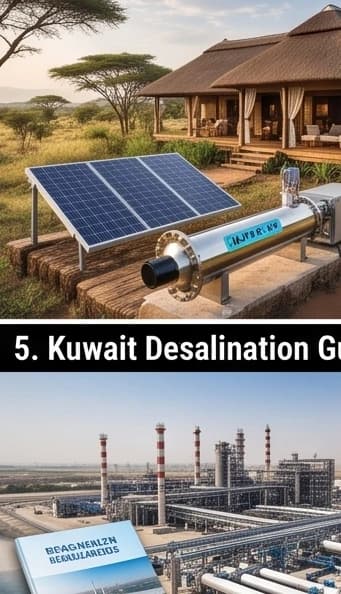
Remote Maasai Mara tented camps (beyond grid power coverage, 250+ km from Nairobi industrial power infrastructure) operate exclusively on solar and generator power. Alpha UV's AU-S 10 and AU-S 15 systems with 24V DC solar option connect to a standard off-grid solar system: 200W monocrystalline solar panel, 30A MPPT charge controller, 100–200 Ah LiFePO4 battery bank (low-voltage cutoff at 23V DC to protect battery from deep discharge), powering the UV controller and lamp (maximum 50W draw for AU-S 10, 75W for AU-S 15). Daily solar insolation at Maasai Mara latitude (1.5°S, altitude 1,600 m) averages 5.5–6.0 peak sun hours/day year-round (minimal seasonal variation near equator) — a 200W panel charges 100 Ah battery within 3–4 hours, providing 4–6 hours of UV operation per charge cycle. For camps with continuous kitchen operations (EU guests demanding 24-hour hot water and food preparation safety), generator integration charges the battery bank during evening peak demand, with solar covering daytime refill operations. The system is packaged for aircraft delivery — UV reactor (15–18 kg), controller/lamp (3 kg), panel (12 kg), battery (8 kg) — all within 60 kg aircraft cargo limit for bush airstrip delivery.
What international tour operator water safety requirements apply to Kenyan safari lodges?
Major international safari tour operators — &Beyond (South Africa/Kenya/Tanzania), Abercrombie & Kent (UK), Micato Safaris (US), Ker & Downey (US/UK), Natural Habitat Adventures (US) — conduct annual lodge supplier audits covering food safety including water quality. Common requirements: (1) WHO 4th edition microbiological standards at point of use; (2) documented water treatment with validation evidence (NSF/ANSI 55 Class A certificate accepted); (3) HACCP plan with water as a CCP; (4) quarterly microbiological test results from a KEBS-accredited laboratory; (5) corrective action records for test failures. Some operators additionally require: signed water safety declaration (lodge manager); copy of most recent KTA inspection water safety assessment; and reference to water treatment equipment specification in lodge food safety management plan. Alpha UV provides an operator-ready documentation package at commissioning — formatted for &Beyond WildlifeSAFE, Abercrombie & Kent due diligence, and KTA Star Rating requirements from a single English-language dossier.
What UV specification handles Mara River surface water during wildebeest crossing season?
Mara River surface water during wildebeest Great Migration crossing season (July–October) — when millions of wildebeest and zebra cross the Mara River repeatedly at established crossing points — shows turbidity spikes from disturbed riverbed sediment, animal waste, and bacterial loading (E. coli from wildebeest gut flora). UVT can drop to 58–70% during active crossing events. Standard UV specification for Mara River-sourced lodges: (1) GAC pre-filtration (granular activated carbon — raising UVT from 62–70% to 78–86% by removing organic colour compounds before UV reactor); (2) auto de-rating UV controller (monitors real-time UVT via sensor at UV inlet, reduces permitted flow to maintain 40 mJ/cm² dose when UVT drops); (3) MODBUS RS485 logging (confirms dose delivery throughout crossing season — critical for HACCP CCP records during the highest-risk turbidity period). Alpha UV AU-M 25 with GAC pre-filtration is the standard Mara River surface water specification — providing NSF/ANSI 55 Class A 40 mJ/cm² throughout Migration season regardless of wildebeest crossing frequency.
What is the logistics route for UV systems to remote Maasai Mara lodges?
Maasai Mara is approximately 250 km from Nairobi via Narok (B3 highway — partially tarmacked to Sekenani Gate, murram road within the Mara). Road freight from Nairobi: 4–5 hours to major camp gates. Air freight to JKIA Nairobi (under 48 hours from India) then road to Mara is the standard route for most lodges. For ultra-remote camps or large shipments: charter flight from Wilson Airport Nairobi to Mara Serena, Kichwa Tembo, or Mara North Conservancy airstrips (30 minutes — all airstrips handle Cessna Caravan cargo, 750 kg maximum cargo payload). For solar off-grid AU-S units (packed at 50–60 kg including panel and battery): Wilson Airport charter delivery is preferred for time-critical lodge openings. Spare lamps (2–3 kg per carton) dispatch by DHL Express from India to JKIA in 3–4 working days, then same-day road or charter to Mara.
Logistics and Supply Chain
Alpha UV supplies Kenya safari lodges via air freight to JKIA (under 48 hours from India) then road or charter aircraft delivery. Maasai Mara: 250 km road (4–5 hours) or Wilson Airport charter (30 minutes). Laikipia: 200–250 km from Nairobi via Nyahururu or Nanyuki road. Amboseli: 240 km via Namanga road (4 hours). Tsavo: 200–300 km from Mombasa or Nairobi.
Solar 24V DC AU-S systems are packaged in 60 kg aircraft-portable format for bush airstrip delivery. Mombasa Port sea freight (18–22 days from India) then road to interior lodges is used for planned capital installations at established lodges.
Documentation with every Kenya safari lodge installation: NSF/ANSI 55 Class A validation report, WHO 4th edition compliance declaration (English), Kenya Tourism Authority Star Rating HACCP water documentation, Ecotourism Kenya Gold water criteria evidence, international tour operator water safety declaration (&Beyond, A&K, Micato format), MODBUS RS485/TCP register map, IP65 certification (IP66 for Diani/coastal installations), and O&M manual in English and Swahili.
Alpha UV Systems — UV water treatment for Kenya safari lodges and coastal hotels. NSF/ANSI 55 Class A | WHO 4th edition HACCP | Ecotourism Kenya Gold water criteria | &Beyond / A&K / KTA documentation | Mara River auto de-rating GAC+UV | Maasai Mara 24V DC solar off-grid | IP66 coastal Indian Ocean. Delivery via JKIA 48 hours then road or charter. Contact us for Maasai Mara or Laikipia eco-lodge sizing.
Standards, authorities & further reading
External references used to inform this guide. Regulations evolve — check the latest revision on each authority's site before compliance decisions.
- Central Pollution Control Board (CPCB), Government of India
- Central Ground Water Board (CGWB)
- BIS IS 10500:2012 — Drinking Water Quality Specification
- WHO — Guidelines for Drinking-water Quality (4th ed.)
- FSSAI — Food Safety & Standards Authority of India
- NSF/ANSI 55 — Ultraviolet Microbiological Water Treatment Systems
Recommended UV Systems
Alpha UV System products for this application — powered by genuine Philips UV-C lamps.
Commercial UV Water Purification System
500 – 5,000 LPH
HACCP-compliant UV water purification for hotels, restaurants, and offices
Industrial UV Water Treatment System
5,000 – 50,000 LPH
Schedule M 2025 and HACCP compliant UV for pharma, food & beverage, and process water
Not sure which system suits your application? WhatsApp our engineers for a free recommendation →
Related solutions
See how Alpha UV System applies this to your industry or city.
Need a UV system?
Talk to our UV engineers — WhatsApp for a quote in 2 hours, or browse the full catalog on IndiaMART.