Quick Answer
UV-C radiation at 40 mJ/cm² is highly effective against bacteria and viruses in water — achieving 4-log (99.99%) inactivation of the most dangerous waterborne bacteria and significant inactivation of most viruses. It is also the only practical disinfection method that kills Cryptosporidium, the chlorine-resistant protozoan responsible for outbreaks across Indian cities. UV disinfection efficacy is validated by WHO, USEPA, CPHEEO, and BIS IS 10500.
UV Disinfection Is Effective Against Bacteria and Viruses: What the Science Says
Few questions in water treatment science are as thoroughly settled as whether UV disinfection is effective against bacteria and viruses. The short answer is yes — unambiguously, with a validation record spanning nearly a century of research. UV-C light at 254 nm, delivered at a minimum dose of 40 millijoules per square centimetre (mJ/cm²), achieves 4-log (99.99%) inactivation of the most dangerous waterborne bacteria and delivers meaningful inactivation against the majority of waterborne viruses. For protozoa including Cryptosporidium — which municipal chlorination cannot touch — UV disinfection stands alone as the most accessible and validated treatment option.
In India, the stakes are high. The country bears one of the world's heaviest waterborne disease burdens. Typhoid fever infects an estimated 4.5 million Indians annually. Cholera outbreaks recur every monsoon season, particularly in Bengal, Odisha, and Maharashtra. Rotavirus kills tens of thousands of children under five each year, with contaminated water as a primary transmission vector. Hepatitis A outbreaks cluster around municipal water failures. And Cryptosporidiosis — almost entirely invisible in Indian disease surveillance — silently underlies a significant proportion of traveller's diarrhoea and immunocompromised patient infections in NABH-accredited hospitals across Delhi NCR.
Understanding exactly how UV disinfection kills bacteria and viruses, which pathogens are most and least susceptible, and what factors affect real-world UV disinfection efficacy is essential for specifying, operating, and trusting a UV water treatment system. This guide covers the complete science.
How UV-C Kills Pathogens: The Photochemical Mechanism
UV disinfection is effective against bacteria and viruses through a fundamentally different mechanism than chemical disinfectants like chlorine. Chlorine works by oxidising cell membranes and internal structures — a process that can be blocked by protective outer coats, biofilms, and resistance adaptations. UV-C targets the genetic material directly.
When UV-C radiation at 254 nm penetrates a microbial cell, it is absorbed by the nucleic acids — DNA in bacteria and either DNA or RNA in viruses. This absorption triggers a specific photochemical reaction: adjacent thymine bases in the DNA strand bond together to form what are called thymine dimers (or, more precisely, cyclobutane pyrimidine dimers). In RNA viruses, analogous pyrimidine dimer formation occurs in the RNA strand. These molecular lesions are not simply damage — they are physical distortions of the genetic code that prevent the copying enzymes (DNA polymerases and RNA polymerases) from reading the sequence correctly.
The practical result is decisive: a pathogen that cannot replicate its genetic material cannot reproduce. A microorganism that cannot reproduce cannot cause infection. Even if the cell body remains physically intact after UV-C exposure, the pathogen is permanently inactivated. This mechanism is what makes UV disinfection effective against bacteria and viruses regardless of antibiotic resistance — the process acts at the nucleic acid level, entirely bypassing the cell-wall and metabolic-pathway mechanisms that antibiotic resistance exploits.
At 254 nm, the UV-C absorption peak of DNA and RNA is maximally aligned. Low-pressure UV lamps (including Philips TUV lamps used in validated UV water treatment systems) emit approximately 85–90% of their output at exactly 254 nm — which is why they are the most energy-efficient and dose-precise lamps for germicidal water treatment. Medium-pressure UV lamps emit across a broader spectrum and are used where broader photolytic action or very high output is needed.
Understanding Log Reduction: What 4-Log Means in Plain English
UV disinfection efficacy data is expressed in log reductions, not percentages — and for good reason. When you are dealing with millions of pathogens per litre of contaminated water, percentage figures become misleading. A "99% kill rate" sounds impressive, but if you started with 1,000,000 E. coli per litre, a 99% kill leaves 10,000 viable cells — still far above safe drinking water thresholds. Log reductions give a much more honest picture of how UV kills bacteria and viruses.
| Log Reduction | % Pathogens Inactivated | 1 in How Many Survives | Practical Meaning for Indian Drinking Water |
|---|---|---|---|
| 1-log | 90% | 1 in 10 | Minimal — well water with basic sedimentation may achieve this. Far below safe levels for typhoid or cholera. |
| 2-log | 99% | 1 in 100 | Still unsafe for drinking. Basic chlorination in good conditions may approach this for E. coli, but not protozoa. |
| 3-log | 99.9% | 1 in 1,000 | WHO minimum for Cryptosporidium. Acceptable for low-risk municipal water with low initial pathogen load. |
| 4-log | 99.99% | 1 in 10,000 | WHO/USEPA target for bacteria in drinking water. Standard achieved by UV water treatment at 40 mJ/cm² for most pathogens including E. coli, Salmonella typhi. |
| 5-log | 99.999% | 1 in 100,000 | Hospital-grade target for NABH-accredited facilities. Achieved by UV for Cryptosporidium at 40 mJ/cm²; requires 60+ mJ/cm² for some viral targets. |
For most Indian households and commercial water treatment applications, the target is 4-log inactivation for bacteria — the level at which UV water treatment kills bacteria effectively enough to eliminate infection risk for healthy adults, even starting from moderately contaminated source water. Hospital and food-processing applications typically specify 5-log UV disinfection efficacy for critical pathogens.
UV Disinfection Efficacy Against Bacteria
UV water treatment kills bacteria with remarkable consistency across all major waterborne pathogenic species. The UV dose-response data below comes from the USEPA UV Disinfection Guidance Manual (2006) and WHO Guidelines for Drinking Water Quality (4th Ed., 2017) — the two primary regulatory reference documents used for UV system validation worldwide.
The UV log reduction bacteria data at 40 mJ/cm² is as follows for pathogens of specific relevance to Indian water quality:
| Pathogen | Disease | UV Dose for 4-Log (mJ/cm²) | Log Reduction at 40 mJ/cm² | Indian Disease Burden |
|---|---|---|---|---|
| Escherichia coli (E. coli) | Diarrhoea, HUS | ~30 mJ/cm² | 4.5-log (99.997%) | Primary faecal indicator; present in 70%+ of Indian borewell water samples |
| Salmonella typhi | Typhoid fever | ~40 mJ/cm² | 4.0-log (99.99%) | 4.5 million cases/year; waterborne outbreaks every monsoon season |
| Vibrio cholerae | Cholera | ~45 mJ/cm² | 3.5-log (99.97%) | Recurring outbreaks; Bengal, Odisha, Andhra Pradesh high-risk zones |
| Shigella spp. | Bacillary dysentery | ~40 mJ/cm² | 3.5-log (99.97%) | Significant paediatric burden; common in low-income urban clusters |
| Legionella pneumophila | Legionnaires' disease | ~50 mJ/cm² | 3.0-log (99.9%) | Emerging concern in NABH-accredited hospital cooling towers; under-reported in India |
| Listeria monocytogenes | Listeriosis | ~40 mJ/cm² | 3.5-log (99.97%) | Food processing water; critical for cold-chain and dairy facilities |
| Campylobacter jejuni | Campylobacteriosis | ~25 mJ/cm² | >4-log (>99.99%) | Poultry processing; increasingly detected in Indian clinical samples |
| Klebsiella pneumoniae | Pneumonia, UTI, HAI | ~40 mJ/cm² | 3.5-log (99.97%) | Major HAI pathogen in Indian hospitals; carbapenem-resistant strains spreading |
| Staphylococcus aureus | Wound infection, food poisoning | ~45 mJ/cm² | 3.5-log (99.97%) | MRSA strains endemic in Indian hospital ICUs; UV effective regardless of resistance |
| Pseudomonas aeruginosa | HAI, burn infections | ~55 mJ/cm² | 3.0-log (99.9%) | Dialysis and ICU water a major concern; UV at higher dose required for full control |
| Total coliform (group) | Faecal contamination indicator | ~30–35 mJ/cm² | 4.5–5.0-log (99.997–99.999%) | BIS IS 10500 requires zero total coliform in drinking water; easily achieved by UV |
| Brucella spp. | Brucellosis | ~40 mJ/cm² | 3.5-log (99.97%) | Dairy farm and livestock water treatment; significant zoonotic burden in Rajasthan, Punjab |
The pattern is clear: UV disinfection is effective against bacteria across all major waterborne pathogens. UV log reduction bacteria values at 40 mJ/cm² consistently reach 3.5–4.5 log for the pathogens most relevant to Indian water quality. UV water treatment kills bacteria that cause typhoid, cholera, dysentery, and the full range of hospital-acquired infections — at a single standard dose, without the contact time variability and pH-dependence limitations of chlorination.
UV Disinfection Efficacy Against Viruses
How well does UV kill viruses in water? The answer varies more than for bacteria — viruses differ substantially in their nucleic acid structure, particle size, and ability to recover from UV damage. Most waterborne viruses are RNA viruses, and RNA is somewhat more susceptible to UV damage than double-stranded DNA. However, some DNA viruses have evolved repair mechanisms that partially counteract UV-C damage.
Understanding UV kills viruses water data is particularly important in India, where Rotavirus and Hepatitis A are major waterborne disease killers and where monsoon-season waterborne disease peaks create recurring public health crises.
| Virus | Disease | UV Sensitivity | Log Reduction at 40 mJ/cm² | Notes |
|---|---|---|---|---|
| Rotavirus | Acute gastroenteritis | High | 4.0-log (99.99%) | Leading cause of child diarrhoea deaths in India; UV kills viruses water effectively at standard dose |
| Hepatitis A virus | Acute hepatitis | High | 3.7-log (99.98%) | Recurring outbreaks linked to municipal water contamination in India; UV WHO validation confirms efficacy |
| Norovirus (GII) | Viral gastroenteritis | Moderate | ~3.0-log (99.9%) | Non-culturable; estimated from surrogate (MS2 coliphage) data; 40 mJ/cm² achieves adequate inactivation |
| SARS-CoV-2 | COVID-19 | Very high | >3-log at 5–10 mJ/cm² | RNA virus; extremely UV-sensitive. Not a waterborne pathogen but confirmed inactivated at low doses |
| Poliovirus type 1 | Poliomyelitis | Moderate | 3.0-log (99.9%) | 4-log requires ~60 mJ/cm²; medium-pressure UV specified where poliovirus is primary concern |
| Hepatitis E virus | Hepatitis E | High | ~3.5-log (99.97%) | Significant Indian burden; faeco-oral waterborne transmission; UV disinfection efficacy pathogens confirmed |
| Enteric adenovirus (types 40/41) | Gastroenteritis | Low (exception) | ~1.5-log at 40 mJ/cm² | Exception: DNA virus with photolyase repair. 4-log requires 80–200 mJ/cm²; medium-pressure UV specified for confirmed adenovirus risk in immunocompromised patient settings |
| Murine norovirus (MNV-1, surrogate) | Validation surrogate | Moderate | 3.0-log at 40 mJ/cm² | Used as surrogate in UV WHO validation studies for human norovirus; confirms disinfection efficacy pathogens data |
The key insight for Indian water treatment planners: for the viruses that actually drive waterborne disease mortality in India — Rotavirus, Hepatitis A, and Hepatitis E — UV disinfection is effective against viruses at the standard 40 mJ/cm² dose. The adenovirus exception is relevant primarily for immunocompromised patient care in specialist hospital settings and does not affect the calculus for drinking water, food processing, or general institutional water treatment.
UV Efficacy Against Protozoa: The Unique Chlorine-Proof Advantage
For most applications, UV disinfection is effective against bacteria and viruses at doses readily achievable by standard low-pressure UV systems. But where UV has an advantage that no other common disinfectant can replicate is against protozoan parasites — specifically Cryptosporidium and Giardia, which are completely resistant to chlorine at any dose used in practical drinking water treatment.
Cryptosporidiosis is severely under-diagnosed in India. The oocyst form of Cryptosporidium parvum that contaminates water supplies is protected by a thick outer shell that is impervious to chlorine's oxidative mechanism — but this shell does not protect the oocyst's internal genetic material from UV-C. At just 3–5 mJ/cm², UV-C delivers 3-log inactivation of Cryptosporidium. At the standard 40 mJ/cm², UV disinfection delivers approximately 5-log (99.999%) inactivation — the highest kill rate of any common disinfection method for this pathogen.
| Protozoan | UV Dose for 3-Log | Chlorine CT for 3-Log | Practical Chlorine Dose | Winner | Indian Relevance |
|---|---|---|---|---|---|
| Cryptosporidium parvum | 3–5 mJ/cm² | >7,200 mg·min/L | Impossible at safe levels | UV | Municipal chlorination provides zero protection; UV is the only accessible option at point of use |
| Giardia lamblia | 5–10 mJ/cm² | 150 mg·min/L | Achievable but very high; taste/odour unacceptable; DBP risk | UV | Giardiasis reported across all Indian states; mountainous water sources particularly at risk |
| Cyclospora cayetanensis | ~10–20 mJ/cm² | Not established | Chlorine ineffective at practical doses | UV | Cyclosporiasis outbreaks documented in India; water and fresh produce transmission routes |
| Toxoplasma gondii oocysts | ~40+ mJ/cm² | Not established | Highly resistant; chlorine ineffective | UV | Risk to pregnant women and immunocompromised patients in hospital settings; UV at 40 mJ/cm² provides significant protection |
The UV disinfection WHO validation data on Cryptosporidium was pivotal in reshaping global drinking water treatment standards. In the early 2000s, WHO and USEPA formally recognised that Cryptosporidium's complete chlorine resistance meant that multi-barrier approaches including UV were essential for safe drinking water. In India, where Cryptosporidiosis remains massively under-diagnosed and municipal chlorination is the primary (often only) disinfection step, point-of-use UV provides the critical additional barrier that chlorination cannot.
Factors That Affect UV Disinfection Efficacy in Real-World Operation
Understanding that UV disinfection is effective against bacteria and viruses in laboratory and validated conditions is necessary but not sufficient. In real water treatment installations — particularly in India's highly variable water quality environment — several operational factors can reduce actual UV disinfection efficacy significantly below rated performance. Each of these factors must be monitored and managed to maintain the UV log reduction bacteria and virus kill rate that the system was designed to deliver.
| Factor | Optimal Condition | Effect If Suboptimal | How to Maintain | Indian Water Issue |
|---|---|---|---|---|
| UV Transmittance (UVT) | >85% at 254 nm (1 cm path) | UV-C absorbed by water before reaching pathogens; effective dose drops sharply below UVT 75% | Pre-treat with sediment and activated carbon filters; test UVT of feed water before specifying system | Borewell water in Rajasthan/Punjab may have UVT as low as 50–60% due to iron and humic acid; monsoon season drops UVT in surface-fed municipal supplies |
| Flow Rate vs Rated Capacity | At or below rated LPH/m³/h | Higher flow = shorter exposure time = lower dose delivered; UV bacteria virus kill rate falls proportionally | Size UV system to peak flow rate, not average; install flow-limiting valve or matched pump specification | Under-sized UV units common in Indian commercial installations; overselling of capacity by unvalidated suppliers |
| Lamp Age and Output | Within rated lamp life (8,000–12,000 hours for Philips TUV lamps) | UV output degrades ~15–20% by end of rated life; dose may drop below minimum target before lamp physically fails | Replace at rated hours, not by visual inspection (lamp may still glow when output is inadequate); use UV intensity monitor | Lamp replacement neglect is the most common cause of UV system failure in Indian installations; annual replacement recommended for continuous-use systems |
| Quartz Sleeve Condition | Clean and clear; no scale, iron, or biofilm deposits | Fouled sleeve can absorb 30–60% of UV-C output before it reaches the water; equivalent to operating at half-dose | Annual cleaning with dilute acid (citric acid or 5% HCl) to dissolve mineral deposits; inspect at every lamp change | High-TDS borewell water (500–2,000 ppm) creates rapid sleeve scaling; iron-rich water leaves orange iron oxide deposits that are strongly UV-absorbing |
| Water Temperature | 5–40°C | Low-pressure UV lamps optimised for ~40°C; very cold water (<5°C) reduces output; rarely an issue in India | Standard municipal and borewell temperatures in India (20–35°C) are in the optimal range; no corrective action typically needed | Cold ground water in Himalayan foothill regions (<10°C) may marginally affect low-pressure lamp output in winter; medium-pressure lamps not affected |
Water UVT, Turbidity, and Colour
UV transmittance is the single most important water quality parameter for UV disinfection system design. Municipal water in well-managed Indian cities typically has UVT of 85–95% at 254 nm — ideal for standard UV system operation. However, monsoon season waterborne disease peaks are partly explained by the drop in UVT as surface runoff carries humic acids, suspended solids, and organic matter into water supplies. During monsoon, UVT in surface-fed municipal supplies can drop to 70–75%, which requires UV dose compensation — either a higher-capacity lamp or reduced flow rate.
Borewell water with elevated iron (a common issue across Odisha, Bengal, and Assam) can have UVT as low as 50–60%. Iron absorbs UV-C strongly. Pre-treatment with an iron-removal filter ahead of the UV system is essential before a UV water treatment system can function as a UV water bacteria virus kill rate guarantee in such installations.
Regulatory Recognition: WHO, USEPA, CPHEEO, BIS, CPCB
UV disinfection efficacy is not simply a manufacturer claim — it is recognised and specified by every major drinking water and water treatment regulatory body globally. The following regulatory framework governs UV system specifications in India and internationally.
| Regulatory Body | Standard / Guideline | Minimum UV Dose | Pathogen Target | India Applicability |
|---|---|---|---|---|
| WHO | Guidelines for Drinking Water Quality, 4th Ed. (2017) | 40 mJ/cm² | Bacteria, viruses, Cryptosporidium | Reference standard adopted by CPHEEO; UV WHO validation basis for all municipal UV installations in India |
| USEPA | UV Disinfection Guidance Manual (2006); Long Term 2 Enhanced Surface Water Treatment Rule | 40 mJ/cm² (drinking water); higher for specific log credits | Cryptosporidium, Giardia, viruses | Internationally recognised dose-response data; used by Indian UV system manufacturers for validation claims |
| CPHEEO | Manual on Water Supply and Treatment (MoUD, India) | 40 mJ/cm² | Faecal coliforms, total coliforms | Mandatory reference for all Indian municipal water treatment design; UV disinfection efficacy pathogens recognised |
| BIS | IS 10500:2012 (Indian Drinking Water Standard) | Not specified (treatment method recognised) | Zero total coliform; zero E. coli in finished water | BIS IS 10500 is the Indian drinking water quality benchmark; UV is a recognised and compliant treatment method |
| CPCB | Guidelines for Sewage Treatment Plants / Tertiary Treatment | 30–40 mJ/cm² (tertiary) | Total coliform <200 MPN/100 mL (recycled water) | Approved for STP tertiary treatment across Indian industrial estates; mandatory for Class A recycled water reuse |
| NABH | NABH Hospital Accreditation Standards (India) | Per CPHEEO / infection control protocol | Zero coliforms in potable water; Legionella control | NABH-accredited hospitals Delhi NCR and across India required to maintain documented water disinfection validation; UV increasingly specified |
Pathogen Priority for Indian Water: The Key Targets UV Must Kill
India's waterborne disease profile is distinct from the disease priorities that shaped water treatment standards in North America and Western Europe. When assessing whether UV disinfection is effective against bacteria and viruses in the Indian context, the following pathogens represent the highest disease burden and clearest return on investment from point-of-use UV treatment.
Rotavirus is the leading cause of diarrhoeal disease deaths in Indian children under five — responsible for approximately 100,000 paediatric deaths annually. It is a waterborne and foodborne pathogen, and UV kills viruses water effectively at 4-log at the standard 40 mJ/cm² dose. There is no equivalent chemical disinfection option that is both effective and free of taste/odour objections at point of use.
Salmonella typhi (typhoid fever) infects an estimated 4.5 million Indians annually, with monsoon-season waterborne outbreaks concentrated in cities with ageing distribution infrastructure and faecal-to-water contamination pathways. UV log reduction bacteria data confirms 4-log inactivation at 40 mJ/cm².
Vibrio cholerae (cholera) recurs each monsoon season across eastern and southern India, primarily through contaminated water. UV water treatment kills bacteria including Vibrio at 3.5-log at 40 mJ/cm², providing effective control without the taste and disinfection byproduct problems of chlorine.
Hepatitis A outbreaks are directly linked to municipal water system failures in India, with dozens of outbreaks documented across Gujarat, Maharashtra, and Tamil Nadu over the past decade. UV kills viruses water effectively at 3.7-log for Hepatitis A at 40 mJ/cm².
Cryptosporidium is the invisible epidemic: massively under-diagnosed in India but responsible for a significant proportion of chronic diarrhoea in children and immunocompromised patients. The chlorine-based disinfection that municipal water treatment relies on provides zero protection against Cryptosporidium oocysts. UV at 40 mJ/cm² delivers 5-log inactivation — 99.999% — the only accessible and validated point-of-use solution.
Escherichia coli (enteric pathogenic strains) is the primary indicator organism of faecal contamination. In surveys of Indian urban water supply systems, faecal coliform contamination has been detected in distribution networks in every major city. UV water bacteria virus kill rate against E. coli exceeds 4.5-log at 40 mJ/cm², well above the zero total coliform standard required by BIS IS 10500 for drinking water.
Antibiotic-Resistant Bacteria: UV Still Works
Antibiotic resistance is a growing public health crisis in India — WHO ranks India among the countries with the highest rates of antibiotic-resistant organism (ARO) carriage. ESBL-producing E. coli, carbapenem-resistant Klebsiella, MRSA, and New Delhi metallo-beta-lactamase (NDM-1) producing organisms have been detected in Indian water supplies, hospital effluents, and river systems.
A critical property of UV disinfection is that its mechanism of action — photochemical damage to nucleic acids — is entirely independent of the antibiotic resistance mechanisms that make AROs dangerous. Antibiotic resistance is conferred by genes encoding enzymes that inactivate antibiotics, modified cell membrane porins that exclude antibiotics, or efflux pumps that expel antibiotics. None of these mechanisms provide any protection against UV-C-induced DNA damage.
MRSA, ESBL-producing E. coli, and carbapenem-resistant Klebsiella are inactivated by UV-C at exactly the same dose as their antibiotic-sensitive counterparts. UV disinfection efficacy pathogens data for antibiotic-resistant strains shows no meaningful difference from sensitive strains at 40 mJ/cm². This makes UV disinfection particularly valuable in hospital water treatment, where ARO-contaminated water represents a direct infection risk to vulnerable patients, and where chemical disinfectants face increasing regulatory scrutiny over disinfection byproduct formation in closed hospital water systems.
Common Misconceptions About UV Disinfection Efficacy
"UV water only works if the water looks clear." Partially true, but imprecise. The relevant parameter is UV transmittance at 254 nm (UVT), not visual clarity. Some water that appears clear has low UVT due to dissolved organic compounds — humic acids, iron, and tannins absorb UV-C even when invisible to the eye. Conversely, some turbid water that looks slightly cloudy may have adequate UVT if the turbidity is from fine calcium carbonate particles rather than UV-absorbing organics. Always measure UVT, not visual clarity.
"If the UV lamp is glowing, the system is working." This is the most dangerous misconception about UV disinfection efficacy. UV lamps emit visible blue-violet light as well as germicidal UV-C. As lamps age, the visible light output remains relatively constant while the germicidal UV-C output degrades significantly. A lamp that appears fully operational visually may be delivering only 60–70% of its rated germicidal dose. Operating on hours-run, not visual inspection, is essential.
"UV adds something to the water." UV disinfection adds nothing to the water. It leaves no residual — no taste, no odour, no chemical byproduct. Unlike chlorination, which forms trihalomethanes (THMs) and haloacetic acids (HAAs) as disinfection byproducts at concentrations of potential health concern, UV-C treatment produces no chemical reaction products in the water. This is a major advantage for high-purity applications in pharmaceuticals, food processing, and laboratory water treatment.
"UV cannot be used for borewell water." UV is applicable to borewell water, but may require pre-treatment to raise UVT above the minimum threshold for effective germicidal action. A properly engineered system with sediment filtration, iron removal, and activated carbon pre-treatment ahead of the UV unit will consistently achieve the UV bacteria virus kill rate specified for the application.
Frequently Asked Questions
Does UV kill 100% of pathogens?
No disinfection method — UV, chlorine, or any other technology — achieves 100% pathogen inactivation. UV disinfection efficacy is expressed in log reductions: 4-log means 99.99% inactivation, leaving one pathogen in 10,000 viable. At 40 mJ/cm², UV achieves 4-log for the most common waterborne bacteria and 3.5–4-log for most viruses. In practice, the residual 0.01% survival fraction represents a negligibly small infection risk for healthy individuals, given that infectious doses for most waterborne pathogens require exposure to far more organisms than survive correctly dosed UV treatment. For immunocompromised patients in clinical settings, higher UV doses (60–80 mJ/cm²) can be specified to achieve 5-log or greater inactivation.
Can UV-treated water still make you sick?
A correctly operating UV system — sized to actual peak flow rate, fitted with a Philips TUV lamp within its rated hours, and with a clean quartz sleeve — will not produce water that causes waterborne infection from bacteria, viruses, or protozoa. The risks that can make UV-treated water unsafe are: (1) chemical contamination, which UV does not address — heavy metals, pesticides, and nitrates require separate treatment; (2) re-contamination after the UV unit, such as storage in a contaminated container or dirty tap; (3) system malfunction — lamp past its rated hours, flow rate exceeding system capacity, or severely fouled quartz sleeve. All three are preventable with correct system sizing and annual maintenance.
Is UV effective against COVID-19 in water?
SARS-CoV-2 is an RNA virus and is extremely sensitive to UV-C. Studies confirm greater than 3-log inactivation at UV doses as low as 5–10 mJ/cm² — well below the standard 40 mJ/cm² used for drinking water treatment. At 40 mJ/cm², SARS-CoV-2 in water is essentially completely inactivated. However, COVID-19 is not a waterborne disease — its transmission route is respiratory (airborne droplets and aerosols), not water ingestion. UV disinfection in water systems does not protect against COVID-19 transmission in spaces. For indoor air COVID-19 risk reduction, UV germicidal irradiation (UVGI) systems installed in HVAC/AHU units are the relevant application.
Does UV kill antibiotic-resistant bacteria (ESBL, MRSA)?
Yes — UV disinfection is fully effective against antibiotic-resistant bacteria including ESBL-producing E. coli, MRSA, carbapenem-resistant Klebsiella (CRK), and NDM-1 producing organisms. UV-C kills bacteria by damaging DNA at the nucleic acid level — a mechanism that is completely independent of the cell membrane, enzyme, and efflux pump mechanisms through which antibiotic resistance operates. Antibiotic resistance genes do not protect against UV-C. The UV log reduction bacteria data for MRSA and ESBL strains is indistinguishable from sensitive strains at 40 mJ/cm². This makes UV the disinfection method of choice for hospital water treatment in India, where ARO contamination of water systems is an emerging and largely uncontrolled problem.
What pathogens does UV NOT kill or inactivate?
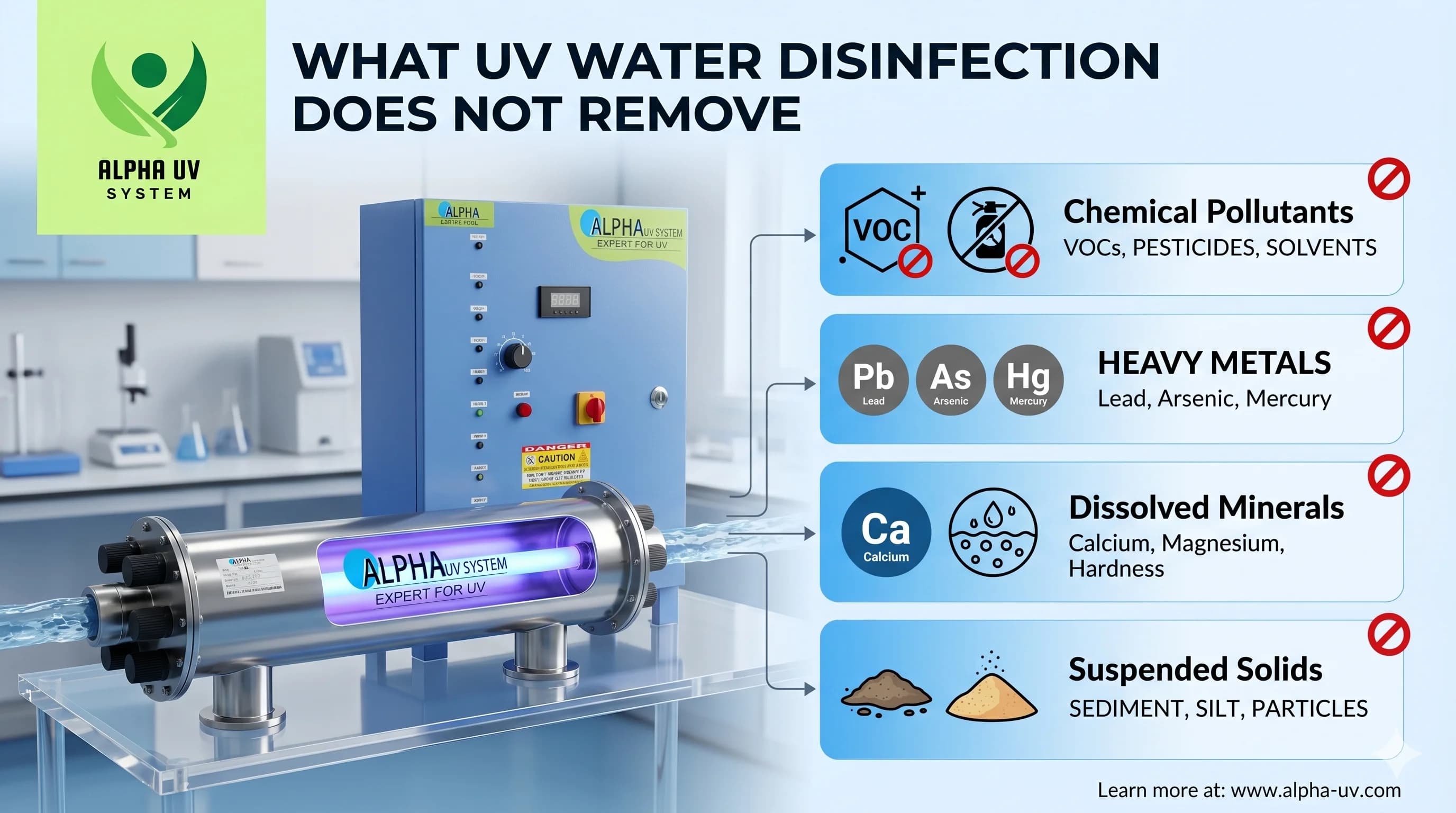
UV disinfection is effective against bacteria, viruses, and protozoa — the three biological pathogen categories relevant to waterborne disease. However, there are important limitations. Adenoviruses (enteric types 40/41) require significantly higher UV doses (80–200 mJ/cm²) for 4-log inactivation and are not adequately addressed by standard 40 mJ/cm² low-pressure UV systems. Bacterial spores (e.g., Bacillus anthracis) are more UV-resistant than vegetative bacteria but are rarely waterborne concerns in drinking water treatment. Prions — the misfolded proteins that cause conditions like BSE — are not inactivated by UV or any other disinfection method (they are not microbial agents). And critically: UV addresses only biological contamination. Chemical contaminants (arsenic, fluoride, nitrates, pesticides, heavy metals) are not removed by UV and require separate treatment steps.
Is UV effective enough for hospital water treatment in India?
UV disinfection is not only effective but increasingly required for hospital water treatment in India, particularly for NABH-accredited hospitals facing infection control mandates. UV at 40 mJ/cm² meets the WHO and CPHEEO minimum dose for drinking water disinfection and achieves 4-log inactivation of the bacteria (E. coli, Salmonella, Klebsiella, Staphylococcus) and viruses (Rotavirus, Hepatitis A) of greatest concern in hospital settings. For dialysis water, operating theatre water supply, and immunocompromised patient wards where Legionella, Pseudomonas, and antibiotic-resistant organisms are primary concerns, UV systems delivering 60–80 mJ/cm² with continuous UV intensity monitoring are specified — providing 4–5-log inactivation of all target pathogens including drug-resistant strains. Alpha UV System has supplied UV water treatment systems to hospitals across Delhi NCR with 24–48 hour response time for technical support.
For a technical consultation on UV disinfection system specification for your specific pathogen concerns, water quality profile, and flow requirements — including UV log reduction bacteria and virus kill rate guarantees — contact Alpha UV System on WhatsApp for a 24–48 hour response from our IIT-trained engineering team.
Standards, authorities & further reading
External references used to inform this guide. Regulations evolve — check the latest revision on each authority's site before compliance decisions.
Recommended UV Systems
Alpha UV System products for this application — powered by genuine Philips UV-C lamps.
UV System for Drinking Water
100 – 50,000 LPH
Chemical-free UV drinking water disinfection — from homes to municipalities
Residential UV Disinfection System
100 – 500 LPH
Safe drinking water for homes and villas — no chemicals, no taste change
Not sure which system suits your application? WhatsApp our engineers for a free recommendation →
Related solutions
See how Alpha UV System applies this to your industry or city.
Need a UV system?
Talk to our UV engineers — WhatsApp for a quote in 2 hours, or browse the full catalog on IndiaMART.