Quick Answer
Coliform bacteria in water are the standard indicator organisms for fecal contamination. Indian water quality standards require zero total coliforms and zero E. coli per 100 ml in potable water (BIS IS 10500:2012), ≤1,000 MPN fecal coliforms per 100 ml in STP discharge to surface water (CPCB General Standards), and zero coliforms at the point of food contact in food and beverage manufacturing (FSSAI Schedule IV). Coliforms themselves are not always directly pathogenic — their significance is as indicators: their presence in water signals that the treatment barrier has failed and that enteric pathogens (Salmonella, Campylobacter, norovirus, hepatitis A, Cryptosporidium) may also be present. UV disinfection at 40 mJ/cm² achieves ≥4-log (99.99%) reduction of total coliforms and E. coli in a single pass through the UV reactor — the lowest-cost, chemical-free method for meeting BIS IS 10500 and FSSAI zero-coliform requirements in Indian industrial and commercial water systems.
What Are Coliform Bacteria in Water?
Coliform bacteria are a group of gram-negative, rod-shaped bacteria that ferment lactose at 35–37°C. The coliform group is defined operationally — by this biochemical characteristic — rather than by phylogenetic relationship. The group includes organisms from multiple genera: Escherichia, Klebsiella, Enterobacter, Citrobacter, and others. In water quality testing, coliforms are used as indicator organisms rather than being of direct health concern in most cases.
There are three coliform groups used in Indian water quality standards:
Total Coliforms
Total coliforms include all bacteria that produce acid and gas from lactose fermentation at 35°C. This group includes both environmental organisms (Klebsiella, Enterobacter — common in soil and plant material) and organisms of fecal origin. Total coliform presence indicates a general failure of the disinfection barrier or post-treatment contamination, but does not by itself confirm fecal contamination. BIS IS 10500 requires zero total coliforms per 100 ml in potable water — the rationale being that any detectable coliform suggests the treatment system is not functioning as designed.
Fecal Coliforms (Thermotolerant Coliforms)
Fecal coliforms are a subset of total coliforms that ferment lactose at 44.5°C. The higher temperature selects for organisms of fecal origin — primarily Escherichia coli. Fecal coliform presence in water is a stronger indicator of sewage contamination than total coliform presence. CPCB General Standards specify fecal coliform limits for STP and ETP discharge: ≤1,000 MPN/100 ml for surface water discharge and ≤200 MPN/100 ml for irrigation reuse. WHO GDWQ specifies ≤1 E. coli per 100 ml in drinking water.
Escherichia coli (E. coli)
E. coli is the most specific indicator of recent fecal contamination. Most E. coli strains are non-pathogenic commensal organisms — but some serotypes cause disease: enterotoxigenic E. coli (ETEC) causes traveller's diarrhoea, enterohemorrhagic E. coli (EHEC, including O157:H7) causes haemolytic uraemic syndrome, and extraintestinal pathogenic E. coli (ExPEC) causes urinary tract infections. BIS IS 10500 requires zero E. coli per 100 ml — E. coli is the single most important microbiological indicator in Indian potable water standards.
How Coliform Bacteria Enter Water in India
Coliform bacteria in water in India come from multiple contamination pathways, several of which are specific to Indian water supply conditions:
Groundwater (Borewell and Open Well)
Groundwater is not sterile — it picks up surface-derived bacteria through percolation, especially in shallow aquifers (under 50 metres) that receive infiltration from adjacent agricultural land, open defecation sites, or septic systems. During monsoon season, surface flooding events introduce fecal coliforms into shallow borewells at rates that can increase total coliform counts 100-fold within 48 hours of a heavy rain event. A 2022 BIS survey across 18 Indian states found coliform contamination in 37% of rural borewell samples — the highest rate being in alluvial aquifer zones of UP, Bihar, and West Bengal where shallow water table intersects with intensive agriculture and open sanitation.
Municipal Distribution Network
Municipal water treatment plants in Indian cities typically meet BIS IS 10500 at the point of treatment — but the distribution network recontaminates the water before it reaches the tap. The three principal mechanisms are: (1) intermittent supply pressure — Indian urban distribution systems run at pressure for 2–8 hours per day, and during zero-pressure periods, contaminated soil water can be aspirated into the pipe through cracks and joints; (2) ageing cast iron and asbestos cement pipes with biofilm layers that harbour and release coliforms under flow disturbance; (3) open storage tanks on rooftops and in basements that are cleaned infrequently and receive airborne contamination, bird droppings, and algal growth that provides a nutrient substrate for coliform regrowth.
Food Processing Environments
In food and beverage manufacturing, coliform bacteria in process water can come from municipal supply contamination (as above), from cross-contamination via backflow from process equipment, from condensation on poorly insulated cold surfaces, and from biofilm in water storage tanks that is disrupted during cleaning cycles. FSSAI food safety inspections routinely identify process water coliform failures as a cause of product quality non-conformances, and positive coliform results in food product testing are frequently traced to process water rather than raw material contamination.
Indian Water Quality Standards for Coliform Bacteria
| Standard | Application | Total Coliform Limit | Fecal Coliform / E. coli Limit |
|---|---|---|---|
| BIS IS 10500:2012 | Potable drinking water | Zero per 100 ml (mandatory) | Zero E. coli per 100 ml (mandatory) |
| FSSAI Schedule IV | Food and beverage process water | Zero per 100 ml (IS 10500 compliance at point of use) | Zero E. coli per 100 ml |
| CPCB General Standards — Surface discharge | STP/ETP effluent to rivers, lakes | Not specified separately | ≤ 1,000 MPN fecal coliform per 100 ml |
| CPCB — Irrigation reuse (non-food crops) | STP effluent for land irrigation | Not specified | ≤ 100 MPN fecal coliform per 100 ml |
| CPCB — Food crop irrigation | STP effluent for food crop irrigation | Not specified | ≤ 10 MPN fecal coliform per 100 ml |
| Schedule M (GMP) | Pharmaceutical purified water | TVC < 100 CFU/ml total (not coliform-specific) | Zero — any coliform is OOS for pharma |
| NABH FMS | Hospital potable and patient-contact water | BIS IS 10500 compliance | Zero E. coli |
| WHO GDWQ (4th ed.) | Reference — used in Indian premium product specs | Zero per 100 ml | Zero E. coli per 100 ml |
Why Coliform Detection Matters Beyond the Organisms Themselves
The technical importance of the coliform indicator is not that coliforms themselves cause severe illness in most cases — it is that their presence signals the failure of the disinfection barrier. Enteric pathogens that are genuinely dangerous — Salmonella typhi (typhoid), Vibrio cholerae (cholera), Campylobacter jejuni (campylobacteriosis), norovirus, hepatitis A virus, rotavirus, Cryptosporidium parvum — co-exist with coliforms in fecally-contaminated water. A water source showing zero coliforms after UV disinfection has passed through a validated UV dose that also inactivates these pathogens at equal or lower doses.
The WHO concept of water safety validation uses coliforms as the reference organism for dose calculation — at 40 mJ/cm², UV dose required for 4-log E. coli reduction is achieved, and at this dose all bacterial pathogens are also inactivated at 4-log or higher reduction. Cryptosporidium and Giardia — which are chlorine-resistant — require lower UV doses than E. coli for equivalent log reduction (10 mJ/cm² for 3-log Cryptosporidium vs 6 mJ/cm² for 4-log E. coli).
How UV Disinfection Eliminates Coliform Bacteria in Water
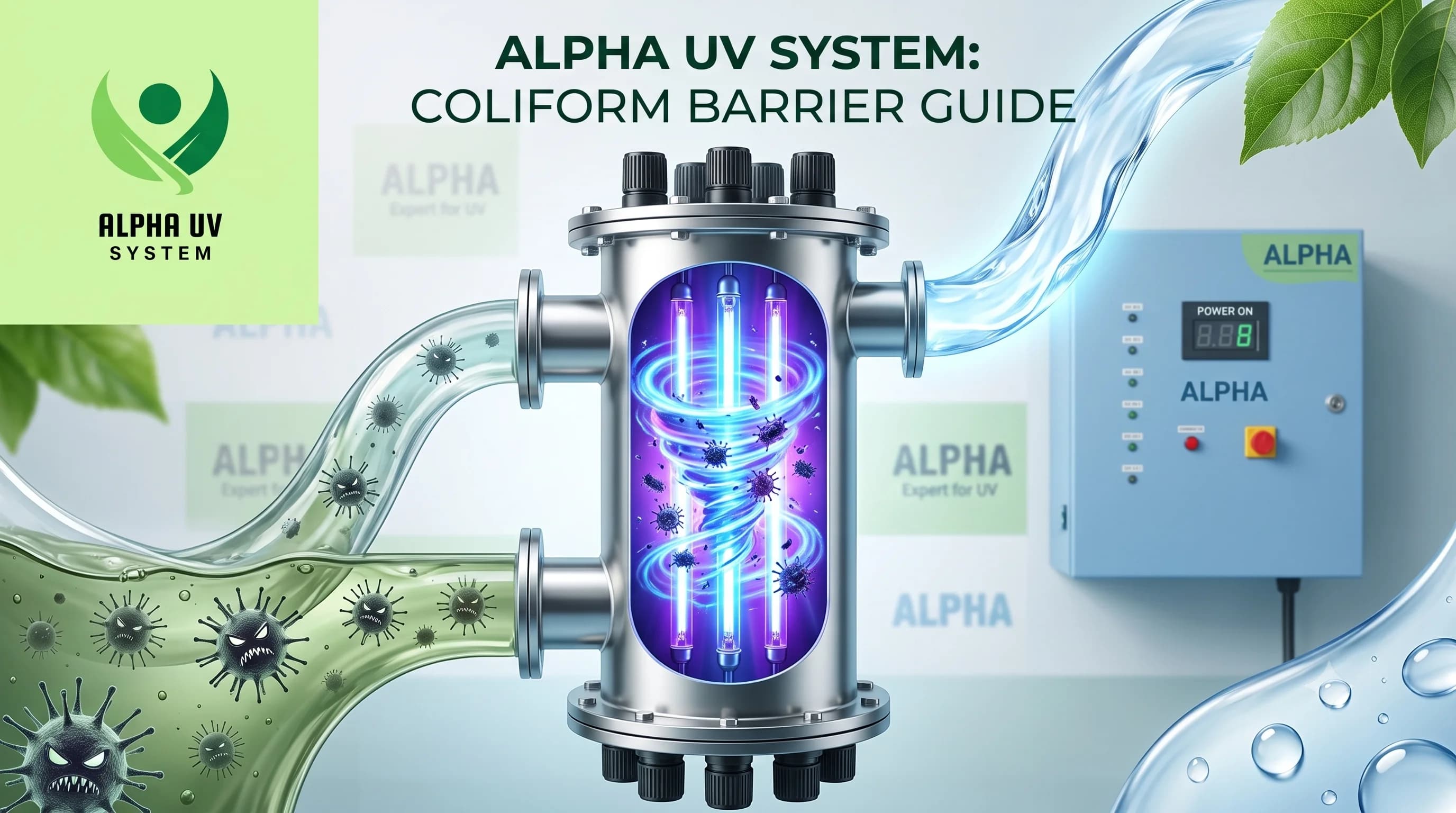
UV disinfection at 254 nm inactivates E. coli and other coliform bacteria by causing thymine dimer formation in their DNA — covalent bonds between adjacent thymine bases that prevent the DNA polymerase from reading and copying the chromosome. An E. coli cell that cannot replicate is biologically non-viable and cannot cause infection, regardless of whether it remains physically present in the treated water.
UV Dose Requirements for Coliform Elimination
| Organism | UV dose for 2-log reduction (99%) | UV dose for 4-log reduction (99.99%) | Significance |
|---|---|---|---|
| E. coli | 3 mJ/cm² | 6–10 mJ/cm² | Primary indicator — most UV-sensitive coliform |
| Klebsiella pneumoniae | 4 mJ/cm² | 8–12 mJ/cm² | Total coliform, nosocomial pathogen |
| Salmonella typhi | 4 mJ/cm² | 8–10 mJ/cm² | Co-occurs with coliforms in contaminated water |
| Shigella sonnei | 3 mJ/cm² | 7 mJ/cm² | Dysentery — controlled at coliform dose |
| Vibrio cholerae | 1 mJ/cm² | 3–5 mJ/cm² | Most UV-sensitive enteric pathogen |
| Campylobacter jejuni | 2 mJ/cm² | 5–7 mJ/cm² | Most common bacterial gastroenteritis cause |
A UV system designed to deliver 40 mJ/cm² — the standard for drinking water and food process water applications — is over-designed for E. coli elimination by a factor of 4–6×. The 40 mJ/cm² design dose provides the safety margin required for validation under worst-case UV transmittance (UVT) conditions, peak flow rate variations, and lamp output degradation over the 9,000–12,000 hour lamp life.
UV vs Chlorine for Coliform Elimination
| Factor | UV Disinfection | Chlorination |
|---|---|---|
| E. coli 4-log dose requirement | 6–10 mJ/cm² (single-pass, seconds) | CT 0.5–3.0 mg·min/L (requires minutes of contact time) |
| Cryptosporidium effectiveness | ✅ 10 mJ/cm² = 3-log reduction | ❌ Resistant at practical doses |
| Disinfection byproducts | None | THMs, HAAs (carcinogenic, regulated) |
| Taste and odour | No impact | Detectable above 0.2 mg/L free chlorine |
| Regrowth after treatment | Possible (no residual) — pre-storage UV position required | Residual prevents regrowth in pipes |
| Compliance documentation | Continuous UV intensity log (automated) | Manual residual tests or online analyser needed |
| Operating cost (per 1,000 L) | ₹0.20–0.80 | ₹1.50–4.00 |
How Coliform Bacteria in Water Are Tested
Indian water testing laboratories use two main methods for coliform enumeration:
Most Probable Number (MPN) Method
The MPN method uses multiple-tube fermentation to estimate the number of coliforms per 100 ml statistically. Water is inoculated into a series of tubes containing lactose broth in declining volumes; tubes showing acid-gas production are counted after 24–48 hours of incubation, and the MPN is read from a statistical table. This method is standard for CPCB effluent monitoring (results expressed as MPN/100 ml) and is appropriate for samples with high expected coliform counts (STP effluent, raw water).
Membrane Filtration Method
Water is filtered through a 0.45-micron membrane that retains bacteria; the membrane is placed on selective agar and incubated. Colonies are counted after 24–48 hours and results expressed as CFU/100 ml. This method is used for low-count water samples (treated drinking water, food process water, pharmaceutical water) where MPN lacks sensitivity at the zero-coliform BIS IS 10500 level. A presence-absence (P-A) test — a simplified version for field testing — gives a yes/no result for total coliforms in a 100 ml sample and is widely used for routine BIS IS 10500 compliance monitoring at water treatment plants.
Pre-Filtration Requirement Before UV for Coliform Elimination
UV disinfection requires pre-filtered water with turbidity ≤1 NTU. Suspended particles in turbid water create "shadow zones" that shield coliform bacteria from UV exposure — a highly turbid water sample (10 NTU) can reduce effective UV dose delivery by 30–50%, causing UV systems to produce water that passes the visual inspection but fails microbiological testing. This is the most common cause of coliform failures in UV-equipped water systems in India: the UV lamp is running, the sensor shows adequate intensity, but turbidity upstream of the reactor is high enough to protect a fraction of the coliform population from the full UV dose.
Pre-treatment requirements before UV for coliform elimination:
- Turbidity: ≤1 NTU (measured, not estimated)
- Iron: ≤0.3 mg/L (above this precipitates on the quartz sleeve, reducing dose over time)
- UV transmittance (UVT at 254 nm): ≥75% for standard reactors; lower UVT requires larger reactor or higher lamp power
- Pre-filtration: 5-micron cartridge filter minimum; sand/multimedia filter for higher-turbidity sources
UV for Coliform Control — Application-Specific Requirements in India
Drinking Water — BIS IS 10500 Zero-Coliform Compliance
For housing societies, hotels, hospitals, schools, offices, and institutional buildings drawing from borewell or municipal supply, UV disinfection at 40 mJ/cm² after 5-micron pre-filtration is the standard solution for BIS IS 10500 zero-coliform compliance at the storage tank outlet or building entry point. Single-lamp SS316L reactors at 500–5,000 LPH are the most common configuration. The UV intensity sensor continuous log is accepted by BIS certification inspectors as documentation of disinfection system operation.
Food and Beverage — FSSAI Zero-Coliform at Point of Use
FSSAI HACCP plans require process water to meet BIS IS 10500 at the point where water contacts food or food contact surfaces. In food and beverage manufacturing, the UV reactor is positioned as the final treatment step before the process water distribution header — after activated carbon (dechlorination) and 5-micron cartridge filtration. The UV intensity sensor output serves as the CCP monitoring record for FSSAI audits, replacing the manual daily chlorine residual testing that was previously required.
STP/ETP — CPCB Fecal Coliform Discharge Compliance
For STP effluent discharge, UV at 40–80 mJ/cm² positioned after secondary clarification and optional tertiary sand filtration achieves the CPCB limit of ≤1,000 MPN fecal coliform/100 ml without chemical dosing. Multi-lamp pressure vessel reactors (for housing society and industrial STPs) or open-channel lamp arrays (for municipal STPs above 5 MLD) are used depending on scale. The continuous UV intensity monitoring log is increasingly required by State Pollution Control Boards as evidence of tertiary treatment operation for CPCB OCEM (Online Continuous Effluent Monitoring) compliance.
UV Systems for Coliform Elimination from Alpha UV System
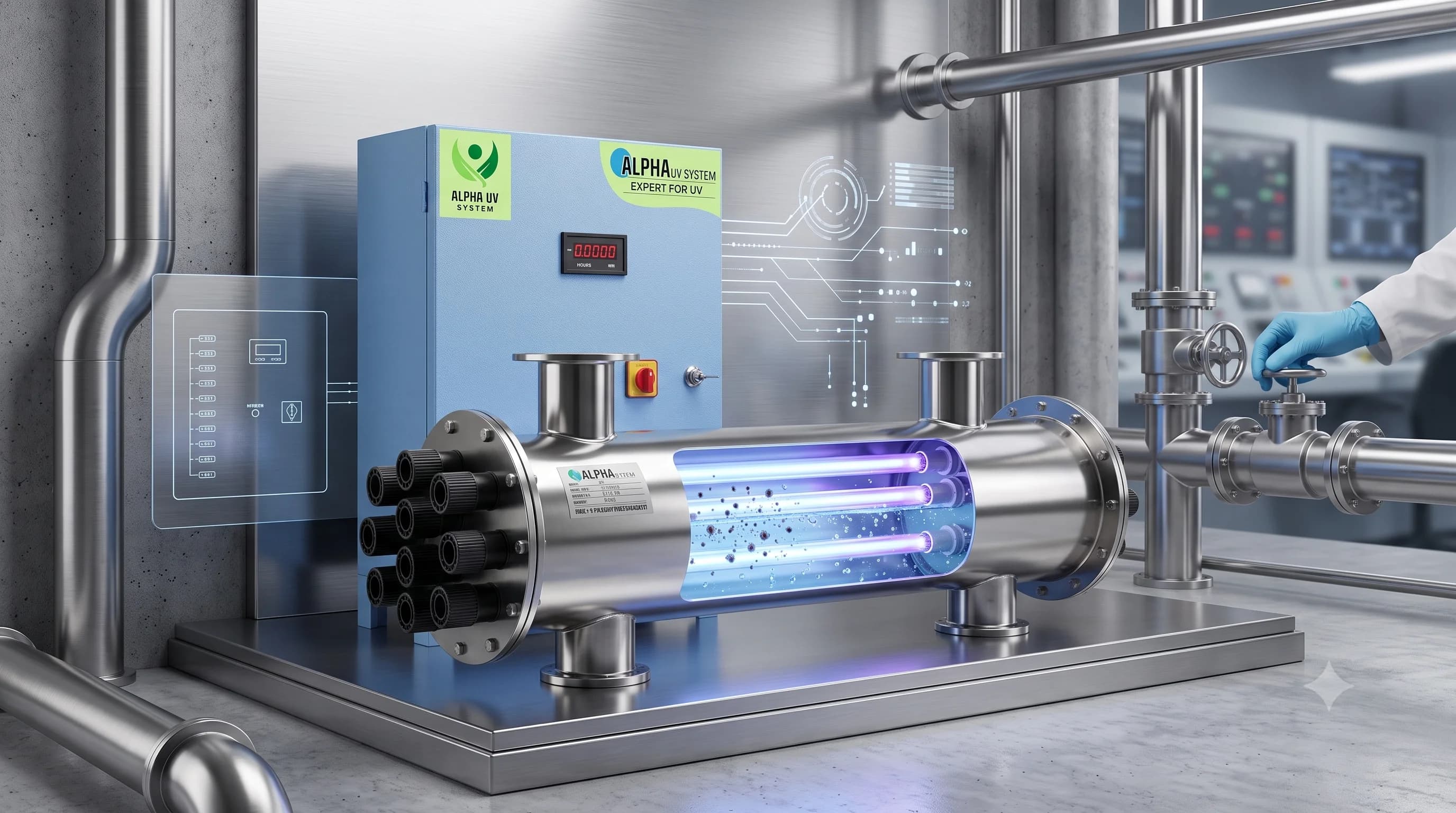
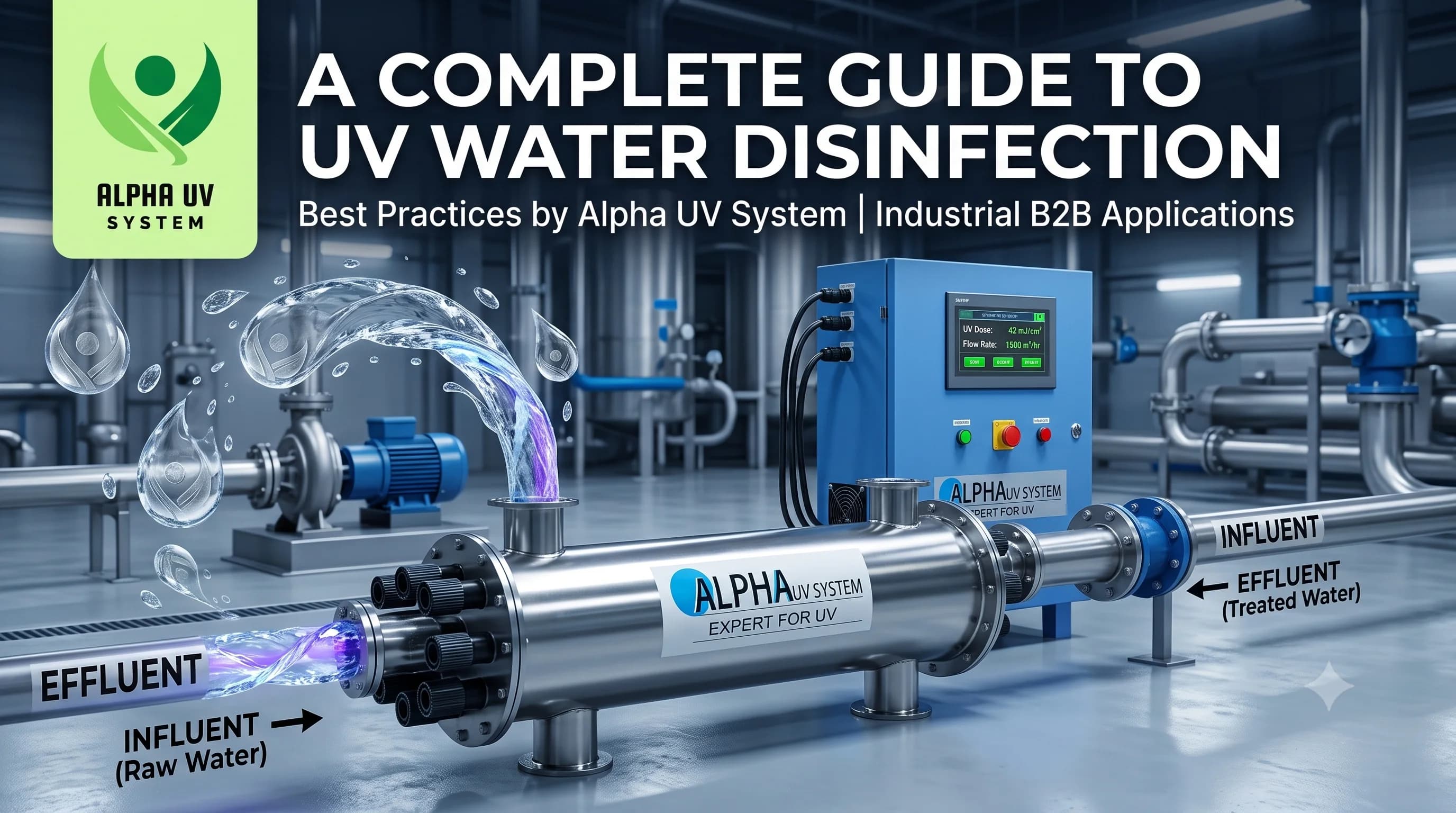
Alpha UV System designs UV water disinfection systems for coliform elimination in drinking water, food process water, pharmaceutical water, and STP/ETP effluent applications across India. All systems use Philips UV-C lamps, SS316L reactor chambers with EN 10204 3.1 material certificates, and calibrated UV intensity sensors with alarm relay outputs — the combination required to guarantee that the zero-coliform BIS IS 10500 standard and FSSAI HACCP CCP requirement are met continuously, not just at the moment of commissioning.
Our IIT-trained engineers measure actual water quality (turbidity, UVT, iron) at your site before specifying a UV reactor — because a reactor sized for 95% UVT clean groundwater will not achieve zero coliforms if the actual source water is 80% UVT municipal supply during post-monsoon season. MSME Udyam registered manufacturer, Greater Noida. 24–48 hour NCR response.
Contact us for coliform elimination system specifications: WhatsApp +91 93183 05878 or call +91 95995 00580.
Related guides: Water disinfection methods compared | UV disinfection systems — complete buyer's guide | How to calculate UV dosage | UV vs chlorine for drinking water
Recommended UV Systems
Alpha UV System products for this application — powered by genuine Philips UV-C lamps.
Commercial UV Water Purification System
500 – 5,000 LPH
HACCP-compliant UV water purification for hotels, restaurants, and offices
Industrial UV Water Treatment System
5,000 – 50,000 LPH
Schedule M 2025 and HACCP compliant UV for pharma, food & beverage, and process water
Not sure which system suits your application? WhatsApp our engineers for a free recommendation →
Need a UV system?
Talk to our UV engineers — WhatsApp for a quote in 2 hours, or browse the full catalog on IndiaMART.